DNA links to personality hold across populations and track life outcomes
An analysis of more than 600,000 people found broadly consistent genetic associations with the Big Five traits and links to consequential behaviours and outcomes.
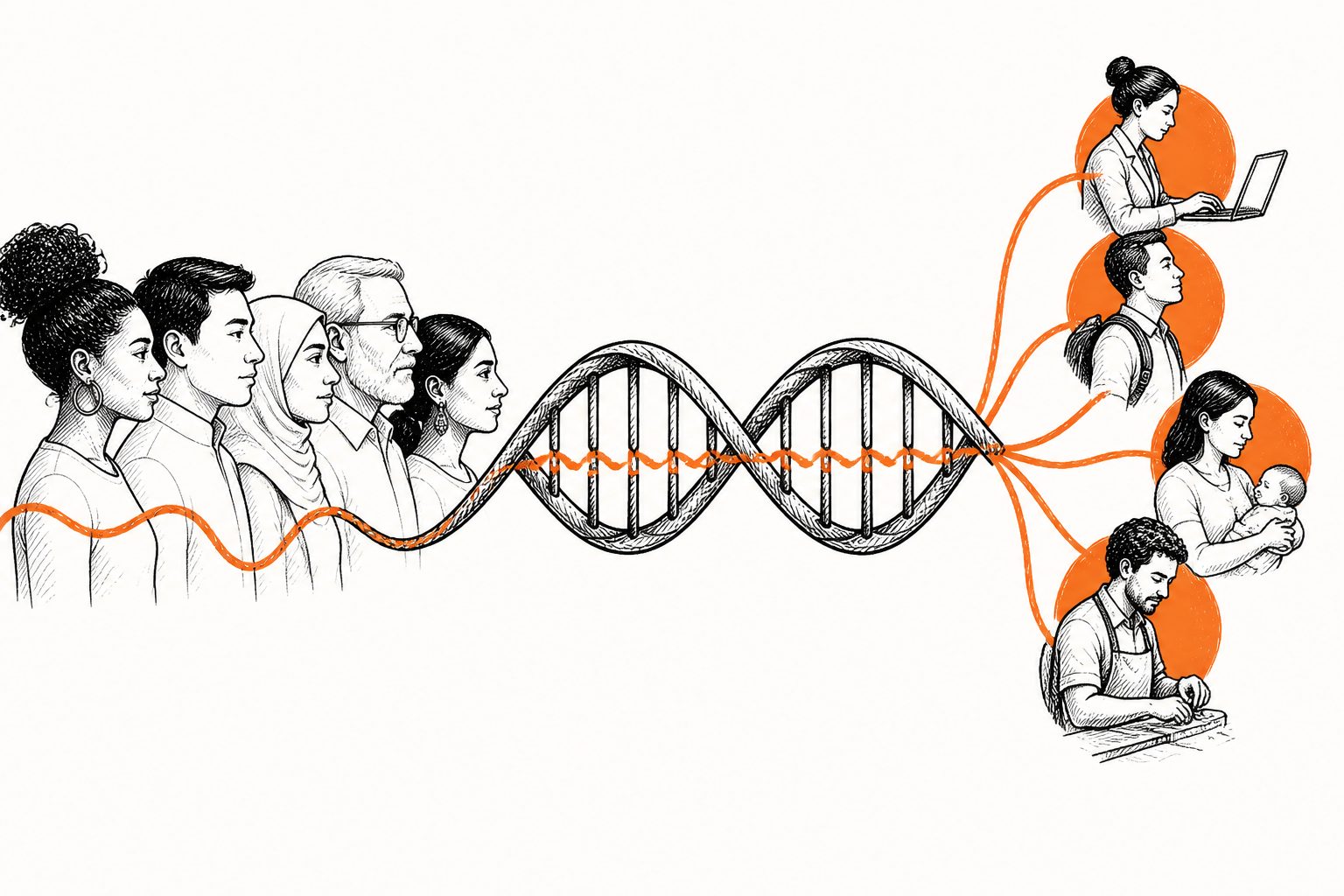
Editorial illustration — not from the study.
Researchers combined genome-wide data from 46 cohorts, covering 611,037 to 1.14 million participants with European-like and African-like genomes. They examined the Big Five personality traits: extraversion, agreeableness, conscientiousness, neuroticism and openness to experience. The analysis identified 1,260 lead genetic variants associated with personality, including 824 novel variants.
The genetic associations were highly consistent across geography, age groups, reporters and measurement instruments, but not identical. Analyses using family data and genetic scores suggested that the associations were minimally confounded by the shared family environment. Other analyses indicated widespread, potentially causal associations between personality traits and consequential behaviours and life outcomes.
Genetic links to personality
Common genetic variants accounted for 4.8–9.3% of the variation in measures of each personality trait. Among measures with typical levels of reliability, they accounted for 9.3–13.3% of the variation.
The researchers identified 1,260 lead variants associated with personality, 824 of them novel. Genetic associations were highly consistent across geography, whether personality was reported by participants or close others, age group and measurement instrument, although they were not identical. The study also found minimal spousal assortment for personality in recent history.
Within-family genome-wide analyses and polygenic index analyses indicated that the genetic associations were minimally confounded by the shared family environment. Polygenic prediction, genetic correlation and Mendelian randomization analyses indicated widespread, potentially causal associations between personality traits and consequential behaviours and life outcomes.
Why the patterns matter
The findings suggest that genetic contributions to personality are not limited to a single group, questionnaire or age range. Their consistency across European-like and African-like genomes, together with the limited evidence of confounding by shared family environment, supports the researchers’ conclusion that the genetic architecture of personality is broadly generalizable.
The links with behaviours and life outcomes also suggest that personality-related genetic differences are relevant to wider aspects of human experience. The study does not show that any single variant determines a person’s personality or life course; the reported associations involve many variants and statistical analyses of groups.
Evidence and caveats
This was a large meta-analysis of genome-wide association studies across 46 cohorts, including 611,037 to 1.14 million participants for the main analyses and up to 50,725 participants for within-family analyses. The researchers used several approaches, including genetic prediction, genetic correlation and Mendelian randomization.
The associations varied somewhat by geography, reporter, age and measurement instrument. The ancestry groups were described as having European-like and African-like genomes, so the results do not establish identical patterns across every population. Mendelian randomization analyses indicated potentially causal associations, but the abstract does not present these as proof of causation. The study estimates the contribution of common variants to measured traits, not the full role of genetics or environment in individual personality.
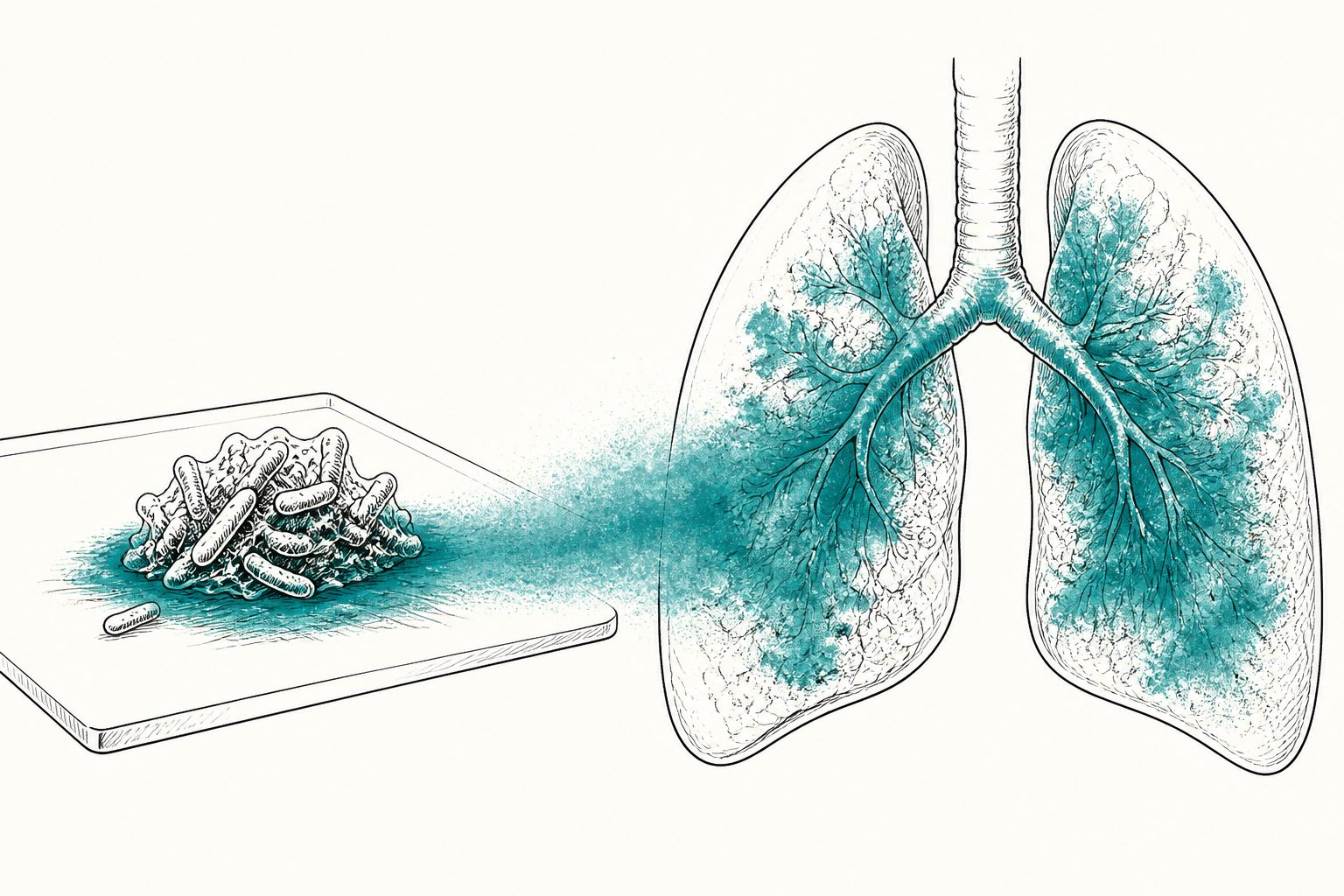
A study used chemical imaging to compare Pseudomonas aeruginosa biofilms grown on a laboratory surface and on mouse lung tissue. Biofilms on lung explants showed greater production and deeper tissue penetration of pyocyanin, a phenazine involved in biofilm activity and host interactions.
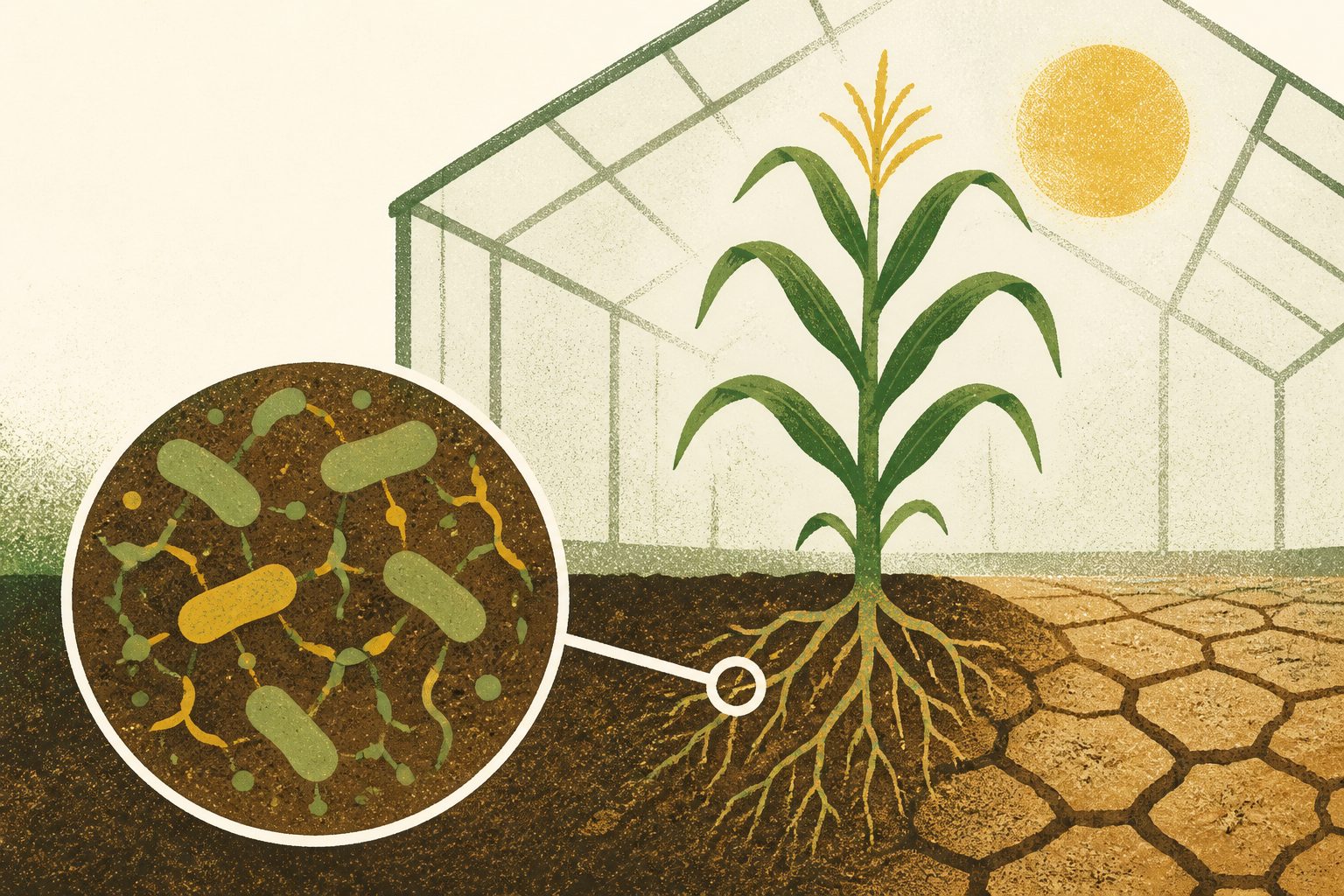
Certain Streptomyces bacteria improved maize growth when plants were grown with limited water in a greenhouse experiment. The effects varied among the four bacterial isolates, and further testing is needed before they can be considered for field use.
A review of five medicinal plants finds evidence that leaves, young stems, small branches and fruits may sometimes replace roots, bark or heartwood as sources of similar plant chemicals. The authors say these substitutions could reduce destructive harvesting, but therapeutic and safety testing is still needed.