Biology

Life sciences: genetics, neuroscience, ecology and molecular biology.

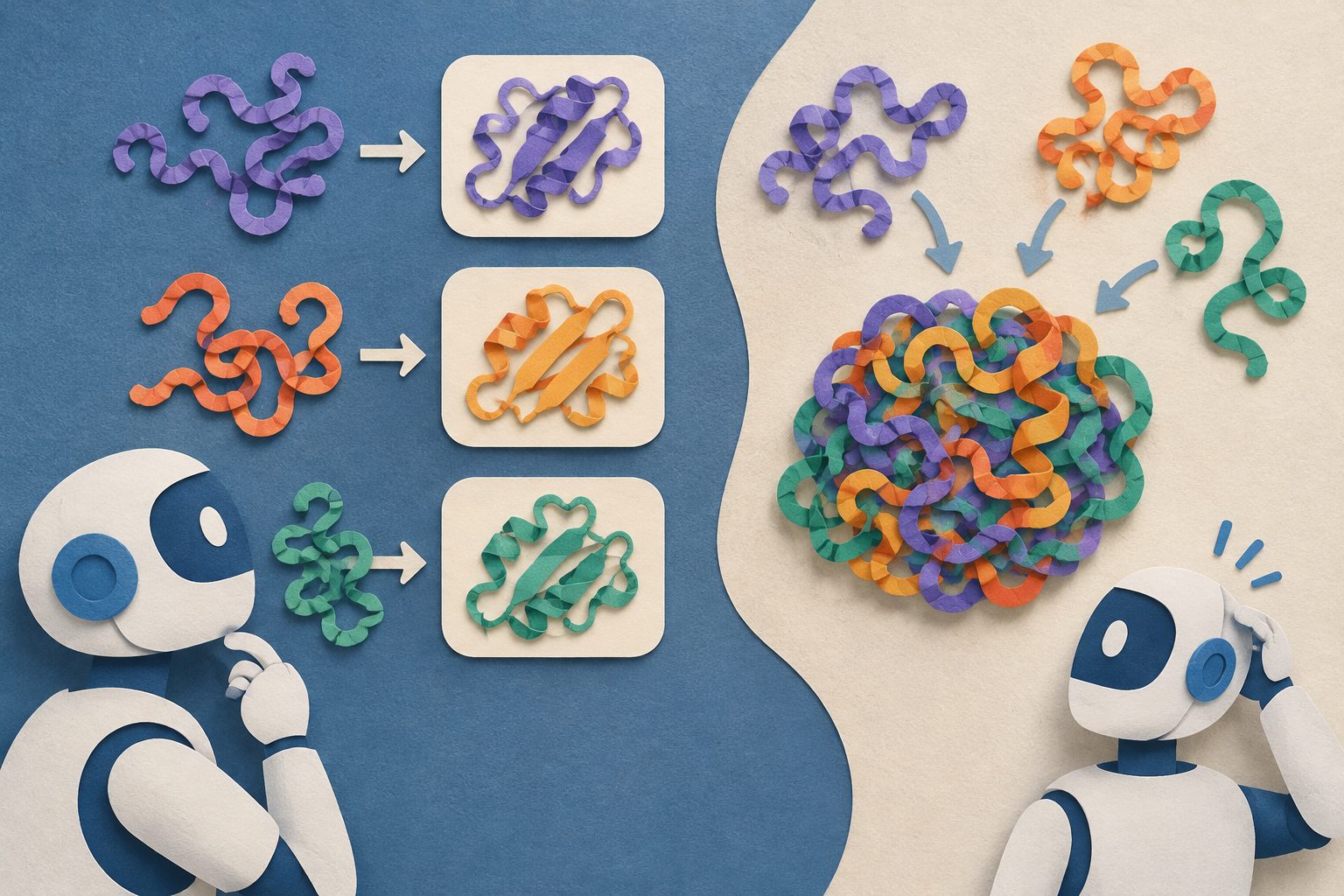
Abstract editorial illustration accompanying the article: Predicting which peptides T cells recognize remains difficult for AI

Predicting which peptides T cells recognize remains difficult for AI

AI tools for predicting T-cell recognition often struggle when the peptide has not appeared in their training data. A study of structure-based classifiers found that extra training objectives can improve predictions for unfamiliar peptides, but the broader generalization problem remains.

·5 views
Abstract editorial illustration accompanying the article: Study links closer adherence to the Eatwell Guide with lower body-fat markers
Biology
Low evidenceHuman study

Study links closer adherence to the Eatwell Guide with lower body-fat markers

In a study of 156,764 UK Biobank participants, researchers examined associations between adherence to the UK Eatwell Guide and measures of body size and body fat. Higher adherence was associated with lower adiposity measures both at the initial assessment and, in the prospective analysis, with more favorable body mass index patterns over time. The study does not show that adherence caused these differences.

·34 views
Abstract editorial illustration accompanying the article: Intensive poultry farming helps Campylobacter spread between bird species

Intensive poultry farming helps Campylobacter spread between bird species

Intensive poultry farming has changed how Campylobacter jejuni moves among chickens and wild birds, according to an analysis of 2,747 genomes. The researchers estimate a roughly 100-fold rise in chicken-to-wild-bird transfers since 1900 and found that chicken-adapted strains often carry genes linked to antimicrobial resistance and survival in chickens.

·35 views
Abstract editorial illustration accompanying the article: A giant virus infecting an ocean alga carries a rhodopsin-like gene

A giant virus infecting an ocean alga carries a rhodopsin-like gene

Researchers have isolated the first cultivated virus known to infect a chrysophyte, an aquatic protist that can both photosynthesize and consume prey. Its genome contains a proteorhodopsin-like gene, a type of gene not previously reported in a virus, although predictions suggest the protein may not function as a light-driven proton pump.

·12 views