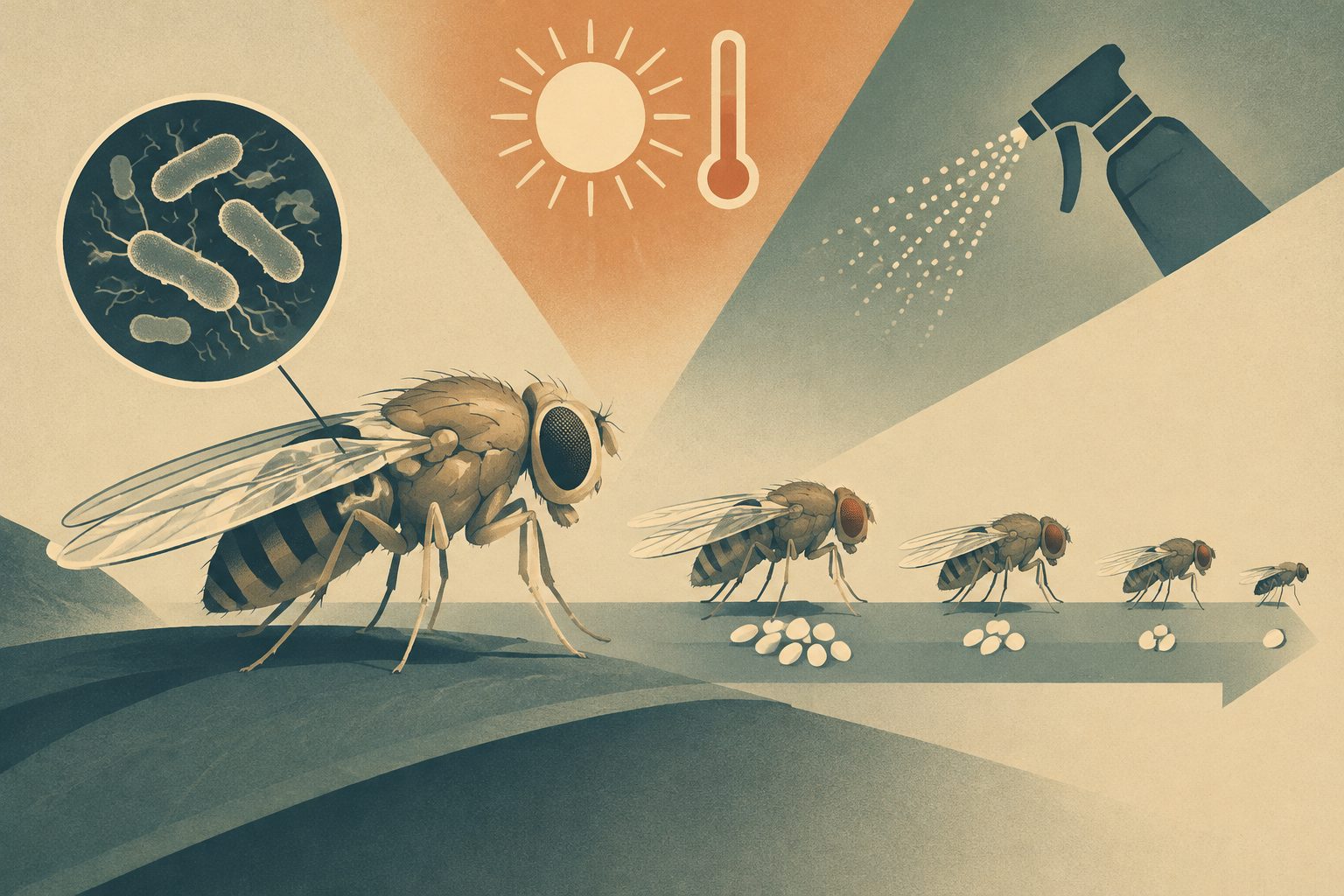
A laboratory study found that a more diverse gut microbiome partly buffered male flies against the combined stressors.
Researchers studied male Drosophila melanogaster with no detectable gut bacteria or with communities containing one or five bacterial species. The flies were exposed to heat, imidacloprid, both stressors, or control conditions, and their reproductive success was measured through the hatching of eggs produced by females they mated with.
The combined exposure often had synergistic effects, meaning its reproductive costs were greater than expected from the individual stressors. Males with the five-species community generally had the highest hatching success, while germ-free males were most affected. Paternal exposure also lowered offspring fertility, and these effects were largely independent of microbial transmission under the study conditions.
What happened to the flies
The combined heat and pesticide treatment reduced male reproductive fitness, with the effects depending on the males’ microbiome. In the fertilization experiment, a statistical model found a significant interaction among microbiome composition, temperature and pesticide exposure, based on 650 observations. Males carrying all five bacterial species generally had the highest egg-hatching success, followed by males associated with one Acetobacter or Lactobacillus species; germ-free males were most severely affected.
The researchers also found that paternal stress exposure reduced offspring fertility and other measures of offspring fitness. Because the experiment minimized direct transfer of microbes from fathers, the authors concluded that these cross-generational effects were largely not caused by microbial transmission. Acetobacter generally provided stronger protection than Lactobacillus, particularly when the bacterial community was more diverse, although the microbiome itself was also sensitive to the stressors.
Why combined stress matters
The findings show why studying heat or pesticide exposure separately can miss effects that arise when organisms encounter both. Reduced male fertility can affect reproduction before broader effects on survival are apparent, and the study indicates that consequences can extend to the next generation.
The results also suggest that gut microbial communities can contribute to resilience, with greater bacterial diversity partly buffering reproductive costs in these flies. The authors argue that ecological risk assessments should consider microbiome status, combined stressors and male-mediated effects across generations rather than treating these factors independently.
Evidence and caveats
This was a controlled laboratory experiment using an outbred population of Drosophila melanogaster. Researchers compared germ-free males with males colonized by one or five defined bacterial species, exposed them to 1 ppm imidacloprid and/or acute heat at 36°C, and measured reproductive outcomes after mating. The experiment controlled female microbiome status to focus on the males’ condition and minimized direct microbial transmission.
The evidence comes from one fly species, defined laboratory microbiomes and short-term, controlled exposures, so the results may not apply directly to other species, environments or stressor combinations. The study tested specific heat and pesticide conditions rather than the full range of exposures found in nature. The authors also identify the need for further research on these interactions across species and environments.
// Source
Proceedings of the Royal Society B Biological Sciences · 2026 · DOI: 10.1098/rspb.2026.1300
Authors: Komal Maggu, Abhishek Meena, Alessio N. De Nardo, Benjamin Eggs, Sonja H. Sbilordo, Rawaa Al Toma Sho, Stefan Lüpold
Institutions: Institut de Biologia Evolutiva