Researchers investigated whether taurine, a naturally occurring compound involved in cell function, could influence transthyretin. The protein normally forms a four-part structure that transports thyroxine, or thyroid hormone; when it breaks apart, abnormal protein deposits can form and contribute to diseases including cardiomyopathy, nerve damage and dementia.
Biology4 days ago
Taurine helped steady a protein linked to amyloidosis in lab tests
Experiments found that taurine strengthened the protein’s binding to thyroid hormone and reduced its tendency to form harmful aggregates.
What taurine did
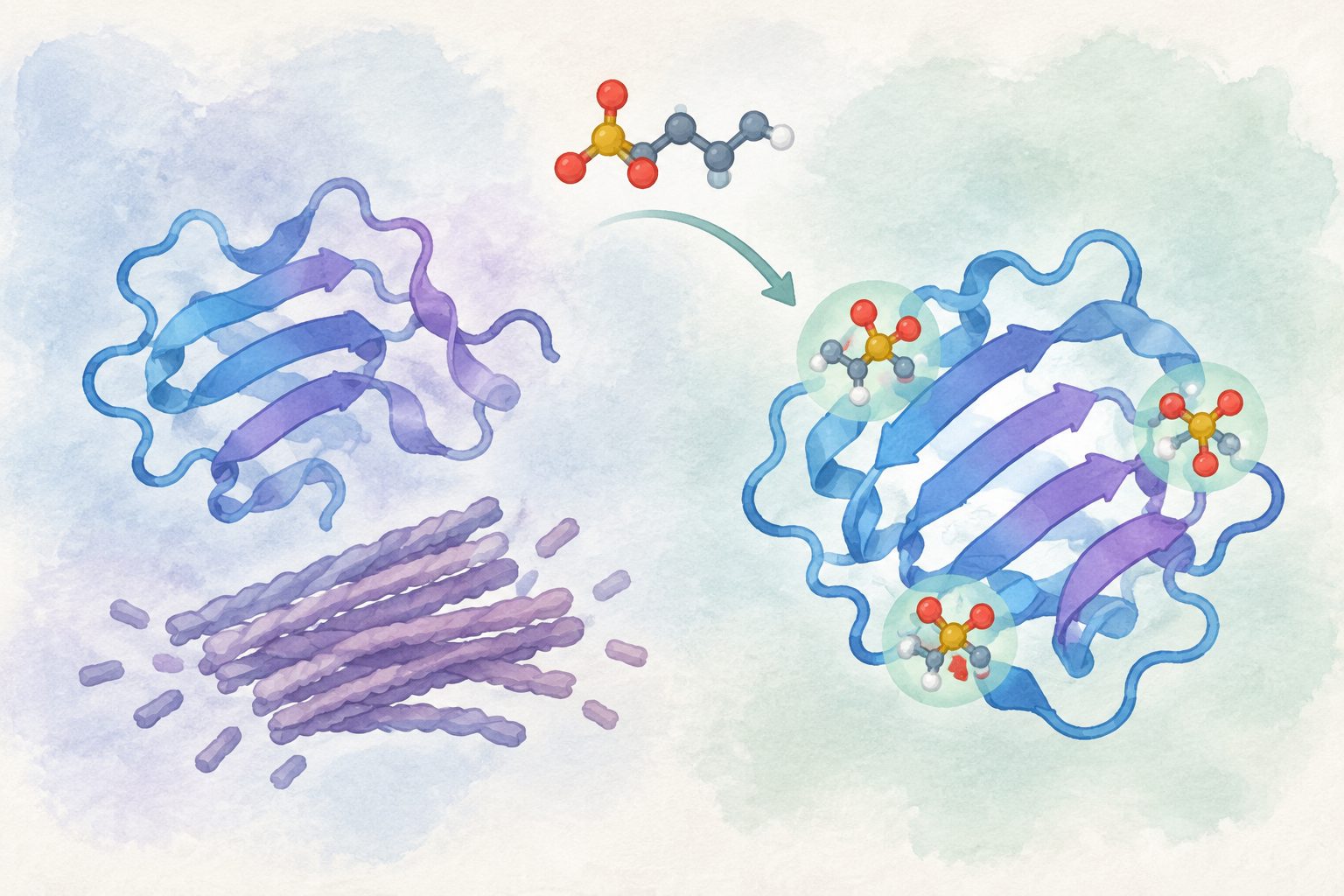
Across biochemical, biophysical and cellular experiments, taurine preferentially bound to transthyretin and increased the protein’s affinity for thyroxine. It also reduced transthyretin’s tendency to form amyloid-related aggregates. The researchers found that taurine acted on specific structural states of the protein and limited local changes in its shape, while leaving the protein’s overall native structure and thermodynamic folding unchanged. They describe taurine as an allosteric chemical chaperone—a compound that regulates a protein by binding at a site that influences its behavior elsewhere.
Why protein stability matters
Transthyretin amyloidosis is associated with the buildup of misfolded protein and can affect the heart, nerves and brain. The findings suggest that taurine could be explored as a way to support transthyretin stability while preserving its thyroid-hormone transport function, rather than simply occupying the hormone-binding pocket. The work also raises the possibility of studying taurine in relation to transthyretin-associated hypothyroidism and impairments affecting the nervous system or pregnancy, but it does not show that taurine prevents or treats these conditions in people.
Evidence and caveats
This was a laboratory study using biochemical and biophysical tests together with a cellular model. The abstract does not report clinical trials, treatment outcomes in people, or the taurine doses that would be needed for medical use. The results therefore show effects on transthyretin under experimental conditions, not a proven therapy for amyloidosis or hypothyroidism.
// Source
Scientific Reports · 2026 · DOI: 10.1038/s41598-026-75617-7
Authors: Snigdha Krishna, Sheeza Khan, Laishram Rajendrakumar Singh
Institutions: University of Delhi, B.S. Abdur Rahman Crescent Institute of Science & Technology