Lab-grown brain tissue showed protein-control changes before tau buildup
Cortical organoids carrying an FTD-linked MAPT mutation showed early changes in phosphatase regulators and prefoldin before tau abnormalities appeared.
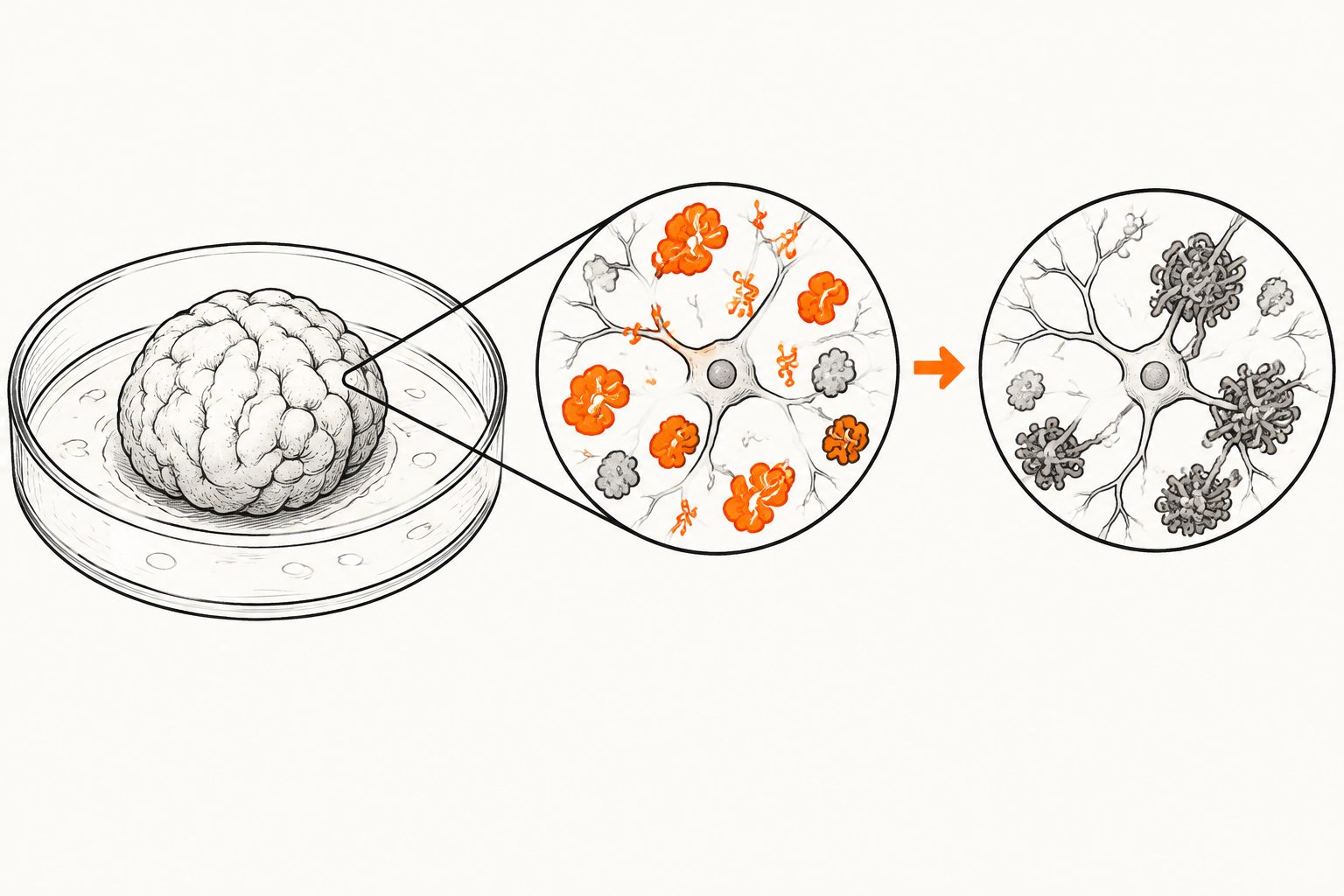
Editorial illustration — not from the study.
Researchers developed a scalable platform for making human pluripotent stem cell-derived cortical organoids, with quality checks covering organoid production and single-cell RNA sequencing. In a 96-well format, the team achieved about 100% organoid formation across 64 cell lines, while adjusting growth factors improved pluripotency and cortical patterning.
The organoids had gene-activity profiles and low-stress signatures similar to those of the developing human cortex. In organoids carrying the MAPT V337M mutation, single-cell analysis identified early changes in the phosphatase regulators PPP2CA and ANP32A, as well as the prefoldin subunit PFDN6, in excitatory neurons before tau hyperphosphorylation and oligomerization were detected.
Early changes before tau
The researchers created an end-to-end quality-control platform for producing cortical organoids from human pluripotent stem cells. Using 96 slit-wells, they achieved about 100% organoid formation across 64 lines. Controlled-release FGF2 supported stem-cell pluripotency and reduced unwanted mesendodermal cells, while optimized SB431542 dosing improved cortical patterning across lines with different levels of TGFBR1/ALK5 expression.
The resulting organoids showed gene-activity patterns and low-stress signatures closely aligned with the developing human cortex. Using single-cell RNA sequencing and a cortical organoid analysis index, the researchers found early dysregulation of PPP2CA and ANP32A, which regulate phosphatase activity, and PFDN6, a prefoldin subunit, in MAPT V337M excitatory neurons. These changes appeared before tau hyperphosphorylation and oligomerization.
Why the timing matters
The findings point to changes in protein regulation that arise in MAPT V337M neurons before the tau abnormalities measured in this study. That timing may help researchers investigate how disease-related cellular changes develop, rather than examining tau pathology alone.
The manufacturing and quality-control methods also address common challenges in cortical organoid research, including variable production, unwanted cell types and stress-related artifacts. A more consistent platform could make comparisons across cell lines and experiments more reliable, while providing a system for studying mechanisms linked to frontotemporal dementia with tau pathology.
Evidence and caveats
This is a laboratory study using human pluripotent stem cell-derived cortical organoids, including eight isogenic sets of lines carrying MAPT mutations relevant to frontotemporal dementia with tau pathology. The evidence comes mainly from organoid quality measurements, gene-activity profiles and single-cell RNA sequencing. The reported early changes are associations observed in MAPT V337M excitatory neurons; the abstract does not establish that they cause later tau abnormalities or disease.
Organoids model aspects of developing human cortex but do not reproduce the full human brain or the clinical course of dementia. The abstract also does not report patient outcomes, treatment effects or whether the identified changes occur in people with MAPT V337M disease.
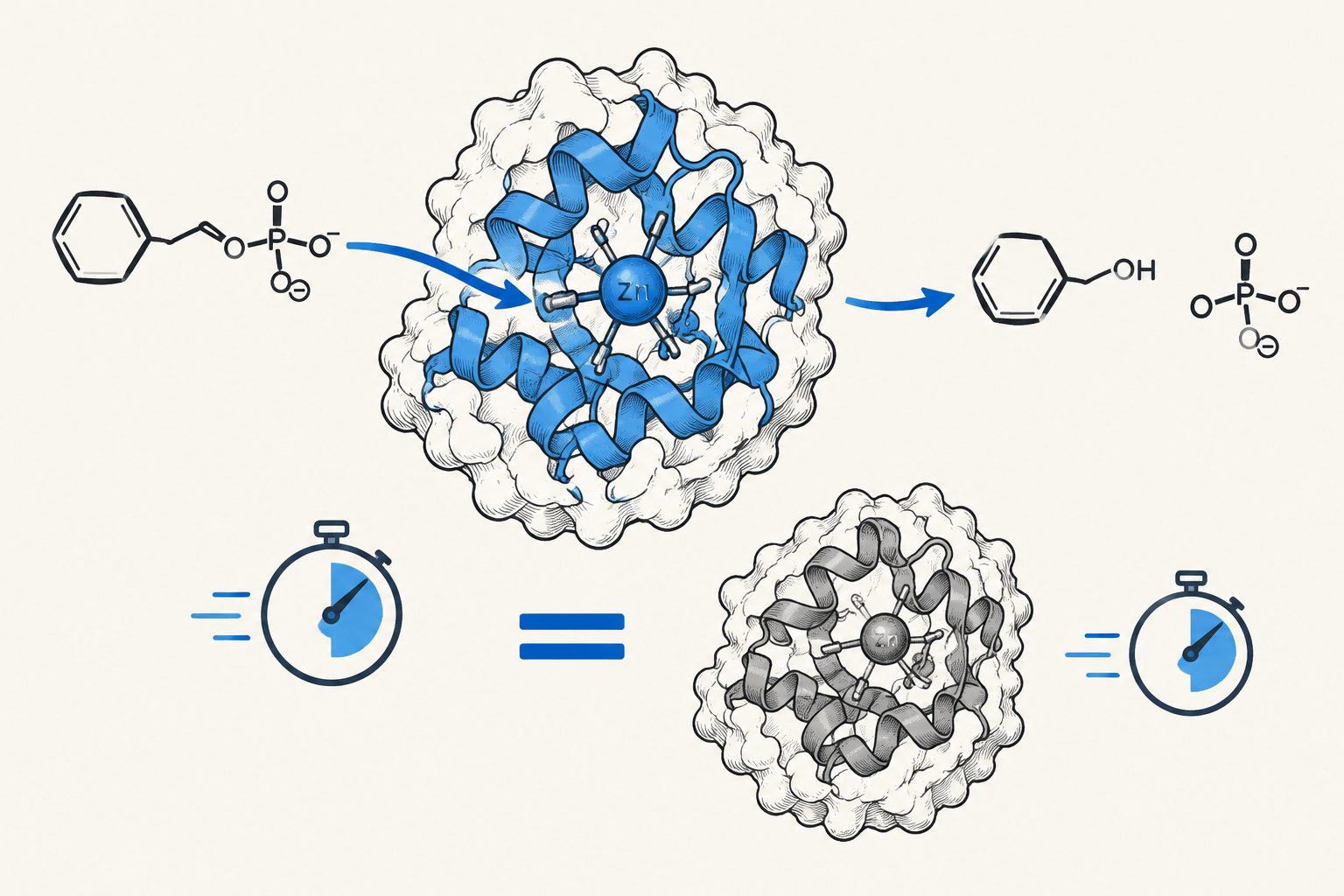
Researchers designed a zinc-containing enzyme from scratch, without a natural template, catalytic motif or evolutionary data. The enzyme showed activity against both phosphomonoesters and phosphodiesters, with rate enhancement comparable to characterized natural phosphatases.
A study of illicit alcohol in two Ugandan cities found that alcohol strength was inconsistent and sometimes under-declared, reaching 44.2%. Some spirits contained methanol above safe limits, while opaque beers showed bacterial contamination and many production and retail sites had poor sanitation.
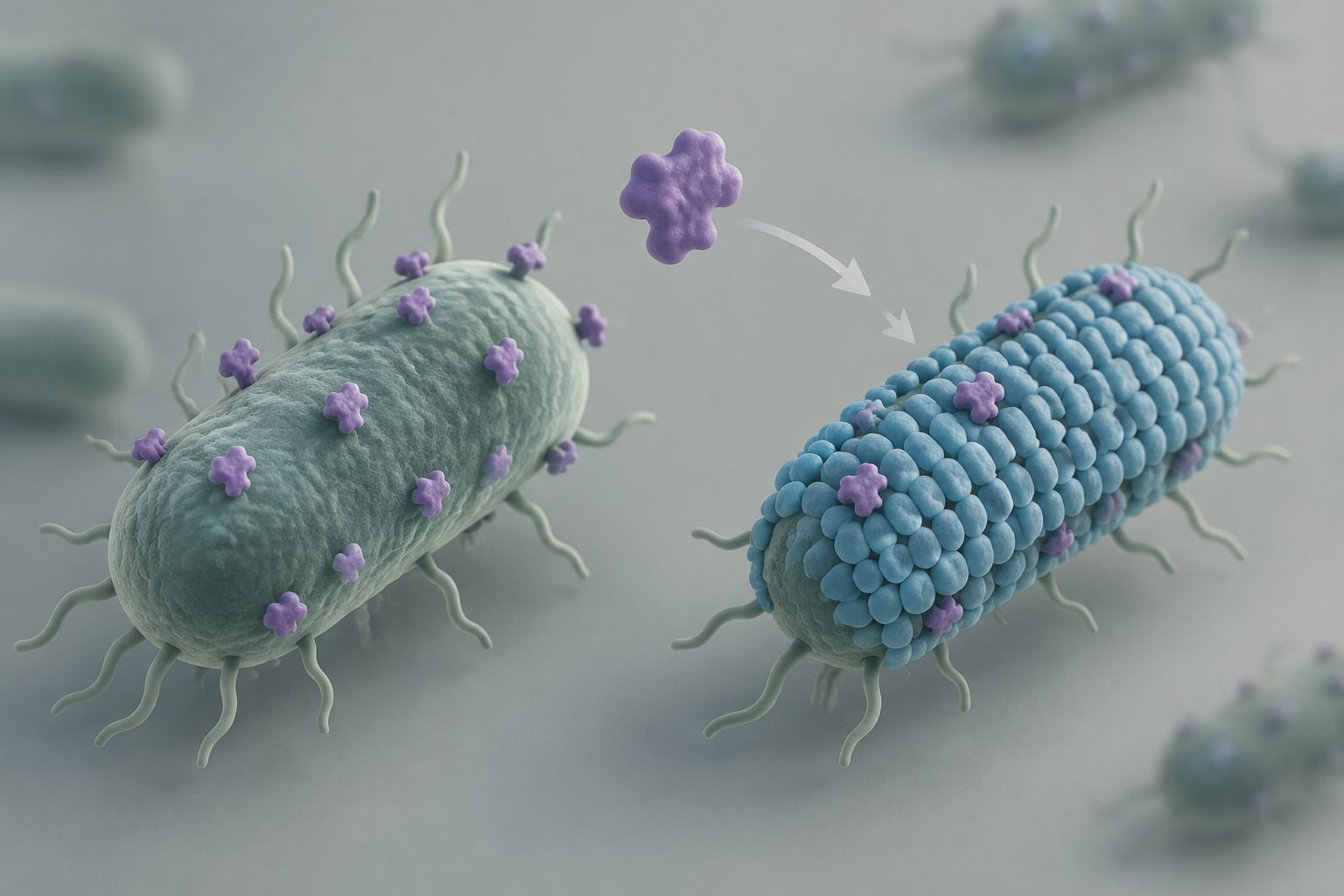
Researchers found that bacterial surface-layer proteins can evolve through modular changes and gene transfer, producing different outer structures. In closely related bacteria with the same type of surface layer, only pathogens showed resistance to the antimicrobial molecules LL-37 and lysozyme.