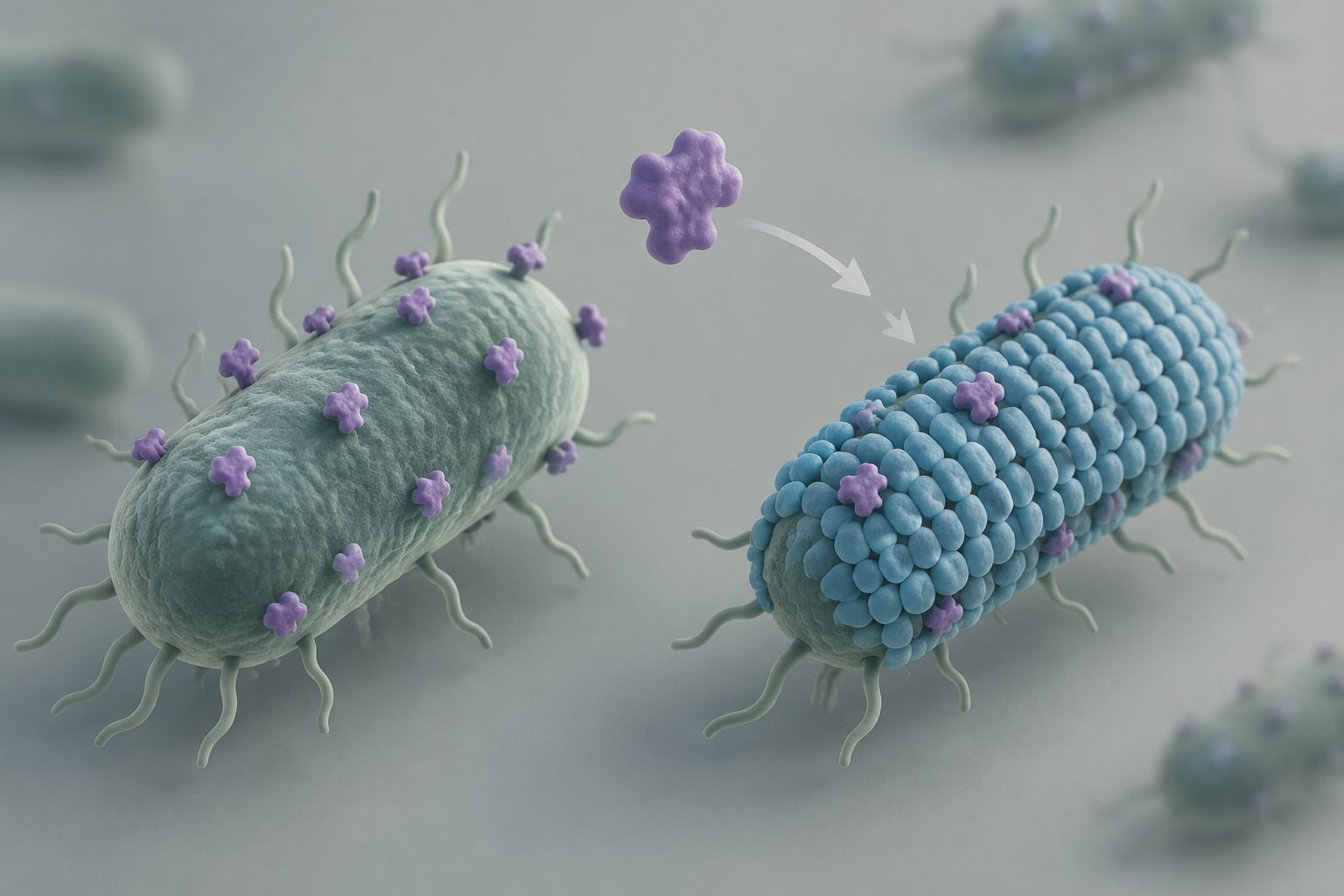
The protein forms a changeable outer layer, and pathogen versions were resistant to two human antimicrobial defenses.
The study examined surface-layer proteins, which form crystalline outer coatings on many bacteria. By combining genome comparisons, structural modelling and laboratory experiments, the researchers traced how these proteins diversified across several bacterial groups, including environmental species and clinical pathogens.
In the pathogen Clostridioides difficile, the researchers determined two surface-layer structures and found that gains and losses within protein domains can produce highly varied versions of related surface layers. Their findings indicate that changes to one structural protein can reconfigure the bacterial surface and contribute to immune evasion.
How bacterial shells change
Surface-layer proteins evolved in different bacterial lineages through extensive sequence change, modular evolution and lateral gene transfer—the movement of genetic material between organisms. The researchers identified distinct surface-layer architectures in bacteria from the Bacillaceae, Peptostreptococcaceae, Caulobacteraceae and Deinococcaceae families.
Among closely related Peptostreptococcales bacteria using the same type of surface layer, only the pathogens showed resistance to LL-37 and lysozyme, antimicrobial effectors used by the immune system. Structural experiments on two C. difficile surface layers showed how gains and losses within protein domains can generate highly diverse outer coatings among clinical isolates.
Why the outer layer matters
A bacterium’s outer surface is a key point of contact with its surroundings, including host defenses. The findings show how evolution of one surface protein can change that interface and, in pathogenic bacteria, is associated with resistance to two antimicrobial immune effectors.
This gives researchers a tractable way to study how bacterial surfaces diversify. It also identifies surface-layer proteins as a possible part of how pathogens alter their exterior during evolution, although the study does not establish that every surface-layer change directly causes immune resistance.
Evidence and caveats
The researchers combined phylogenomic analysis, structural modelling, molecular microbiology and experimental determination of two protein structures. The work spans environmental isolates and clinical pathogens and compares both monoderm bacteria, whose cell membrane is surrounded by one main cell envelope layer, and diderm bacteria, which have two membrane layers.
The abstract does not give the number of isolates tested or describe animal or human studies. The resistance comparison shows a difference between pathogens and close relatives, but the abstract does not establish that the surface layer alone causes that resistance. It also does not report how quickly the changes arise in real-time experiments.
// Source
Nature Communications · 2026 · DOI: 10.1038/s41467-026-77977-0
Authors: Anna Barwinska‐Sendra, Paula S. Salgado, Kacper M. Sendra
Institutions: Newcastle University