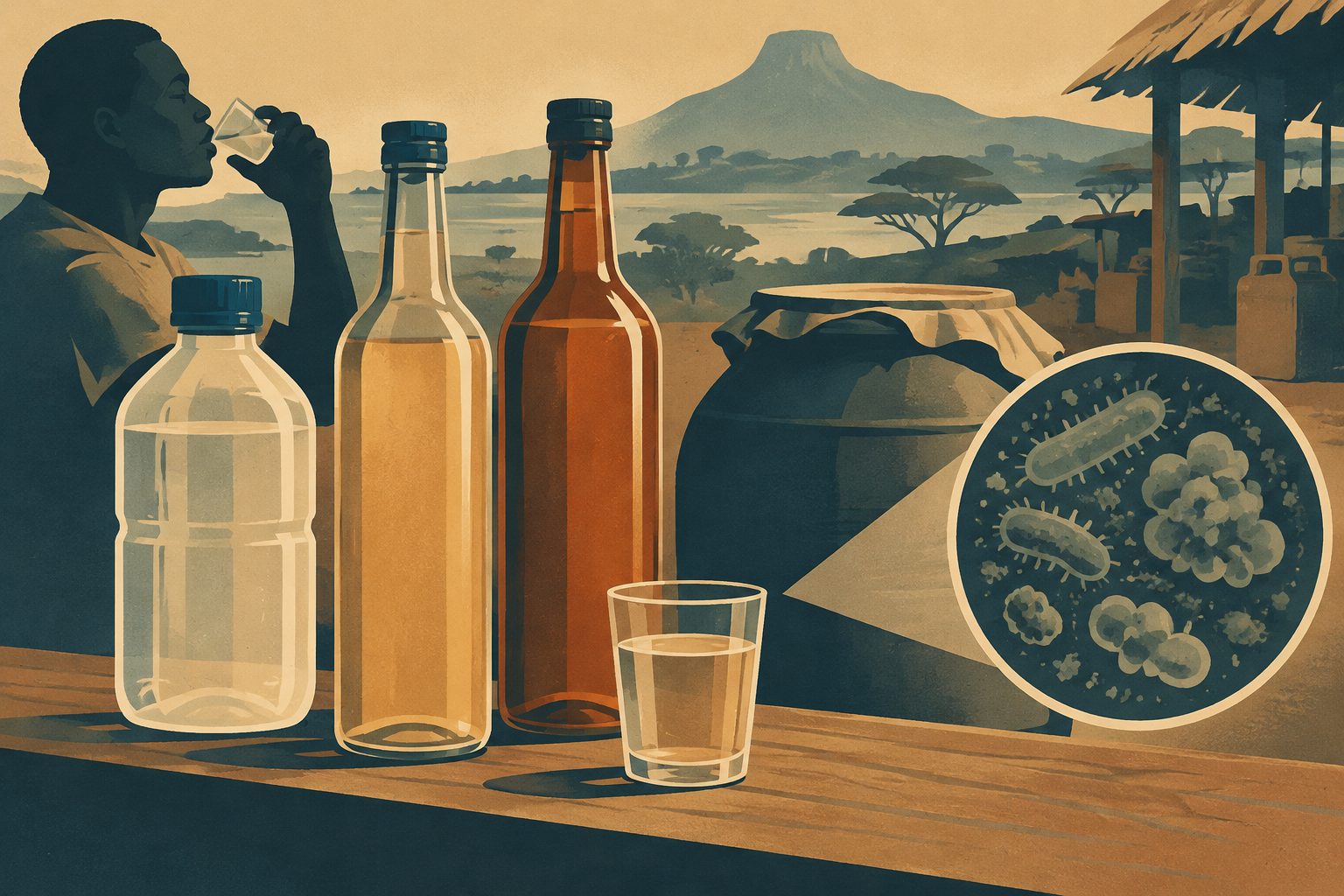
Testing and site inspections found excessive alcohol strength, methanol in some spirits and unsafe hygiene practices in Kampala and Arua.
Researchers surveyed 400 illicit alcohol producers and retailers in Kampala and Arua between October and November 2024. They combined laboratory testing with observations at 200 production sites and 200 retail sites, as well as 20 interviews, to assess alcohol strength, contamination and hygiene practices.
Some spirits contained methanol at concentrations as high as 640.59 mg/L. Observers also recorded unsafe water sources, dirty production areas, pest problems, limited protective equipment and alcohol handled with dirty hands. The researchers say stronger oversight, product testing, labeling and practical support for safer production and retail are needed.
What the study found
Alcohol strength was inconsistent and often lower or higher than declared, with measured strength reaching 44.2%. Some spirits contained methanol above safe limits, with concentrations up to 640.59 mg/L. Opaque beers showed contamination with Staphylococcus aureus, a type of bacterium, which the study linked to poor handling and storage hygiene.
Inspections found unsafe water sources at 36.7% of observed sites in Arua and 63.3% in Kampala. Dirty production areas were recorded at 44.2% of sites in Arua and 55.8% in Kampala. Inspectors also noted pest infestation, a lack of protective equipment and unsafe containers or surroundings. Alcohol was served with dirty hands at 31% of observed retail sites in Arua and 69% in Kampala.
Why the risks matter
The findings show that the risks associated with illicit alcohol involve both the beverage itself and the conditions in which it is produced, stored and sold. Unpredictable alcohol strength can leave consumers without reliable information about what they are drinking, while methanol and bacterial contamination add product-safety concerns.
The researchers recommend routine inspections, alcohol-content and methanol testing, clear labeling, improved hygiene and sanitation, safer water and storage, and accessible information for consumers. They also call for approaches that support informal producers and retailers rather than relying on enforcement alone.
Evidence and caveats
This was a cross-sectional mixed-methods study, combining surveys, structured observations, laboratory analyses and interviews. Its findings describe conditions in Kampala and Arua during October and November 2024; they do not establish that the observed practices caused illness, and the study did not measure resulting illness or health-care use.
The researchers note that some information came from participants' self-reports, which may have involved underreporting or recall errors. The laboratory sample was relatively small compared with the range of illicit beverages in Uganda, the study covered only two locations, and single site visits may not reflect changes in hygiene practices over time.
// Source
Frontiers in Public Health · 2026 · DOI: 10.3389/fpubh.2026.1953805
Authors: Simon Peter Rwakahangi, Muhamudu Tumwine, Kennedy Niwagaba, Cosmas M. Zyambo, Christian Kakuba, Leonsio Matagi, Sandrah Mirembe, Musawa Mukupa, Tom Achoki
Institutions: Makerere University, University of Zambia, Anheuser-Busch InBev (United States)