Astronomers map six dense galaxy nurseries from the young universe
The systems, seen when galaxies were rapidly assembling, include three newly identified structures and three known from earlier studies.
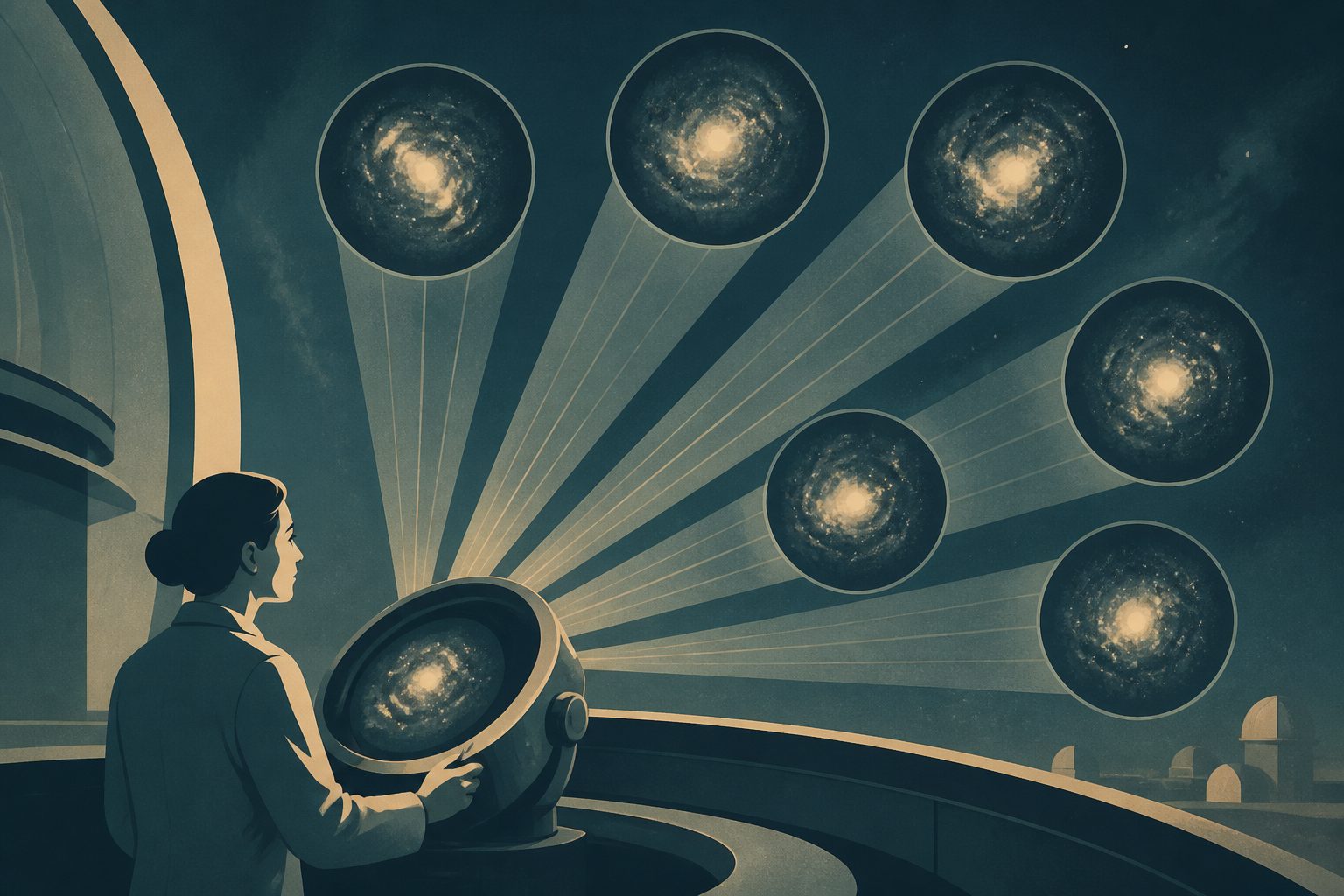
Editorial illustration — not from the study.
Using wide-field images and spectroscopic observations across about 14 square degrees, the researchers identified six massive protoclusters—early structures that can grow into large galaxy clusters. Three had not previously been identified, while the other three overlapped with known structures or systems found using other tracers.
The team reconstructed the systems in three dimensions and estimated the masses of the dark-matter halos they may eventually become. The results also point to differences between galaxies in dense environments and those in the surrounding field, with stronger differences at the earlier time studied.
Six early galaxy nurseries
The six protoclusters lie at redshifts of about 2.4 and 3.1, corresponding to an era when galaxies were assembling rapidly. The researchers reconstructed their three-dimensional structures and estimated their descendant halo masses.
For one system at about 3.12, overlapping filters that select light from hydrogen-emitting galaxies provided accurate information about the galaxies’ distances. Another system, at about 2.45, overlaps a field where hydrogen gas between galaxies has been mapped using absorption in the light of distant objects, allowing a direct comparison of galaxy and gas overdensities.
A protocluster at about 3.12 contains a massive quiescent galaxy with a stellar mass of about 1.2 × 10¹¹ times the mass of the Sun. Across the sample, protocluster galaxies had higher median hydrogen-emission line fluxes and fewer faint emitters than galaxies in the field. The difference was strongest when both two-dimensional and three-dimensional measures of density were used, and it was stronger at about 3.1 than at about 2.4.
Why dense regions matter
Protoclusters are places where galaxy formation and other astrophysical activity are concentrated. Mapping their structures helps researchers test how a crowded environment affects galaxy growth and the shutdown of star formation.
The differing emission properties suggest that environmental processes have the strongest effects in the densest cores. The presence of a massive, quiescent galaxy in one protocluster is also consistent with the possibility that dense surroundings can accelerate galaxy assembly and quenching, although this study does not by itself establish that those surroundings cause the changes.
Evidence and limits
The study combines wide-field Lyman-alpha imaging from the ODIN survey with spectroscopy from the Dark Energy Spectroscopic Instrument and other observations across the extended COSMOS and XMM Large Scale Structure fields. These data support the identification and three-dimensional reconstruction of six systems and comparisons between protocluster and field galaxies.
The conclusions are based on six protoclusters in a survey area of about 14 square degrees, so they do not describe every dense environment in the early universe. The abstract gives no uncertainties for the estimated descendant halo masses or the measured differences in galaxy properties. The environmental results show associations; the study does not demonstrate that dense environments alone cause galaxies to become brighter in hydrogen emission, stop forming stars, or assemble faster.
// Source
The Astrophysical Journal · 2026 · DOI: 10.3847/1538-4357/ae899d
Researchers transported 92 trapped antiprotons 7.5 kilometres by road without losing particles or measurably worsening the trap’s vacuum. The demonstration could allow future matter–antimatter tests in laboratories with less magnetic-field noise than CERN’s Antimatter Factory.
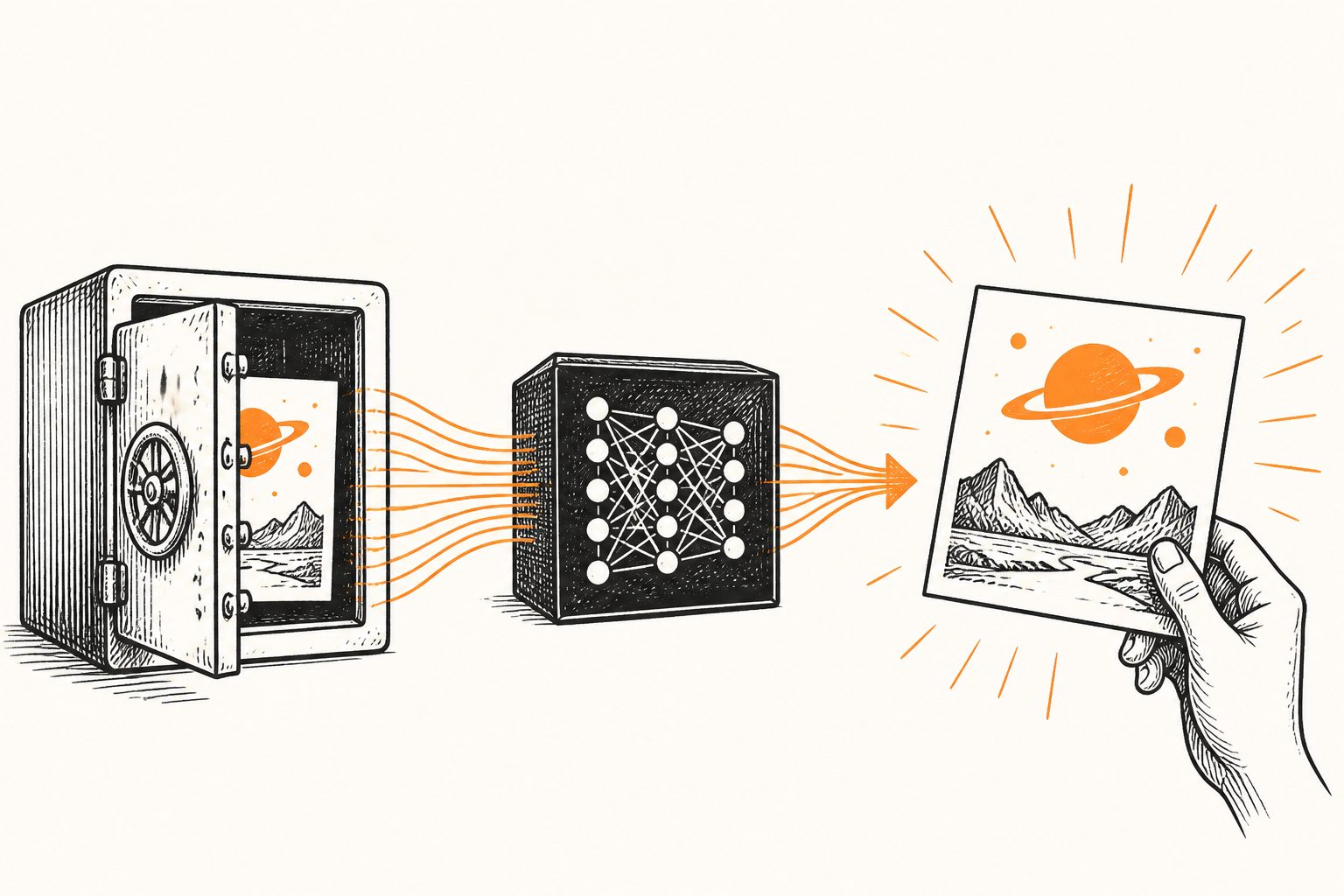
Researchers developed an attack that uses an AI classifier to reconstruct representative images from its private training data. In tests, the approach produced more faithful images than earlier methods while maintaining similar accuracy in identifying their target classes.
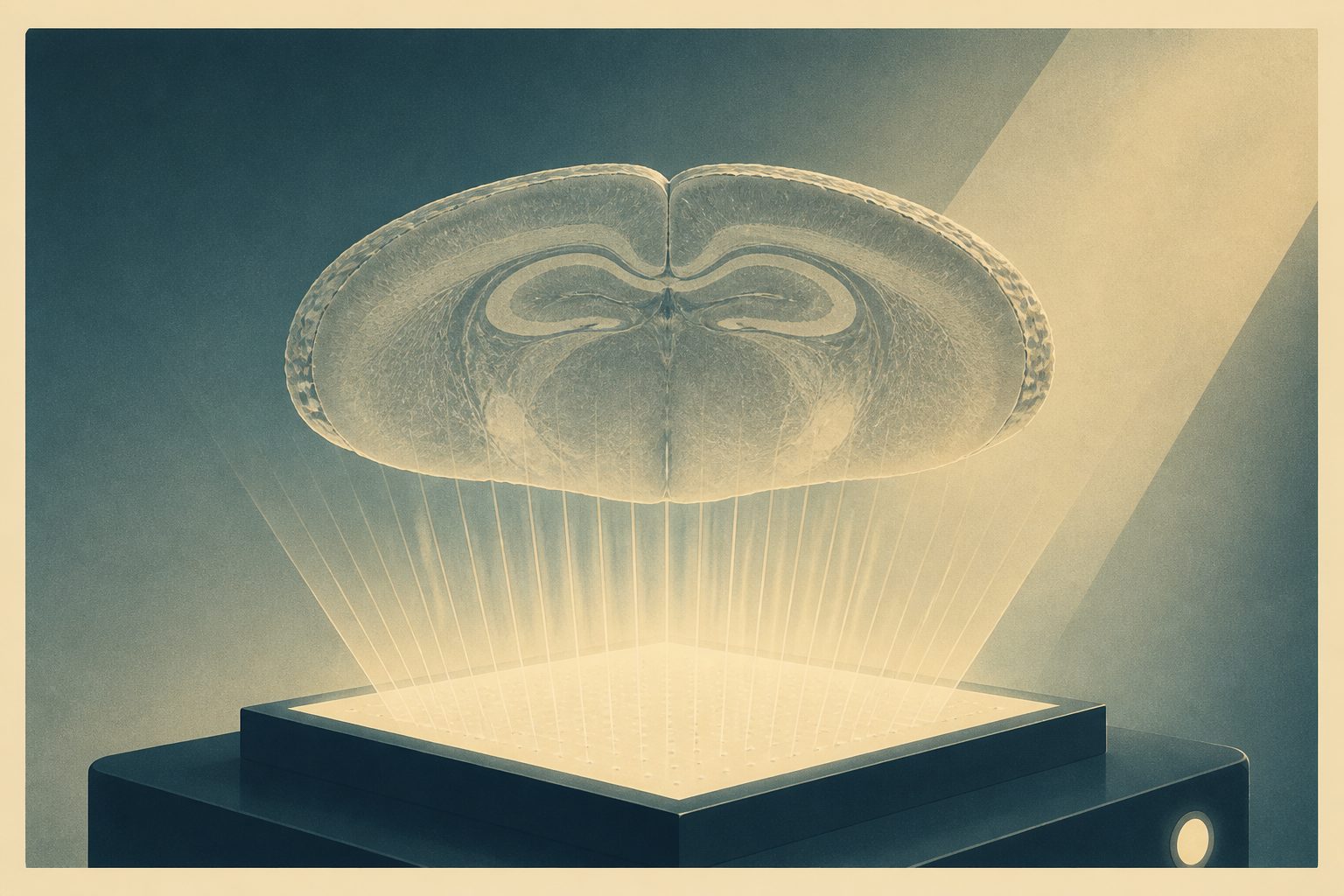
Researchers report a lensless microscope that imaged an entire 500-micrometer-thick, optically cleared mouse-brain slice without labels. The system combines a large field of view with millimeter-scale depth and approximately 2.4-micrometer pixel-level resolution, reaching a three-dimensional imaging volume above a gigavoxel scale in tests.