New analysis links endometriosis to 58 genomic regions
A large, multiancestry study identified genetic regions and biological pathways associated with the condition.
High evidenceHuman studyInterpret with caution
Medical disclaimer: This article summarizes research findings and is for informational purposes only. It is not medical advice.
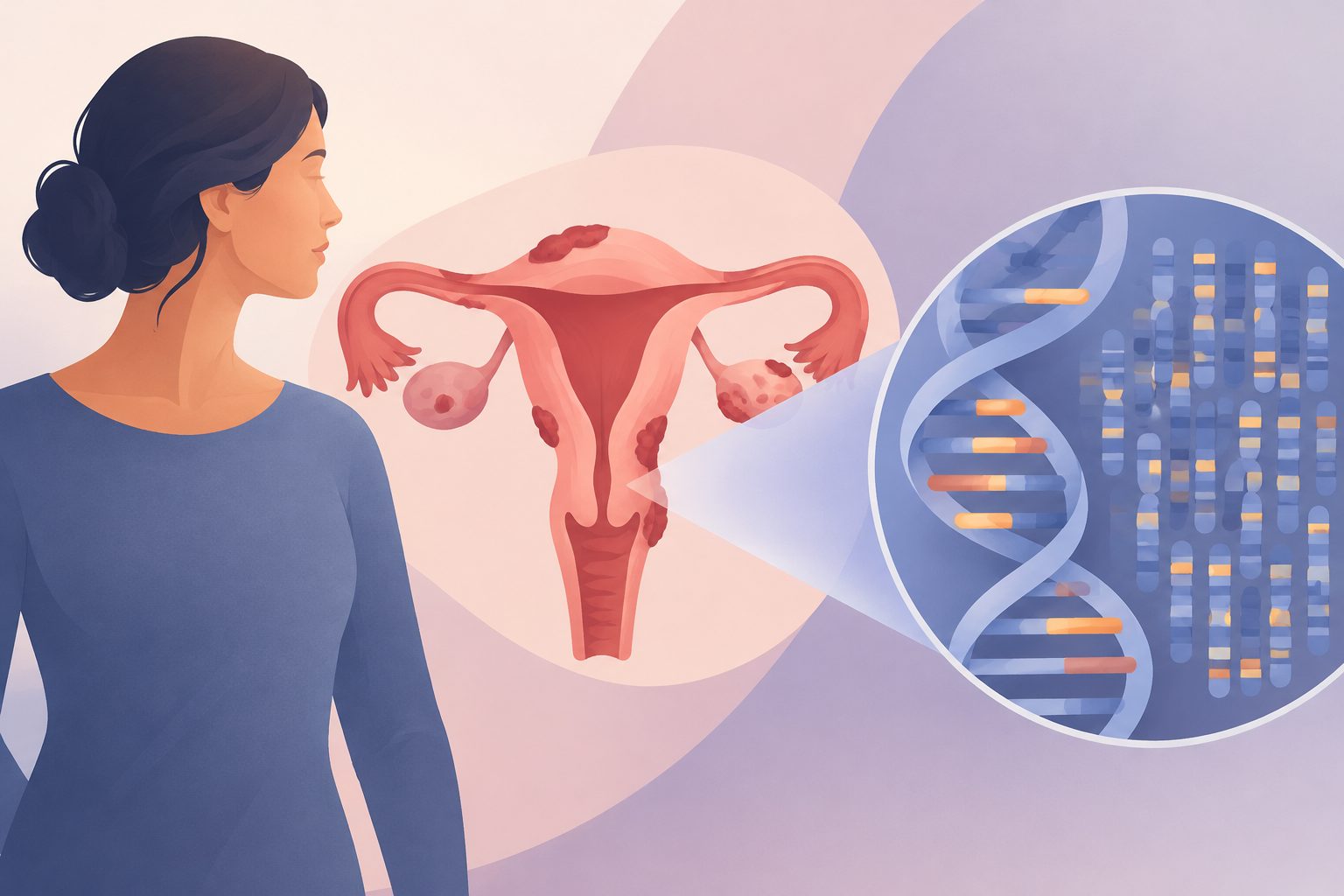
Editorial illustration — not from the study.
The study analyzed endometriosis across ancestry groups, with 32% of participants reported as having non-European ancestry. The researchers also developed case-identification methods based on procedure records and looked for links between endometriosis, other health conditions, gene activity and molecular features.
The analysis found genetic regions associated with endometriosis, including some reported as specific to African and admixed American populations. Additional analyses connected the condition with numerous genes and possible comorbidities, but these results describe associations and research leads rather than confirmed disease mechanisms or treatment effects.
The question reviewed
Researchers examined the genetic basis of endometriosis using a genome-wide meta-analysis within the Global Biobank Meta-analysis Initiative. The work included more than 1 million human participants, 32% of whom were reported to have non-European ancestry. The researchers identified genetic regions associated with endometriosis, evaluated case-identification algorithms based on medical procedures, searched for genetically associated comorbidities and risk factors, and combined genetic, gene-expression and other multiomics analyses to prioritize genes and cellular contexts.
Key conclusions
The researchers reported 58 genomic regions associated with endometriosis, including 27 that had not previously been reported. Some loci were described as unique to African and admixed American populations. The study also reported dozens of associations with known and previously uncharacterized risk factors or comorbidities. Across the genetic and multiomic analyses, the researchers implicated 314 genes and identified examples of gene expression associated with endometriosis status in prioritized cellular contexts. The abstract does not show that any of these genes directly cause endometriosis, nor that targeting them improves symptoms or health outcomes.
Where this may apply
The findings are most directly relevant to human populations represented in the participating biobanks, including the ancestry groups described in the study, although applicability to other populations is uncertain. They provide population-level research information and should not be interpreted as determining an individual person's risk, diagnosis, prognosis or response to treatment. No clinical benefit for patients can be inferred because the study did not evaluate an intervention.
Why it matters
Endometriosis is a painful and heterogeneous human condition, and its biological causes remain incompletely understood. A large, more ancestrally diverse genetic analysis can provide research leads about how different biological pathways may be involved and may help explain why the condition varies among people. The findings may guide future laboratory and clinical research, but the study did not test a therapy or establish that the suggested genes are suitable or effective treatment targets.
Limitations & evidence assessment
This is primarily a genetic and molecular association study, so it cannot by itself establish that the identified variants or genes cause endometriosis. The abstract does not provide detailed participant counts by ancestry, effect sizes, replication results, or enough information to assess how accurately the case-identification algorithms performed in each population. Multiomic links and associations with comorbidities may reflect shared biology, related factors or differences in disease status rather than direct causal pathways. The study also did not test treatments or report patient outcomes such as pain relief, fertility, safety or long-term benefit.
Why this evidence level: Meta-analysis pooling multiple studies sits at the top of common evidence hierarchies.
Evidence levels are editorial estimates derived from study metadata — they are not clinical appraisals.
Researchers systematically reviewed laboratory studies of how temperature affects the time it takes arboviruses to become transmissible inside mosquitoes. Across 53 studies covering 17 viruses, higher temperatures were generally linked with greater transmission efficiency and a shorter time to infectiousness for Zika and West Nile viruses, while results for several other viruses were unclear.
This systematic review and meta-analysis examined whether ultra-low-dose computed tomography (CT) can detect pulmonary, or lung, nodules while using less radiation than standard-dose CT. Across 42 studies involving 15,792 patients, pooled sensitivity for nodule detection was 91.9%, but results varied greatly between studies. The review also found that ultra-low-dose CT used an average effective dose of 0.22 millisieverts (mSv), while detection was less reliable for some small or hazy nodules and in patients with a high body mass index.
In an online randomized experiment involving 3,519 Chilean parents, researchers tested whether adding an “ULTRAPROCESSED” warning to Chile’s existing nutrient labels changed views of potato chips. The added label improved identification of ultraprocessed products and lowered reported purchase intentions and perceived healthfulness, but the effects were smaller when products already had more nutrient warnings. The study measured stated responses, not actual purchases or health outcomes.