Drug-resistant Salmonella and Campylobacter linked across Japanese food and people
Genome comparisons found closely related resistant bacteria in food and human samples, but not where they came from or how they spread.
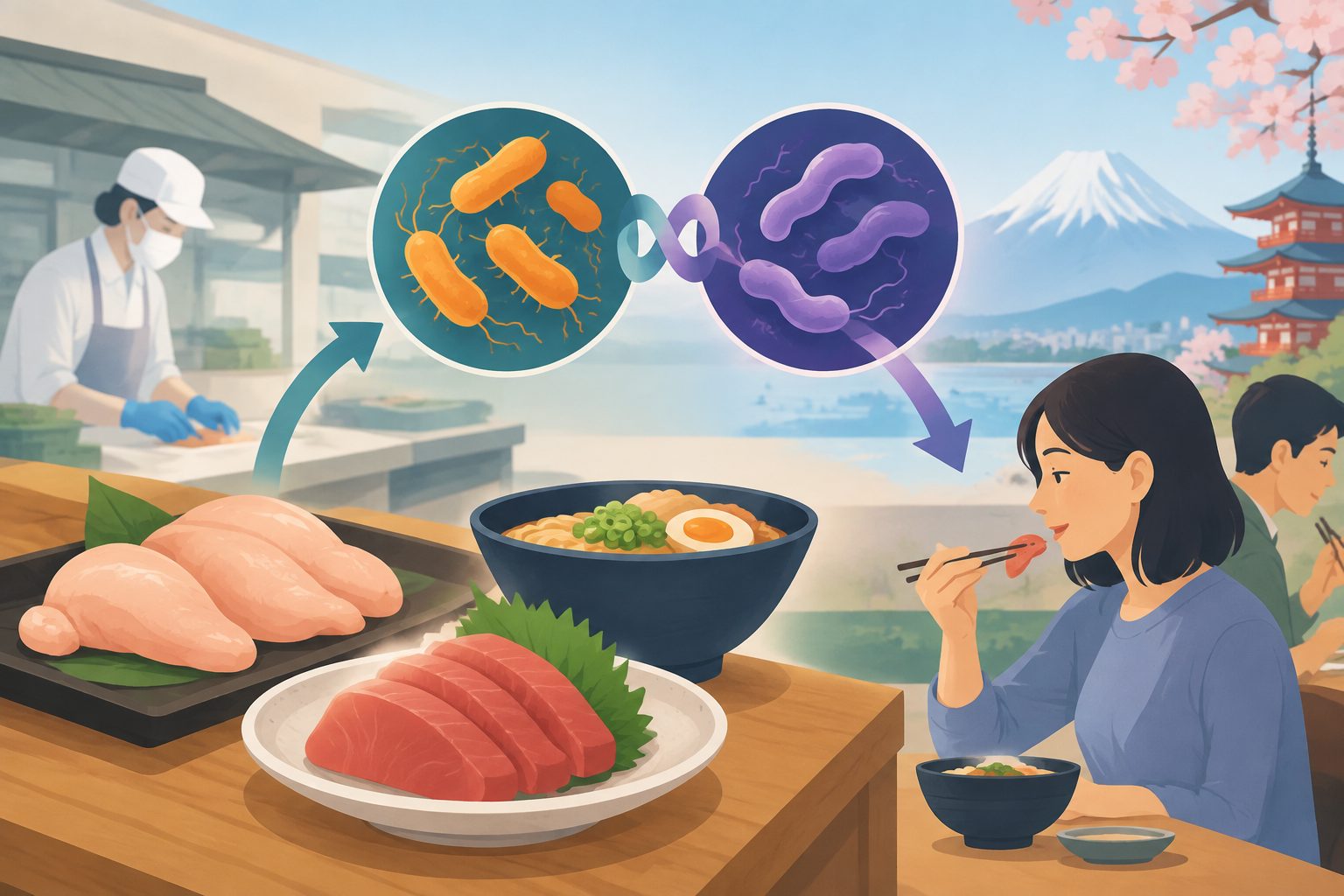
Editorial illustration — not from the study.
Researchers compared whole-genome sequences from 1,613 non-typhoidal Salmonella isolates, 682 Campylobacter isolates and 72 Enterococcus isolates collected across human, animal and food sectors in Japan. Food samples consisted mainly of chicken meat, while animal samples came mainly from cecal and rectal material and human samples from clinical cases.
The analysis identified closely related resistant Salmonella and Campylobacter isolates from food and humans. The researchers say nationwide surveillance that combines data across sectors can reveal links that conventional surveillance might miss, while noting that genetic similarity alone cannot establish how the bacteria moved between sectors.
Resistant bacteria matched closely
Among Salmonella, human and food isolates of S. Blockley carrying the resistance gene blaCTX-M-15 differed by 6–10 single-nucleotide changes, while S. Agona isolates carrying fosA7.2 differed by 13–15. The study also found human and food isolates of Campylobacter jejuni ST-22 that carried a tetracycline-resistance gene and a mutation linked to fluoroquinolone resistance; they differed by 4 single-nucleotide changes. These close matches suggest that resistant Salmonella and Campylobacter strains are genetically linked across the food and human sectors. The study did not report equivalent findings for Enterococcus.
Why cross-sector tracking matters
Combining genome data from food, animals and human cases can help identify antimicrobial-resistant foodborne bacteria that are closely related across sectors. That information may help researchers investigate how resistant strains are maintained and spread, including the possible sources of resistance genes found in food-associated Salmonella in Japan.
Evidence and open questions
The evidence comes from comparisons of whole-genome sequences collected across Japan, rather than from a study tracing a single outbreak or transmission event. The human and food isolates were not from the same foodborne-disease cases, and the study lacked detailed information about food exposure, supply chains and other epidemiological links. Genetic similarity cannot establish whether bacteria moved from food to people, from people to food or animals, or came from a shared source. The researchers therefore describe potential genetic links, not direct transmission pathways. The food samples were mainly retail chicken meat, so the findings do not represent every food type or setting.
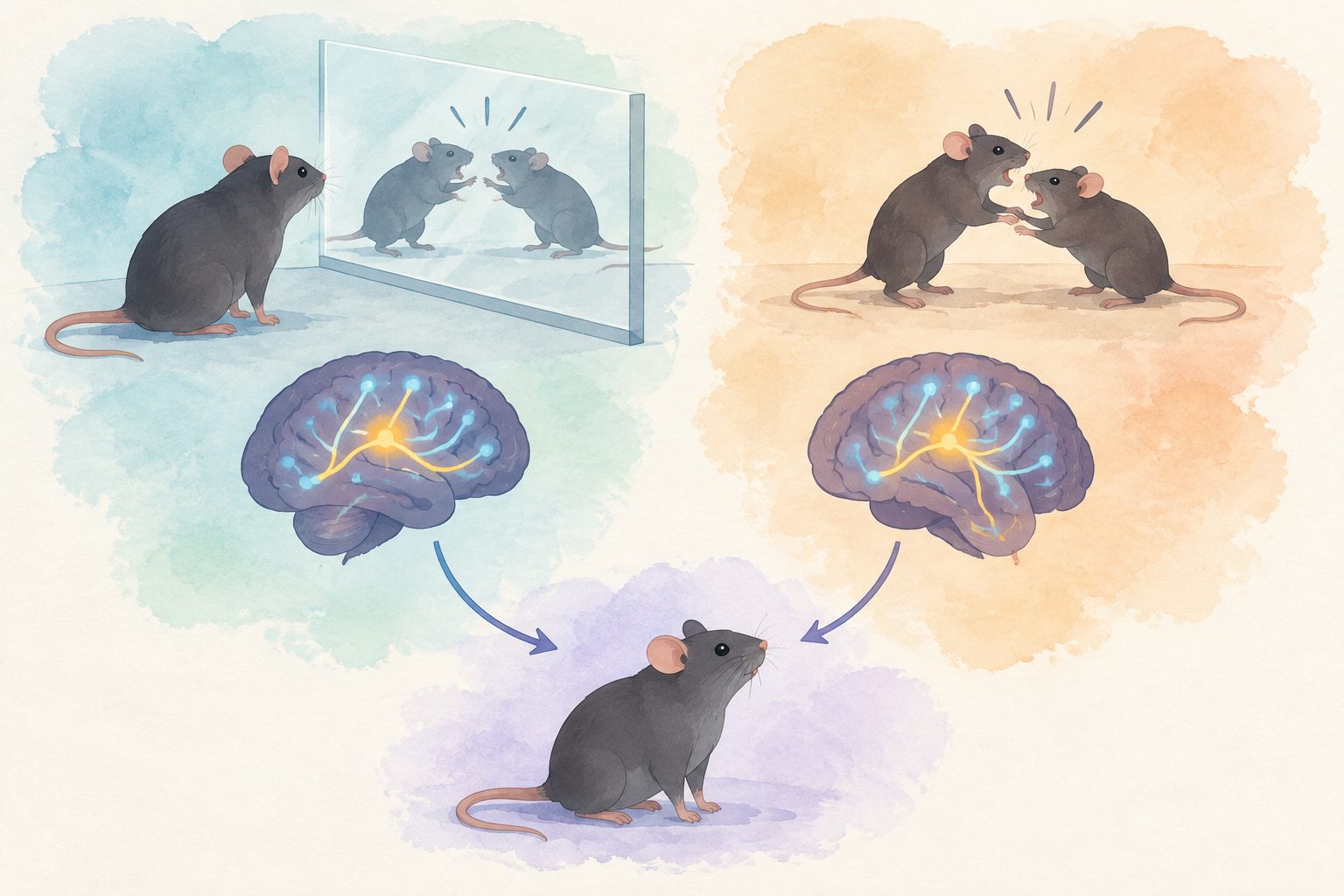
Mice that observed aggressive encounters developed lasting behavioral and brain changes resembling those seen in mice that directly experienced aggression. These changes persisted when the animals faced a new, more challenging aggression context.
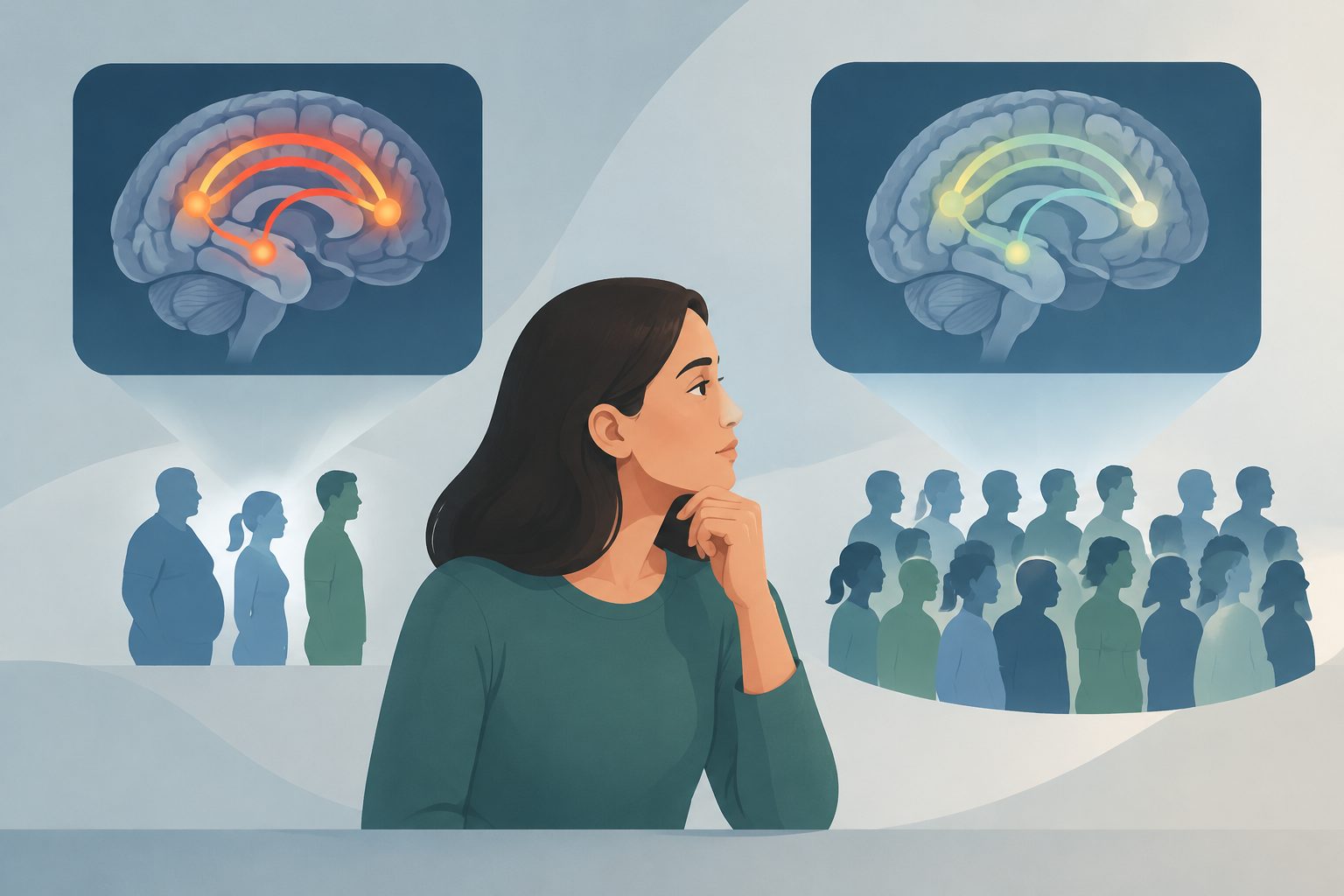
Small samples can greatly inflate estimates of links between body mass index and brain structure, a study in Translational Psychiatry found. Cross-validation showed that some apparently large effects did not hold up in new data.
Researchers found that disrupting 18 different autism-linked genes in human neural progenitor cells produced overlapping changes in gene activity. The results point to the X-linked gene ZFX as a possible contributor to the lower autism vulnerability seen in females, although the proposed protective effect still needs to be tested directly.