Agricultural and Biological Sciences · Soil Science

Soil Carbon and Nitrogen Dynamics

Log in to follow
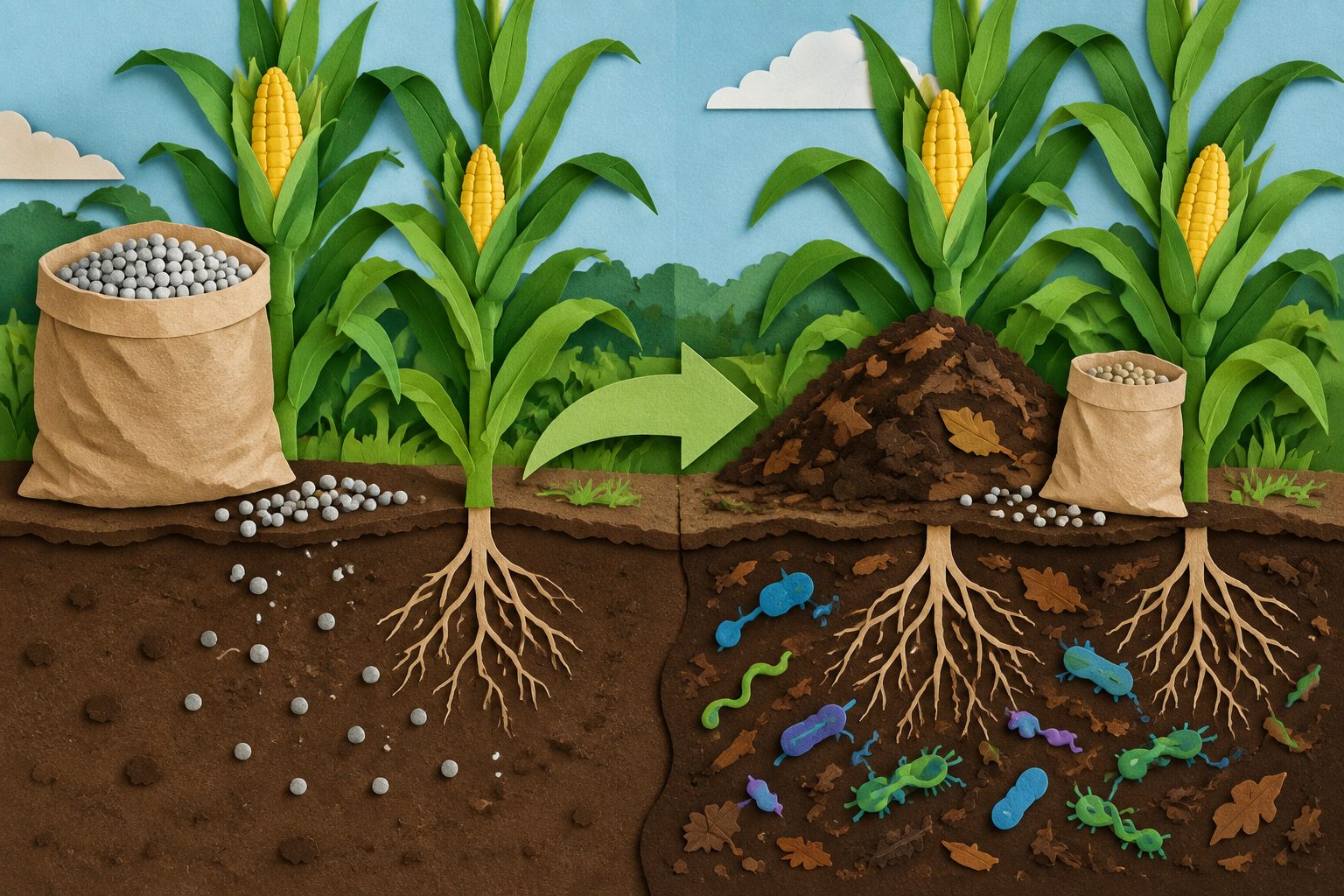
Abstract editorial illustration accompanying the article: Mixed maize varieties grew more and captured more phosphorus with soil fungi

Mixed maize varieties grew more and captured more phosphorus with soil fungi

Maize varieties responded differently to beneficial soil fungi, but mixtures of varieties produced more biomass and captured more phosphorus than single-variety plantings. The results suggest that combining locally adapted maize mixtures with these fungi could support more sustainable production in sub-Saharan agroecological systems.

·11 views
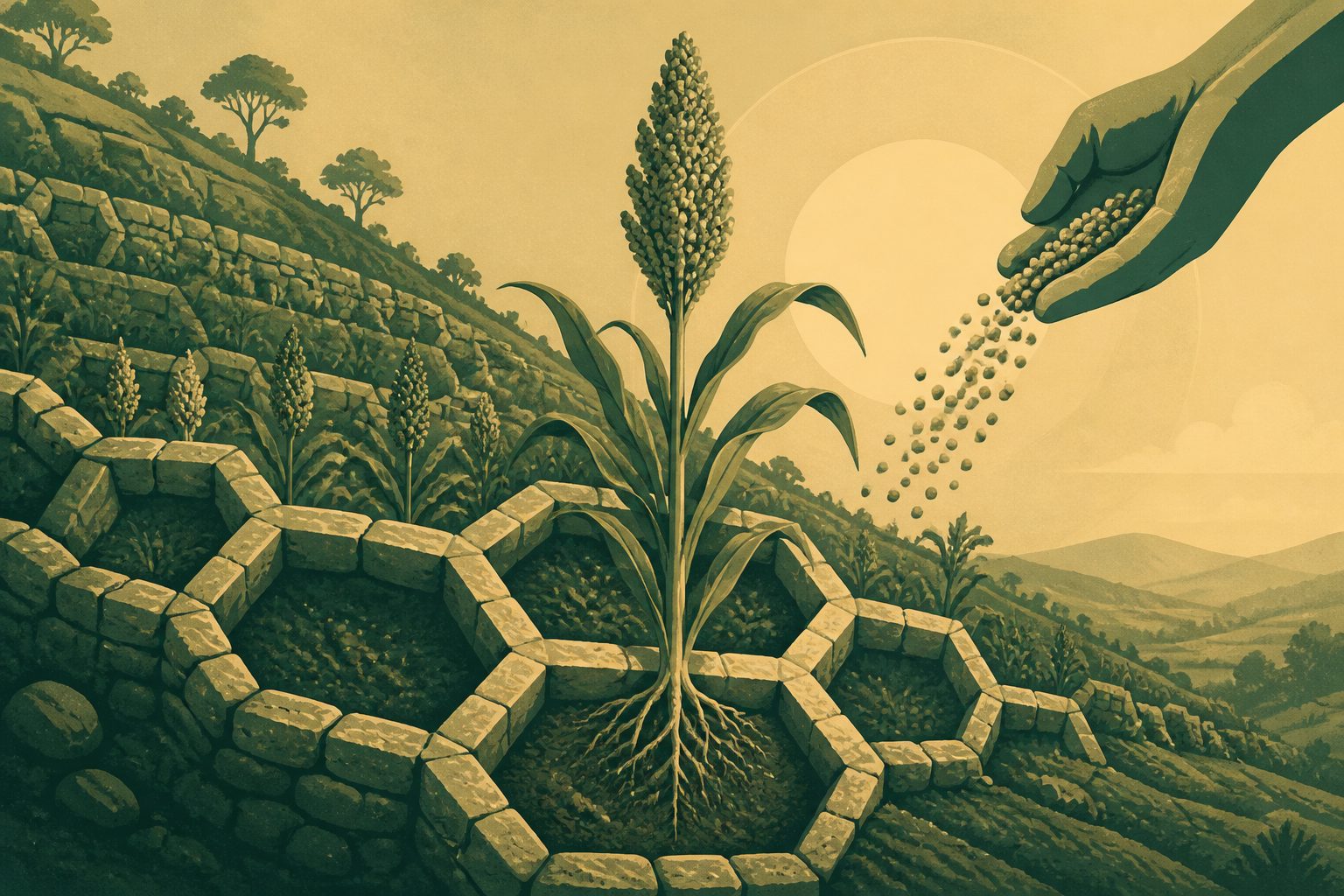
Abstract editorial illustration accompanying the article: Stone honeycombs and small fertilizer doses boosted sorghum on Benin hillsides

Stone honeycombs and small fertilizer doses boosted sorghum on Benin hillsides

On a steep hillside in northwestern Benin, circular and rectangular honeycomb-shaped stone arrangements reduced runoff and soil loss compared with ordinary contour stone rows. When paired with reduced fertilizer doses, the circular layout was associated with 87.42% more sorghum grain yield than the standard stone-row treatment.

·32 views
Abstract editorial illustration accompanying the article: Winter canola between crops linked to higher yields, healthier soil and more carbon

Winter canola between crops linked to higher yields, healthier soil and more carbon

A meta-analysis of 79 articles found that winter oilseed rape, also called winter canola, grown between main crops was associated with higher summer-crop yields, improved soil indicators and greater soil-carbon storage. Methane emissions fell, but nitrous oxide emissions rose; overall emissions were similar to fallow systems and lower than wheat-based rotations.

·13 views
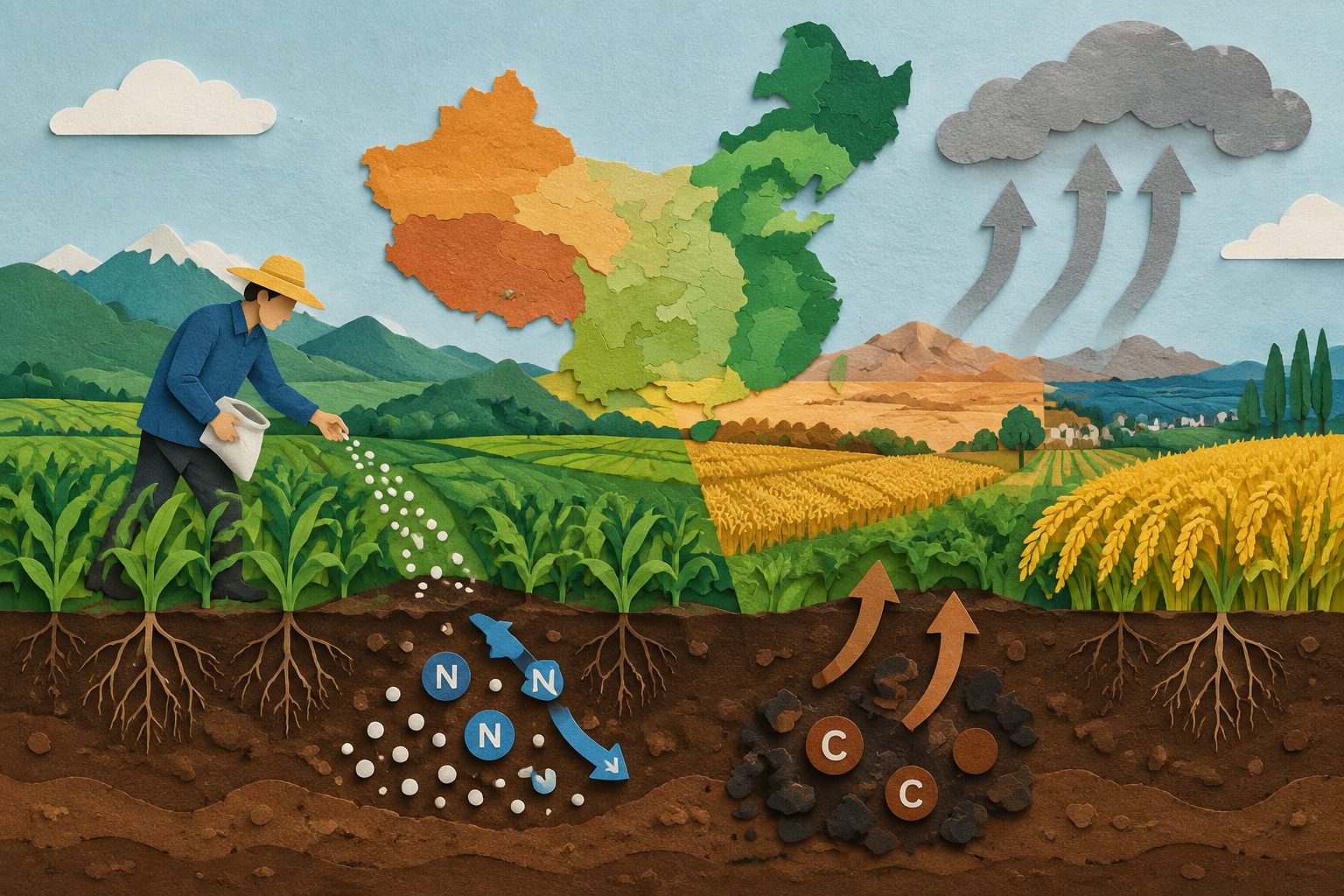
Abstract editorial illustration accompanying the article: Rain “pulses” after drought drive nitrogen gas spikes more than soil type

Rain “pulses” after drought drive nitrogen gas spikes more than soil type

Mediterranean dryland crops face cycles of drought and then sudden rain. In a year-long field experiment, researchers found that the biggest bursts of nitrogen pollution in the form of nitrous oxide and nitric oxide followed rewetting, especially when plants had been stressed by drought. Soil texture changed how much inorganic nitrogen built up, but it did not lead to proportionally larger gas spikes.

·43 views