
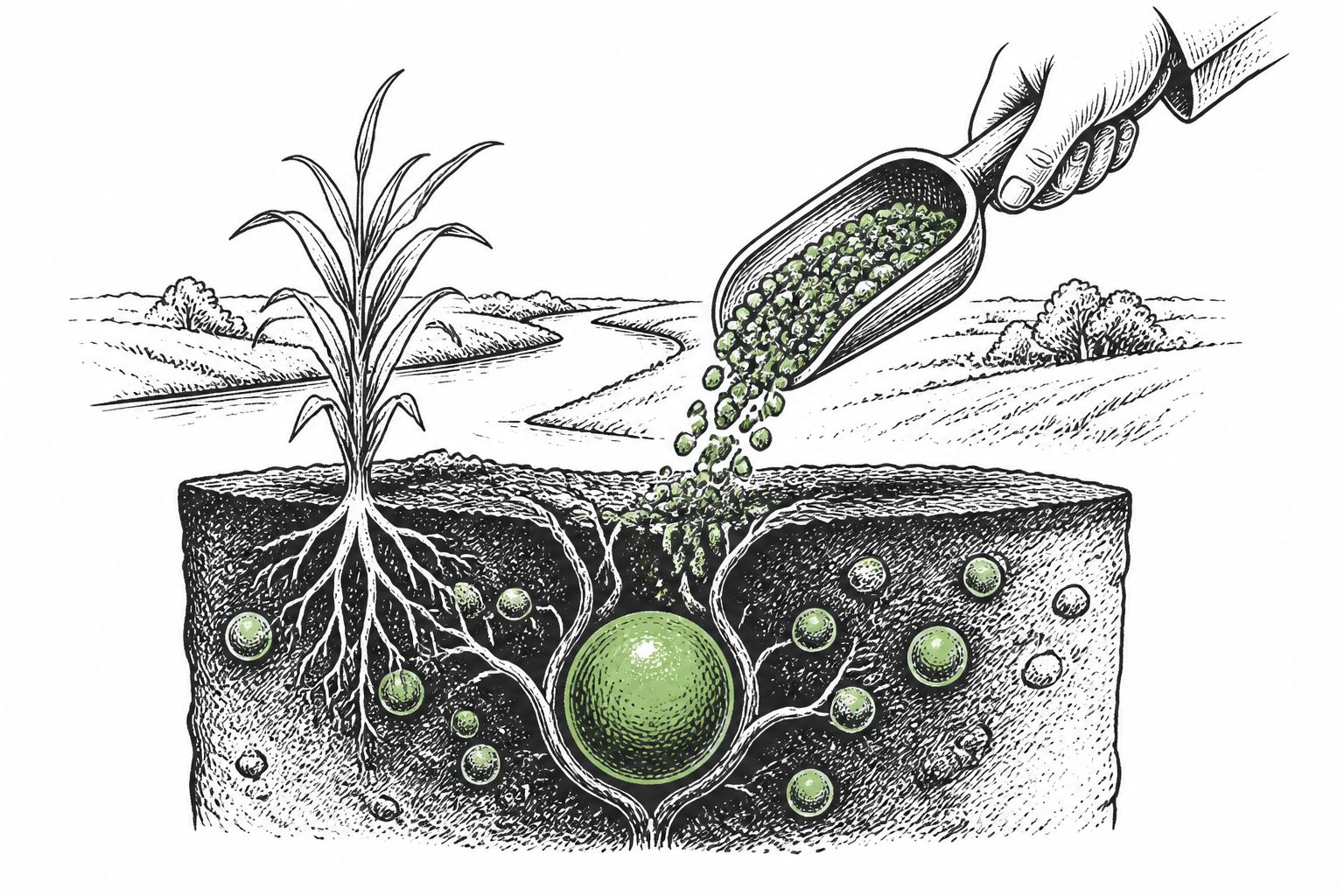
Farmers add carbonate minerals, or agricultural lime, to counter soil acidification and support crop growth. The new analysis examined records of lime use and human-caused acidity inputs across the Mississippi River Basin since 1900, along with the basin’s river alkalinity fluxes—the movement of compounds that reflect how lime reacts and is transported through soils and waterways.
The researchers conclude that liming produced an initial pulse of carbon dioxide as it neutralized acidity in soils, but that the longer-term removal of carbon dioxide exceeded those emissions. Their analysis found that roughly 90% of the ideal removal potential of lime added since 1900—about 0.44 gigatonnes of carbon dioxide—was realized at the catchment scale, with a delay of decades linked to soil chemistry and the movement of dissolved substances.


