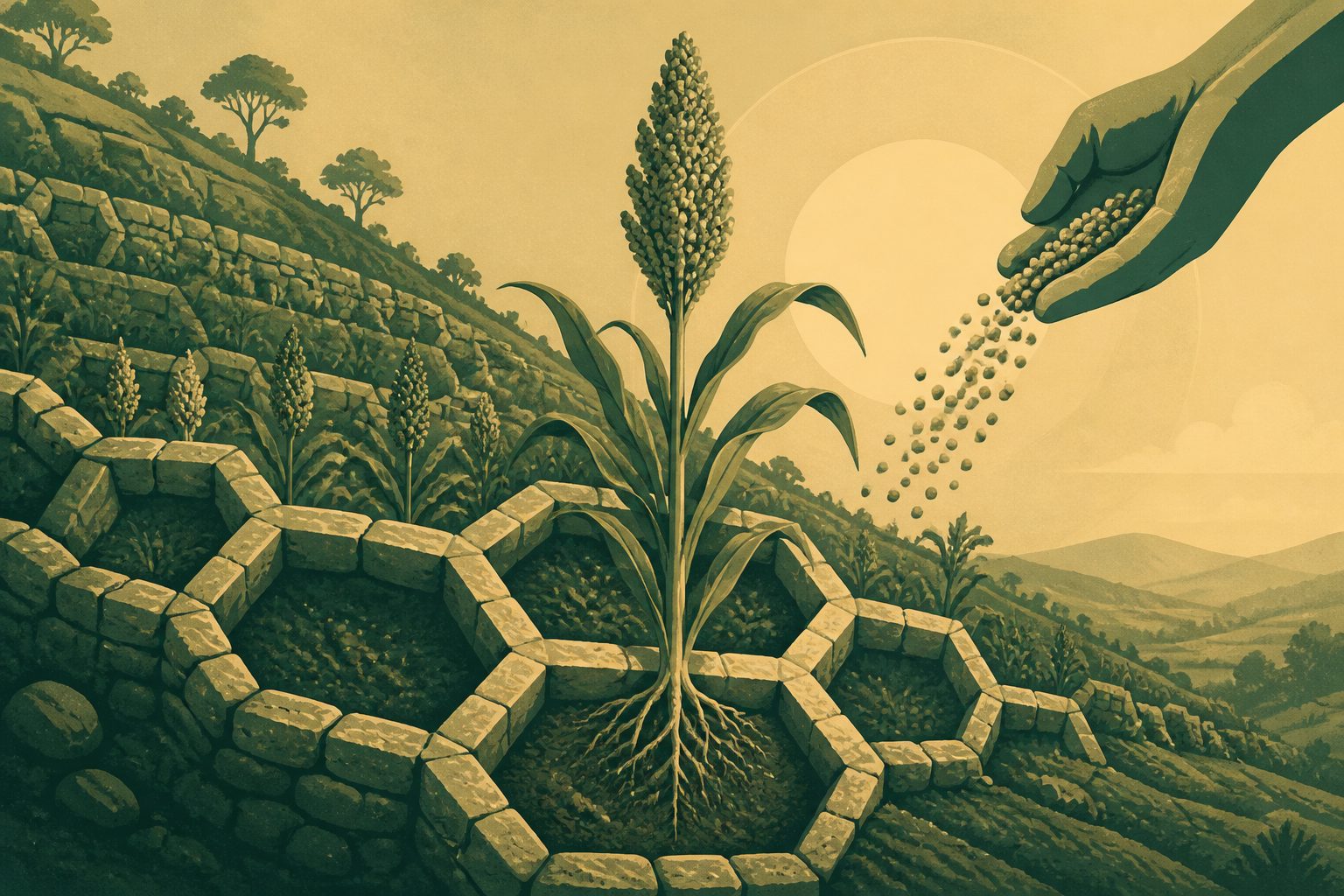
A two-season field study found that circular stone layouts reduced runoff and soil loss while increasing sorghum yields on a steep hillside.
Researchers tested three soil and water conservation practices in a rainfed sorghum experiment on a hillside with a 22% slope in Boukombé. The treatments were circular honeycomb stone arrangements, rectangular honeycomb arrangements and ordinary contour stone rows. They also compared the recommended fertilizer dose with two reduced doses and no fertilizer over two growing seasons, in 2012 and 2013.
The honeycomb arrangements performed best. Circular layouts reduced runoff and soil loss, retained more moisture and produced more sorghum biomass and grain than the standard stone rows. The results also showed a beneficial interaction between the stone arrangements and fertilizer microdosing, meaning that reduced fertilizer doses worked particularly well with the honeycomb layouts.
What the stone layouts did
Compared with ordinary contour stone rows, circular honeycomb stone arrangements reduced runoff by 25.05% and soil loss by 52.01%. Rectangular honeycomb arrangements reduced runoff by 17.65% and soil loss by 38.55%.
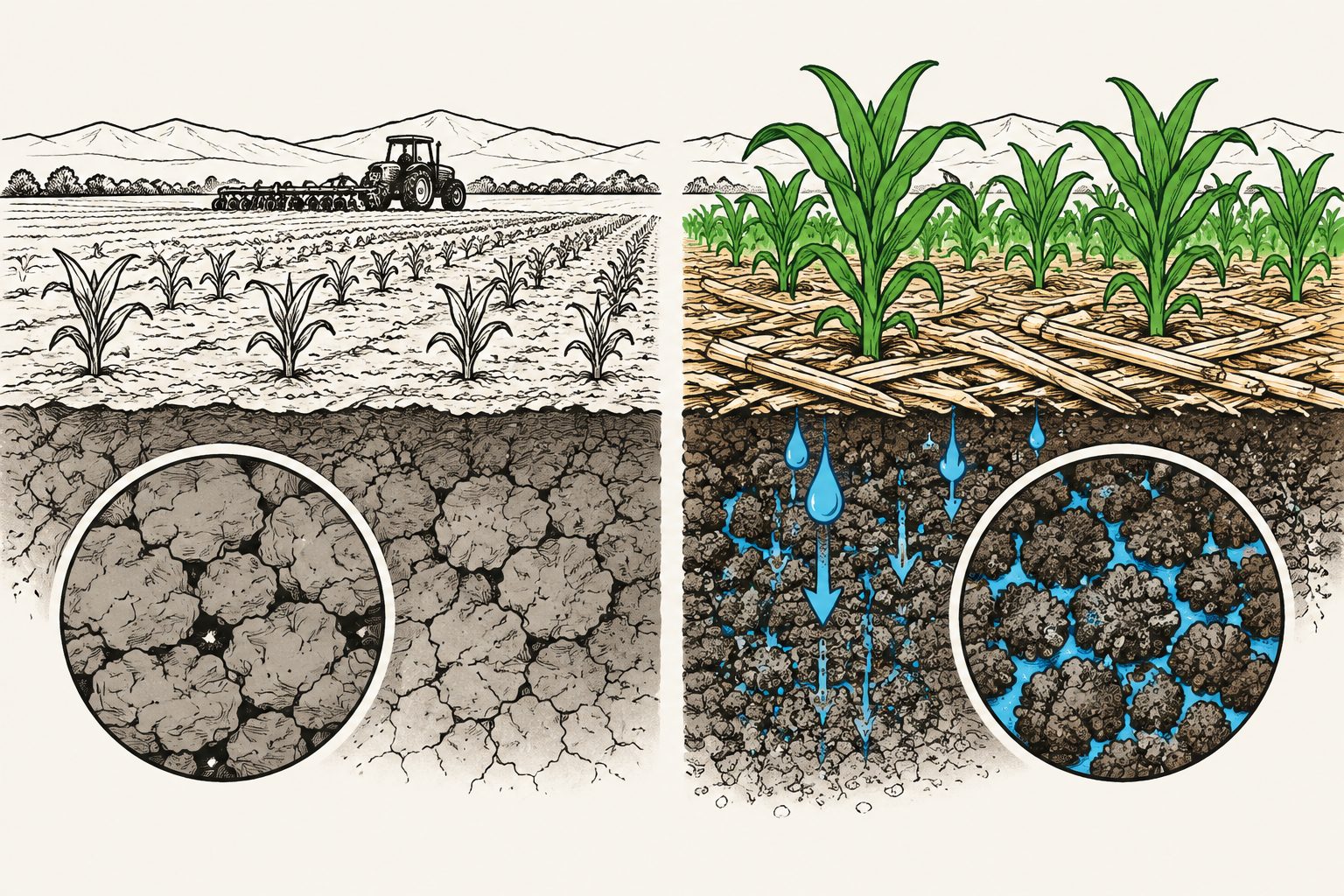
The circular arrangement produced 8.52% to 10.52% more soil moisture than the other stone structures. It also produced 52.38% more sorghum biomass and 87.42% more grain yield than ordinary stone rows. The study tested the recommended fertilizer dose—230 kilograms of NPK fertilizer plus 50 kilograms of urea per hectare—alongside two reduced doses equal to 72.2% and 36.1% of that recommendation, as well as no fertilizer. The researchers reported a significant beneficial interaction between fertilizer microdosing and the honeycomb arrangements.
Why the findings matter
Steep farmland can lose water, soil and nutrients during rain. The findings suggest that arranging stones in circular or rectangular honeycomb patterns may help retain soil moisture and reduce erosion while supporting sorghum production, especially when used with smaller fertilizer doses.
The circular arrangement may be a useful soil and water conservation option for similar steep, semi-arid hillsides. However, the study itself identifies labor requirements, barriers to adoption, costs and long-term performance as issues that still need evaluation.
Evidence and open questions
This was a rainfed field experiment using a split-plot design over two growing seasons on one hillside with a 22% slope in Boukombé. It directly measured runoff, soil loss, soil moisture, sorghum biomass and grain yield under different stone arrangements and fertilizer levels.
The evidence is therefore field-based but limited to the tested site, seasons, crop and treatments. The abstract does not establish how well the results would transfer to other locations or persist over longer periods. It also does not provide the labor requirements or an economic assessment, both of which the researchers say require further study.