Three long-term experiments in Bihar found that adding organic matter supported soil health and yields, while zero-tillage benefits depended on the site and residue use.
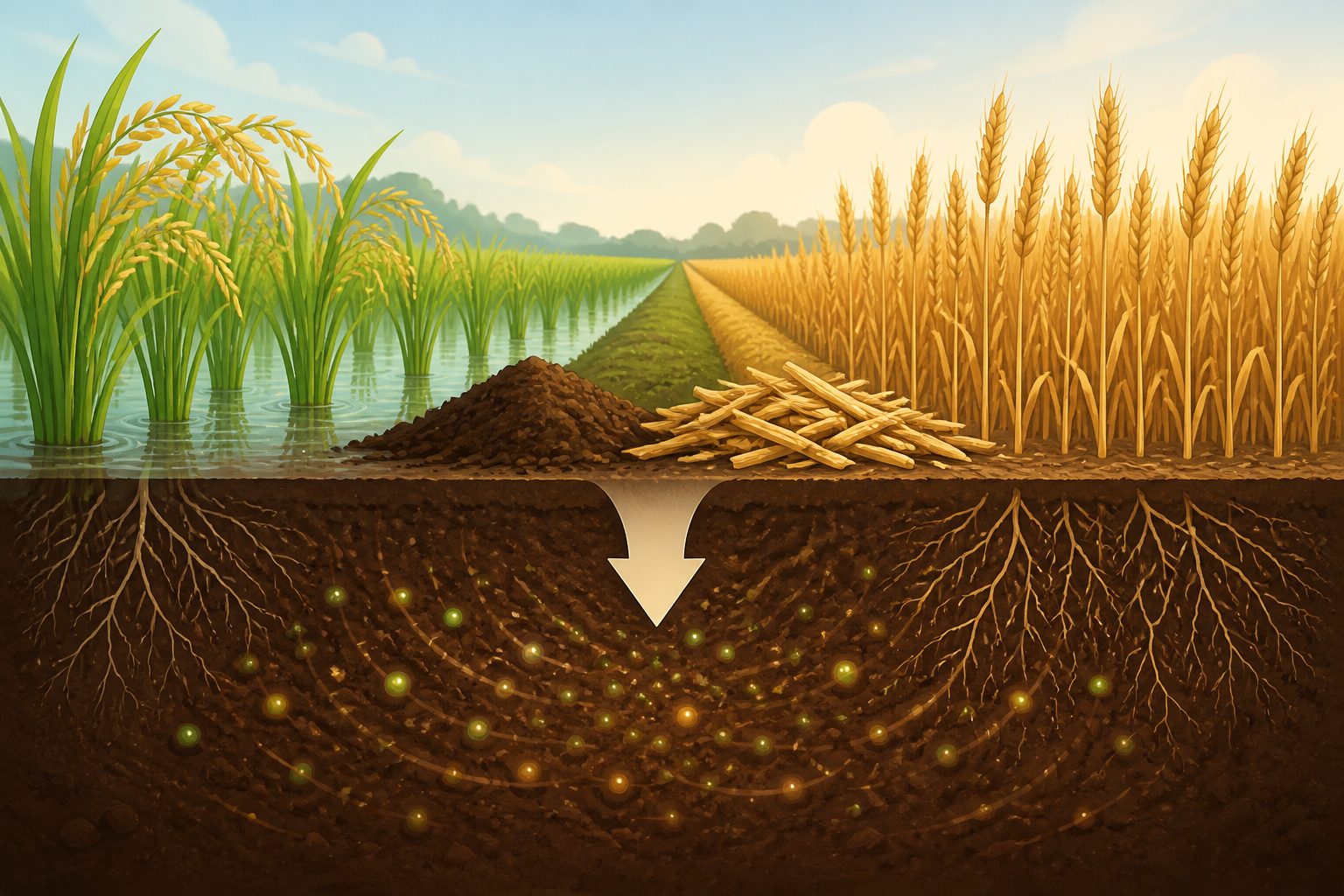
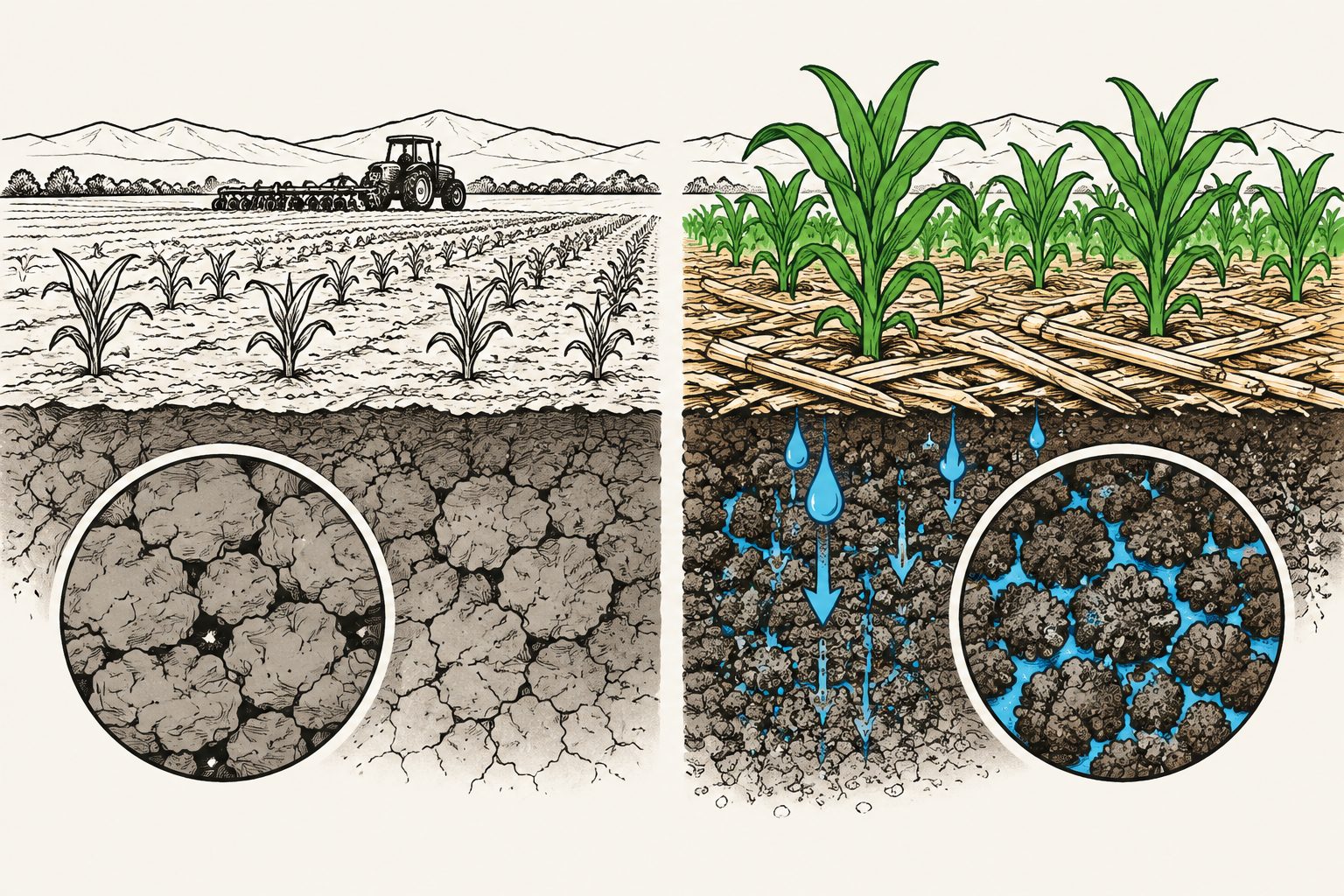
A study of three long-term field experiments in Bihar, India, found that adding crop residues and manure improved soil biology, soil acidity balance and yields in rice–wheat rotations. Reduced tillage mainly improved physical soil properties, but its effects on yields were not consistent across sites.
Rice and wheat yields were linked to an overall soil-health measure and especially to biological indicators. At one site, zero-tillage without added residues was associated with lower yields, while residue and manure additions increased yields at all three sites.
Residues, manure and yields
The researchers studied three rice–wheat experiments in Bihar, India, that had run for 28, 34 and 16 years. They measured 15 biological, physical and chemical soil-health indicators along with crop yields.
Crop residue and manure additions improved biological soil properties and soil pH, a measure of acidity and alkalinity. Reduced tillage largely improved physical soil properties. A composite soil-health index and biological indicators were well correlated with rice yields and especially with wheat yields.
Adding residues and manure increased yields at all three sites. Zero-tillage without residue addition was linked to a yield penalty at one site, showing that its yield effects were not uniform across the experiments.
Evidence and caveats
The study analyzed soils and crop yields from three long-term field experiments in Bihar, India, lasting 28, 34 and 16 years. Researchers assessed 15 biological, physical and chemical soil-health indicators across rice–wheat management treatments. The results may not apply to all farms in the Indo-Gangetic Plain, and the abstract does not report effect sizes or the full details of each treatment comparison. Zero-tillage results also differed by site and by whether residues were added.