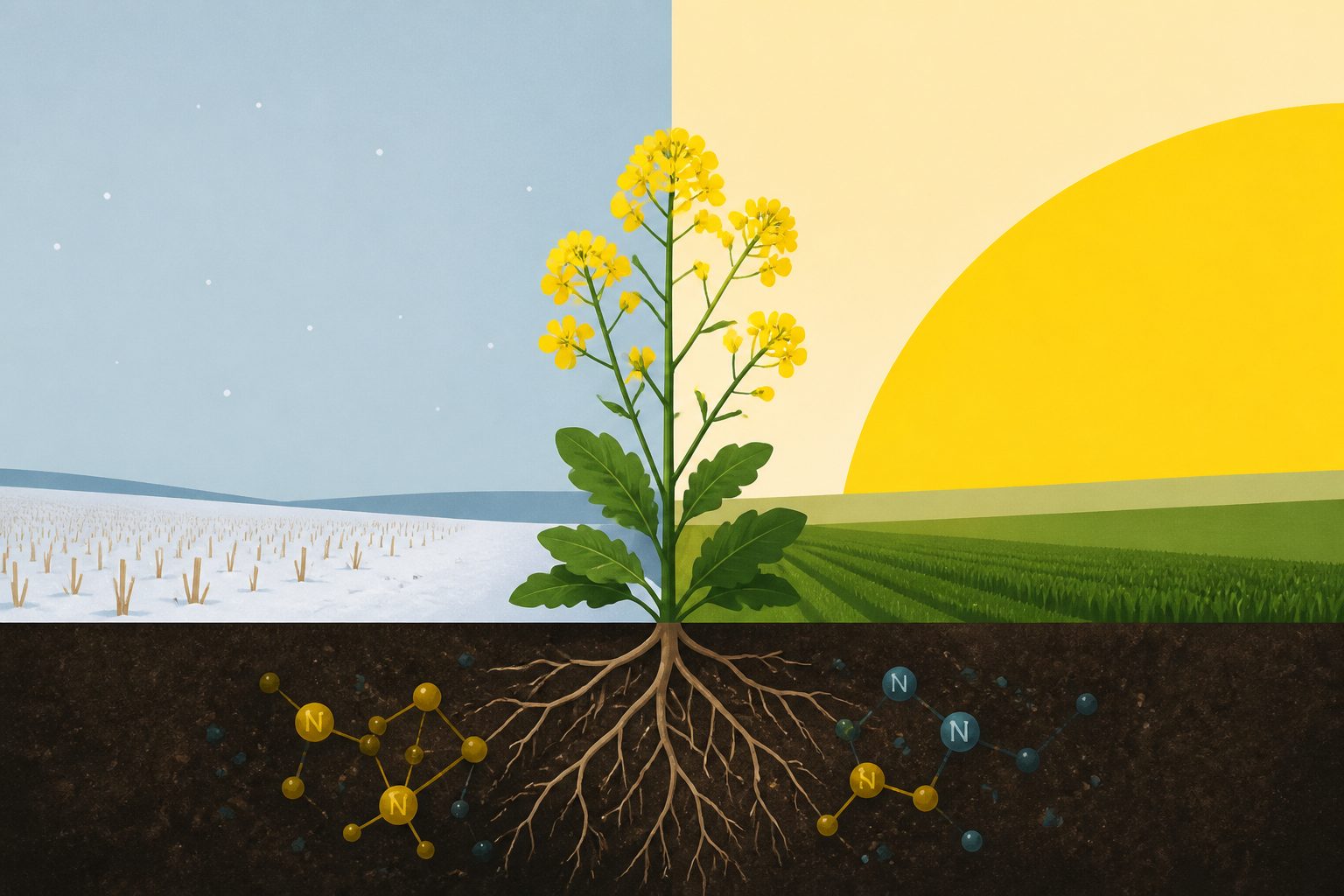
A review found that growing winter oilseed rape before summer crops was associated with small yield gains and mixed greenhouse-gas effects.
Researchers combined 1,469 observations on summer-crop yields, soil health, soil carbon and greenhouse gases. Compared with fallow periods or winter cereal rotations, winter oilseed rape was associated with a 2% increase in subsequent summer-crop yields and improvements in biological, chemical and physical soil indicators.
Soil-carbon sequestration was 7.6% higher. The greenhouse-gas results differed by gas: methane emissions decreased by 17.3%, while nitrous oxide emissions increased by 51.5%. Overall carbon-dioxide-equivalent emissions were comparable to those from fallow systems and lower than those from wheat-based systems.
What winter canola changed
The meta-analysis included 673 observations of summer-crop yields, 449 of soil-health indicators, 156 of soil carbon and 183 greenhouse-gas observations. Relative to fallow or winter cereal rotations, winter oilseed rape was associated with a 2% increase in summer-crop yields. Biological soil-health indicators increased by 8.0%, chemical indicators by 5.5% and physical indicators by 7.8%.
Soil-carbon sequestration increased by 7.6%. Greenhouse-gas effects were mixed: methane emissions decreased by 17.3%, whereas nitrous oxide emissions increased by 51.5%. Net emissions measured as carbon-dioxide equivalents were comparable to fallow systems and lower than wheat-based systems.
Why the crop matters
Winter oilseed rape can provide a biofuel feedstock during periods when fields might otherwise be fallow, without the analysis finding an overall greenhouse-gas penalty compared with fallow systems. Its associations with higher following-crop yields, improved soil indicators and more soil carbon also suggest that it can serve several farm-system functions at once.
The results do not eliminate greenhouse-gas concerns: the increase in nitrous oxide offset the reduction in methane in part. The findings therefore point to limited, rather than absent, greenhouse-gas trade-offs when winter oilseed rape is used between main crops.
Evidence and caveats
This study is a meta-analysis of published research, not a single field experiment. It combined 79 articles and 1,469 observations across several outcomes, with comparisons mainly involving fallow periods or winter cereal rotations.
The abstract reports associations across the combined studies and does not establish that winter oilseed rape caused every observed change. Results may also differ with local soils, weather, management and the summer crop, but the abstract does not provide enough information to assess those differences.