In cell studies and neonatal mice, particles released during peripheral infection weakened the blood-brain barrier through a proposed microRNA–Notch pathway.
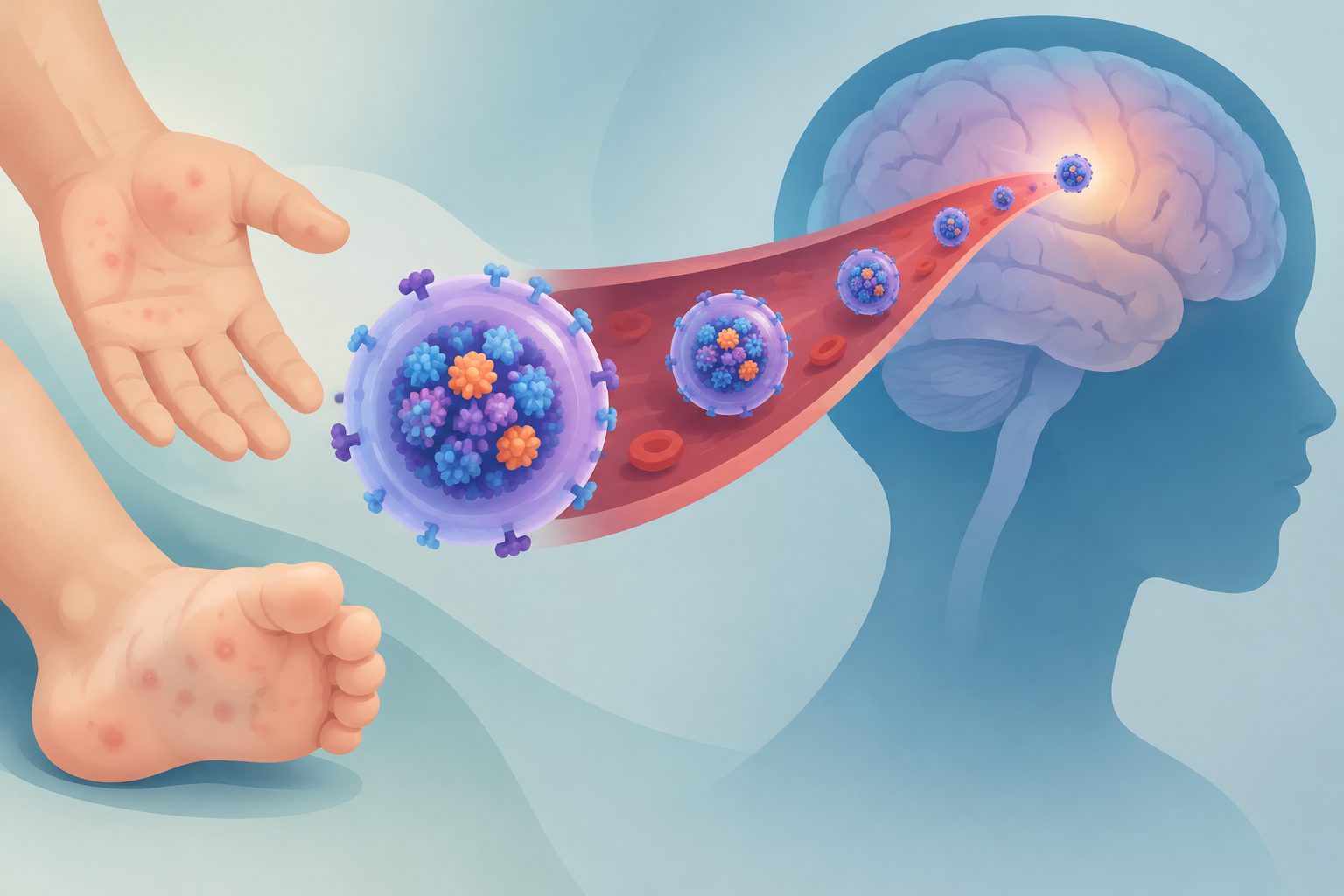
The study examined how an enterovirus A71 infection outside the brain could affect the blood-brain barrier, which normally helps control what enters the brain. Infected peripheral cells released more extracellular vesicles carrying microRNA-30 and microRNA-34. These vesicles reduced Notch1 signaling in human brain blood-vessel cells, weakened the connections between those cells and increased barrier permeability.
Activating Notch1 restored barrier integrity in cell experiments and reduced viral neuroinvasion in neonatal mice. The researchers also found higher levels of vesicle-associated microRNA-30 and microRNA-34 in serum from patients with severe enterovirus A71-associated hand, foot and mouth disease.
How the barrier was weakened
Infection of susceptible peripheral cells with enterovirus A71 increased the release of extracellular vesicles and enriched those vesicles with microRNA-30 and microRNA-34. When the vesicles reached human brain microvascular endothelial cells, the microRNAs suppressed Notch1 signaling, impaired the junctions between endothelial cells and increased blood-brain barrier permeability.
Activating Notch1 signaling restored barrier integrity in the cell model and reduced viral neuroinvasion in neonatal mice. In clinical samples, serum extracellular vesicles carrying microRNA-30 and microRNA-34 were elevated in patients with severe enterovirus A71-associated hand, foot and mouth disease.
// Source
Nature Communications · 2026 · DOI: 10.1038/s41467-026-79119-y
Authors: Yicong Liang, Yi Meng, Yue Kong, Shanyu Huang, Zhaoyang Zhou, Shuang Liu, Xing Zhou, Fanpeng Zhao, Fang Wang, Zhipeng Jin, Yuefei Jin, Jingyou Yu, Zhen Luo
Institutions: Case Western Reserve University, Zhengzhou University, First Affiliated Hospital of Guangzhou Medical University, State Key Laboratory of Respiratory Disease, Jinan University, Zhengzhou Children's Hospital, Guangzhou Regenerative Medicine and Health Guangdong Laboratory