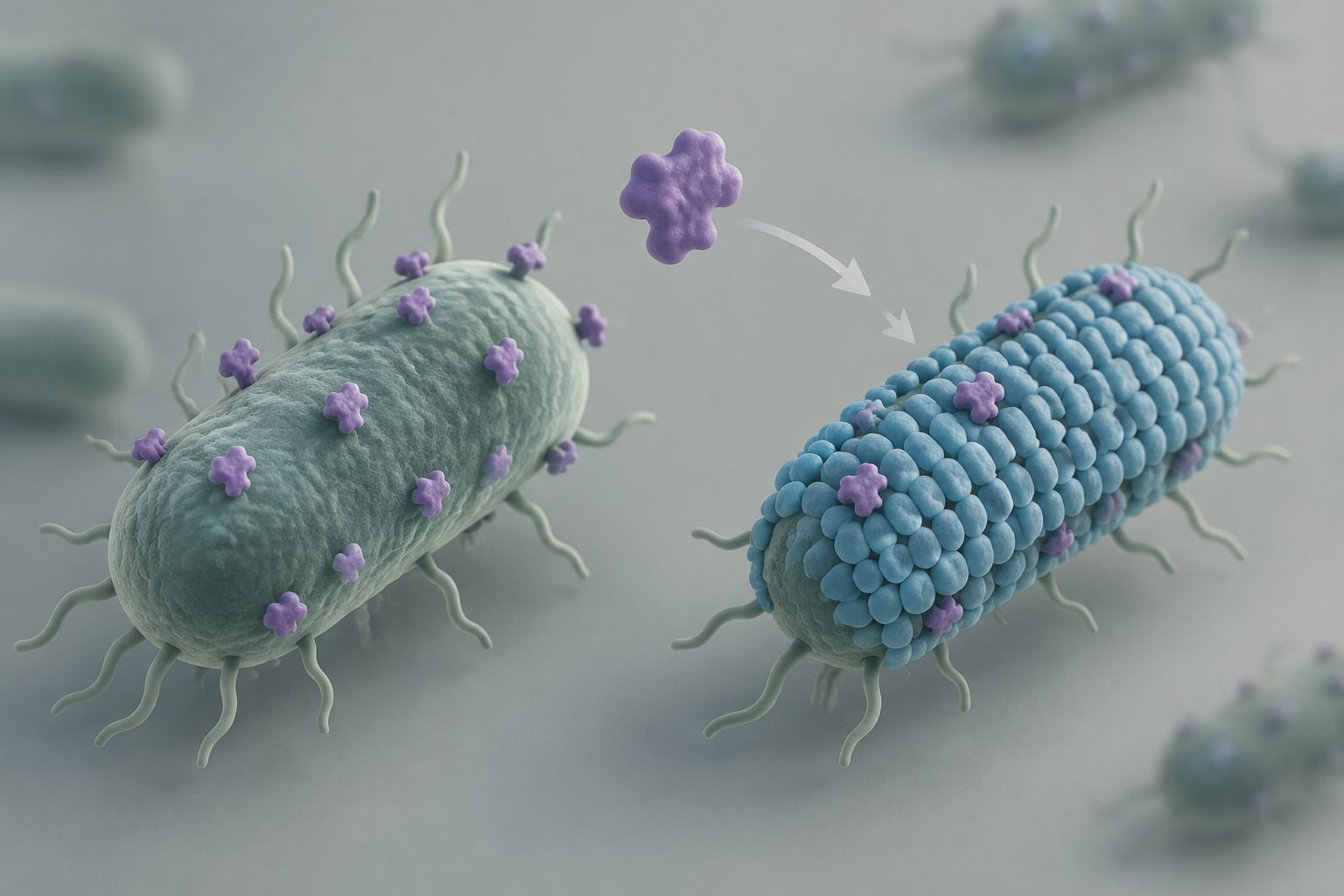
AlphaFold 3 draws more useful clues from a few diverse protein relatives than from a much larger set of similar ones.
The study examined AlphaFold 3’s internal representations as it processed protein sequences and multiple-sequence alignments—sets of related sequences compared position by position. The researchers found that a small number of sufficiently divergent relatives could provide enough information to largely reproduce the structure predicted from the full alignment.
As the model processed this information, it formed an internal representation in which residue distances, contacts, fold similarity and structural confidence became progressively easier to identify. Removing the alignment disrupted these patterns; replacing it with similar relatives provided less information, while selecting evolutionarily diverse sequences largely restored the predictions and internal patterns.
How evolution guides predictions
AlphaFold 3 did not appear to infer protein structure directly from the raw sequence or from the number of sequences in an alignment alone. Instead, the model used sequence variation among evolutionary relatives to constrain its geometric and structural predictions.
A small number of sufficiently divergent homologues—related proteins—largely recovered the structure predicted with the full multiple-sequence alignment. Evolutionarily similar homologues were less informative, and unrelated sequences did not restore the prediction even when they preserved the formal alignment format. Subsampling the alignment to retain phylogenetically diverse sequences largely restored prediction accuracy and coherence in the model’s internal representations.
The researchers also found that the model’s internal pair-processing stage transformed the evolutionary signal into a compact representation from which residue-pair distances, contacts, fold similarity and structural confidence became progressively decodable.
Why the mechanism matters
The findings provide a clearer account of how AlphaFold 3 uses evolutionary information rather than treating the model as a black box. They also offer a framework for understanding why the system can fail when its sequence information is missing or insufficiently diverse.
That understanding is relevant to protein design, the study of different protein shapes, predictions for cases unlike those seen during model development, and the interpretation of AlphaFold 3’s confidence estimates.
Evidence and caveats
This is a mechanistic interpretability study based on analyses of AlphaFold 3’s internal representations, including linear probing, activation patching and deliberate changes to multiple-sequence alignments and their evolutionary diversity. These tests provide computational evidence about how information is represented and used inside the model.
The abstract does not report the number or range of proteins analyzed, nor does it describe experimental tests of the resulting structures. The conclusions therefore concern AlphaFold 3’s computational behavior as examined in this study and may not cover every protein or biomolecular assembly.
// Source
PLoS Computational Biology · 2026 · DOI: 10.1371/journal.pcbi.1014981
Authors: Jonathan Feldman, Jeffrey Skolnick
Institutions: Georgia Institute of Technology