Researchers define signs of fever-related discomfort in children
An international expert panel proposed a three-level framework, but further testing is needed before its clinical value is clear.
High evidenceReviewSome caution advised
Medical disclaimer: This article summarizes research findings and is for informational purposes only. It is not medical advice.
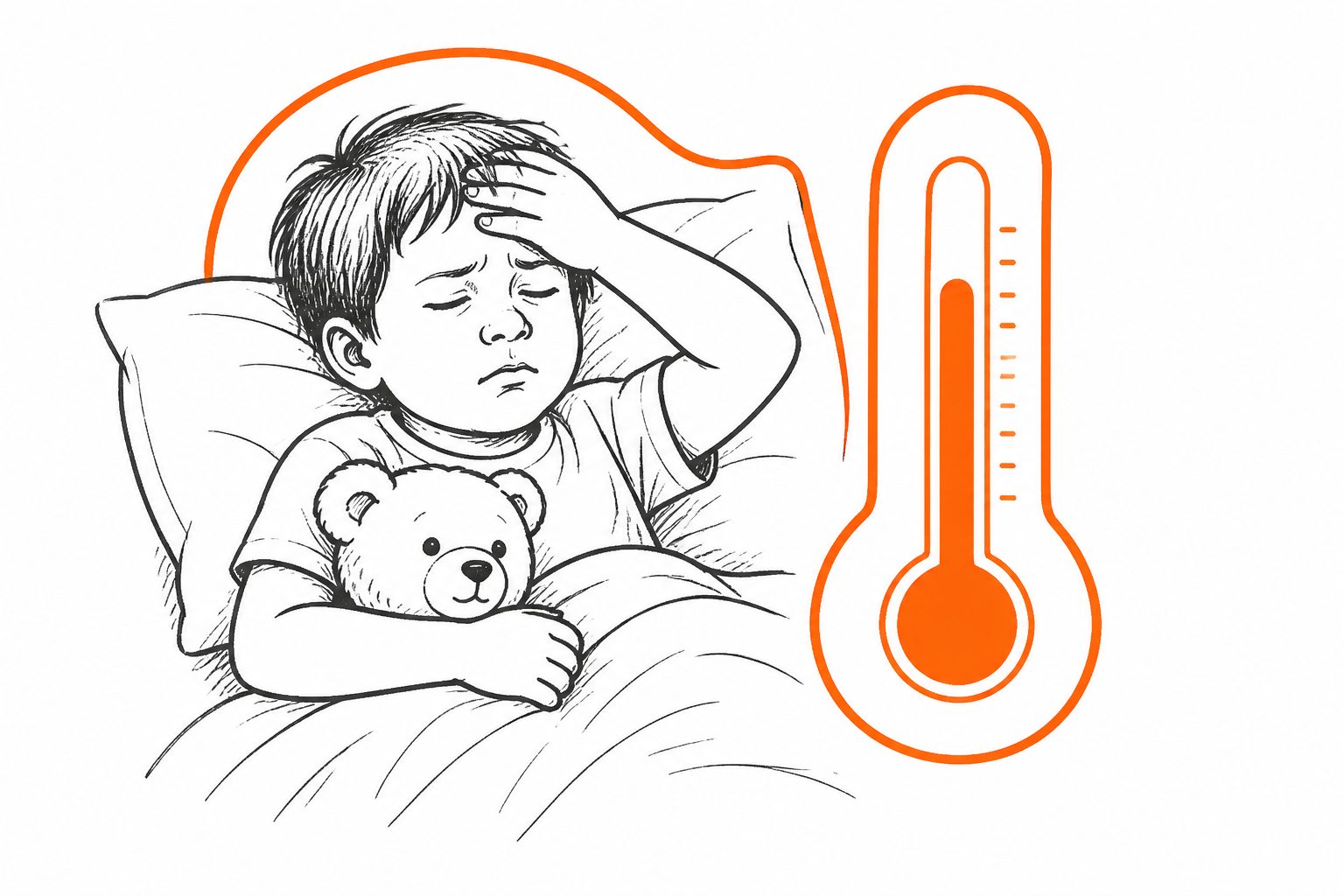
Editorial illustration — not from the study.
Fever is common in childhood, but medical guidance has not consistently defined what fever-related discomfort looks like. This work brought together seven experts from high-income countries for three rounds of online review to agree on practical descriptions of discomfort in children with fever.
The panel agreed that discomfort should be assessed using several types of signs rather than body temperature alone. It proposed a traffic-light system: green for no intervention needed, amber for decisions made case by case, and red for situations in which intervention was considered indicated. The researchers described the framework as potentially usable across ages and care settings, while noting that clinical judgment may need to differ for children with chronic conditions or those receiving intensive care.
What the review covered
Researchers examined how to define and assess fever-related discomfort in children. They conducted an international modified Delphi consensus process, in which a steering committee prepared statements and seven international experts rated and refined them over three online rounds. Consensus was predefined as at least 75% agreement. The abstract does not report direct testing of the framework in children, the number of statements considered, or the demographic details of the experts beyond their being from high-income countries.
What the review concluded
The experts reached consensus that fever-related discomfort is multidimensional, involving behavioral, emotional, and functional indicators. They proposed a traffic-light framework with green, amber, and red categories to describe different levels of discomfort and corresponding degrees of clinical concern. The panel considered the framework applicable across pediatric age groups and care settings, but these are expert judgments rather than results from a clinical validation study.
Who this may apply to
The proposed framework may be relevant to discussions about children with fever across different ages and care settings, but it is not yet established that it works equally well for all children. The authors highlighted that children with chronic conditions or those in intensive care may require individualized clinical judgment. Because the framework has not been clinically validated, it should not be interpreted as directly proven to apply to every child, healthcare system, or cultural setting.
Why it matters
A shared definition could reduce differences in how researchers and clinicians describe discomfort associated with fever, potentially making future studies and clinical discussions more consistent. However, this study establishes a preliminary expert framework, not evidence that the categories accurately measure discomfort or improve outcomes for children. Its practical value remains uncertain until it is tested in larger and more diverse clinical populations and settings.
Limitations & evidence assessment
The panel included only seven experts, all from high-income countries, so the framework may not reflect wider clinical, cultural, or family perspectives. The study used expert consensus rather than direct observations or measurements in children, and the abstract does not provide details about how the initial statements were developed or how representative the panel was. The researchers specifically said that the framework still needs evaluation of its reliability, feasibility, cultural applicability, and clinical validity in larger and more diverse populations and healthcare settings. The abstract also does not report whether using the framework changes clinical decisions or child outcomes.
Why this evidence level: Clinical guideline / consensus statement reflecting reviewed bodies of evidence.
Evidence levels are editorial estimates derived from study metadata — they are not clinical appraisals.
// Source
European Journal of Pediatrics · 2026 · DOI: 10.1007/s00431-026-07340-4
Researchers studied 2,632 women from a Finnish birth cohort to examine whether being classified as climacteric at age 46 was associated with anxiety, depression symptoms, and psychiatric medication purchases. Climacteric women had higher reported levels of some anxiety and depression symptoms than preclimacteric women, although this observational study cannot show that menopausal changes caused those symptoms.
This review examined human clinical evidence about GLP-1 receptor agonists and neovascular age-related macular degeneration, sometimes called wet age-related macular degeneration, in people with type 2 diabetes. The reviewed studies had conflicting results: one reported higher risk, another lower risk, and two large comparisons found no significant increase. The evidence is observational and does not show that these medicines cause or prevent the eye condition.
A prospective, multicenter phase II trial examined whether removing only the treated tumor area through the anus could preserve the rectum in people with locally advanced rectal cancer who responded well to chemoradiotherapy. Among 80 participants, three-year disease-free survival was 84.8%, and local recurrence occurred in 5.0% during the reported follow-up. Because everyone received local excision and there was no comparison group, the findings do not establish that this approach is as effective as more extensive surgery.