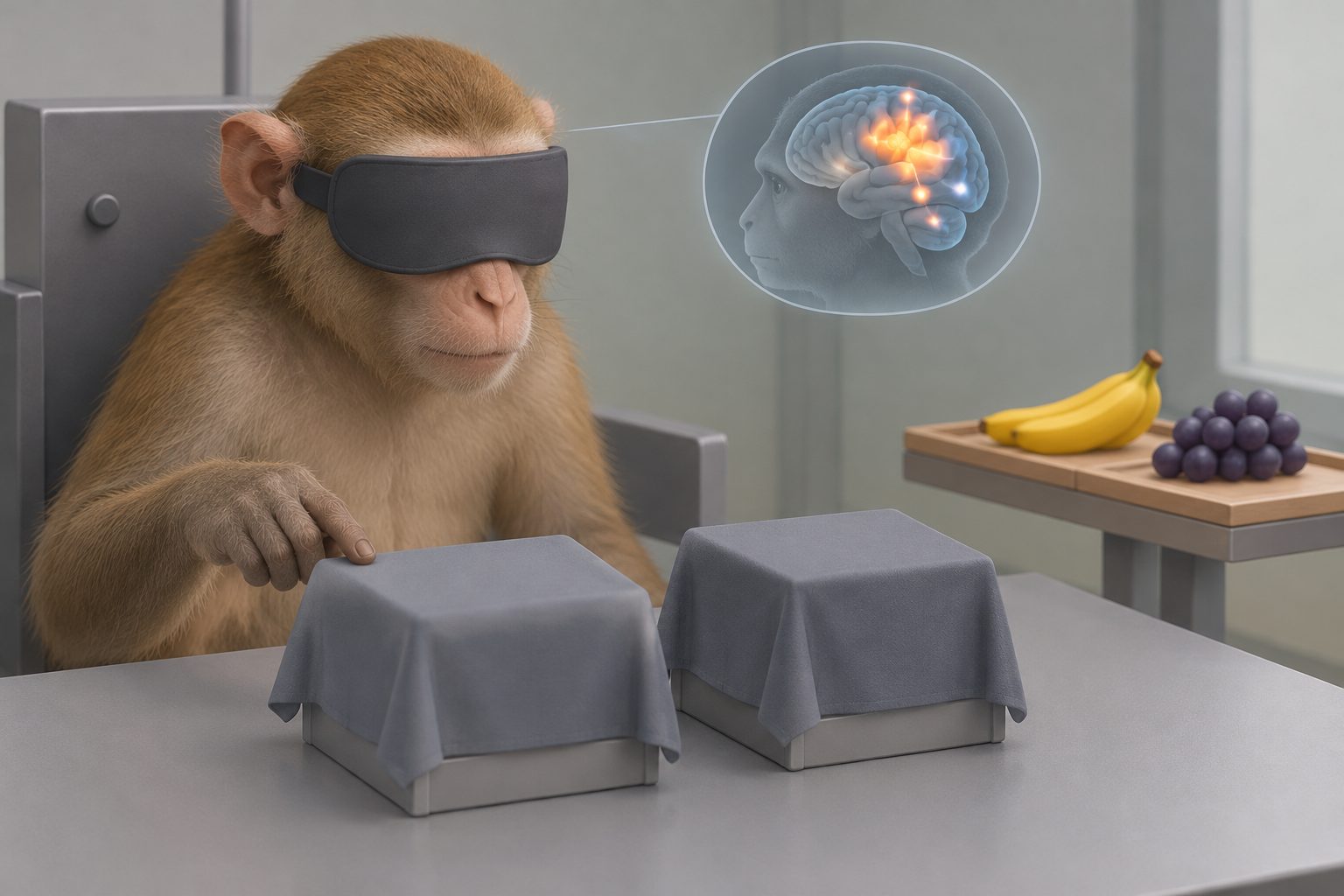
Cells in the anterior cingulate cortex processed cues in peripheral vision and helped guide both eye movements and choices.
Researchers presented rhesus macaques with four cues at the same time in a decision-making task. The animals were more likely to look at valuable cues in the periphery and to choose valuable options whose cues they had not fixated on.
Neurons in several brain regions encoded the value of cues when the animals looked directly at them. The anterior cingulate cortex was different: its neurons also processed the value of peripheral cues, including cues that were never fixated, while guiding information sampling and choice.
// Source
Nature Communications · 2026 · DOI: 10.1038/s41467-026-78945-4
Authors: James L. Butler, Timothy Müller, Sebastijan Veselič, W. M. Nishantha Malalasekera, Timothy E.J. Behrens, Laurence Tudor Hunt, Steven Wayne Kennerley
Institutions: University of Oxford, University College London, Wellcome Centre for Human Neuroimaging, John Radcliffe Hospital, Wellcome Centre for Integrative Neuroimaging, Sainsbury Wellcome Centre