Human evolution left our joints with less of a key cartilage component
A study links human-specific changes in gene control to a three- to fourfold reduction in joint glycosaminoglycans compared with non-human apes.
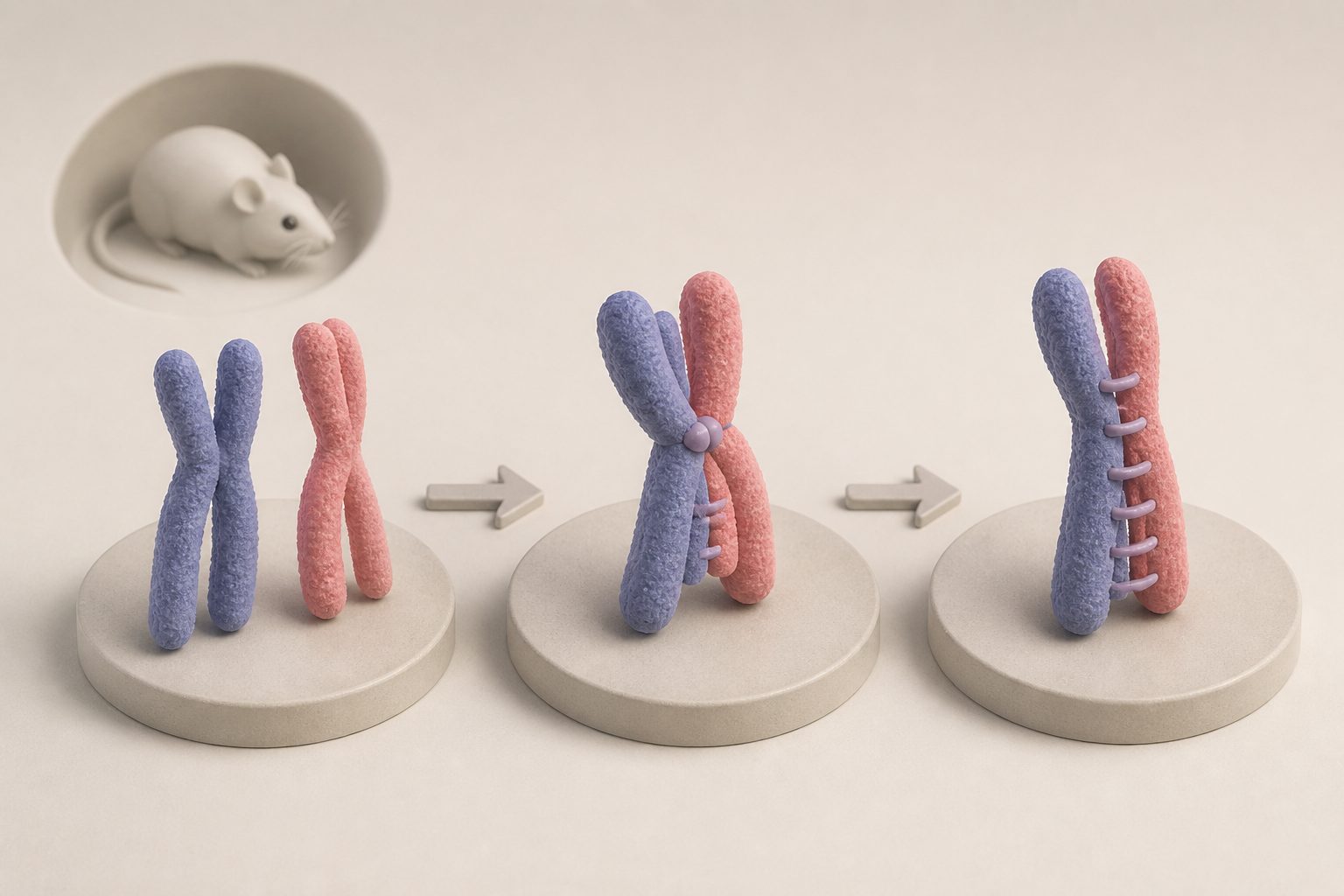
Researchers tested more than 561,000 human-derived DNA changes in cartilage cells to identify changes that alter gene activity. They found 15,077 sites with human-specific regulatory activity and combined these results with experiments using human–ape hybrid cells developed into early bone-and-cartilage cells.
The resulting maps showed broad changes in the regulation of the skeletal extracellular matrix—the material surrounding cells—including a marked reduction in the production of GAGs. The researchers report that human joints contain about three to four times less GAG than joints of non-human apes, and that the shift bears signs of natural selection.
Less material in human joints
The study identified 15,077 genomic sites with human-specific regulatory activity after testing 561,410 human-derived substitutions in promoters and enhancers, DNA regions that help control genes. Experiments in cartilage cells and human–ape hybrid cells pointed to widespread human-specific changes in the skeletal extracellular matrix.
One of the clearest changes was reduced regulation of GAG biosynthesis, the production of glycosaminoglycans. GAG content in human joints was approximately three to four times lower than in non-human apes. The researchers found signatures of selection around this shift and conclude that it is likely to be an important contributor to humans’ exceptional susceptibility to degenerative skeletal diseases.
An evolutionary link to joint disease
The findings connect a specific evolutionary change in the material surrounding skeletal cells with a difference between human and non-human ape joints. They offer a genetic explanation for part of the human skeleton’s distinctive biology and suggest that traits shaped during evolution may also have contributed to humans’ vulnerability to degenerative skeletal diseases.
The study also provides a broad catalogue of human-specific changes in gene regulation that could be used to investigate skeletal development, dental biology and joint disease.
What the evidence shows
The evidence comes from large-scale laboratory tests of DNA sequences in chondrocytes, or cartilage cells, and from human–ape hybrid cells differentiated into early bone-and-cartilage cells. The researchers integrated these experiments to map human-specific changes in gene regulation and their likely sequence drivers, and compared joint GAG content between humans and non-human apes.
The abstract does not describe a direct clinical test of whether lower GAG content causes osteoarthritis or other degenerative diseases. It reports that the evolutionary shift is likely to contribute to disease susceptibility, but the study does not establish that it is the sole cause or quantify its contribution to disease risk.
// Source
Nature · 2026 · DOI: 10.1038/s41586-026-11053-x
Authors: Yizhi Yan, Nadav Mishol, Kathrin Lange, Zicong Zhang, Gal Bodek, Aya Kigel, Noam Priel, Nachshon Egyes, Omer Ronen, Itamar Nini, Liat Rotenstreich, Amit Philosoph, Sira Martínez, Silvia Beltramone, Rika Tsujikawa, Adi Rozenblatt, Lucas Esteban Wange, María Torralvo, Guy Hirsh, Yael Elboim, Sergey Viukov, Idan Korenfeld, Mythili Damal Kandadai, Océane CLUZEAU, Malka Nissim-Rafinia, Eran Meshorer, Jacob H. Hanna, Evie Vereecke, Assaf Marom, Martin Kuhlwilm, Guillaume Bourque, Tomàs Marquès‐Bonet, Simon Fishilevich, Fumitaka Inoue, David Gokhman
Institutions: Kyoto University, KU Leuven, University of Vienna, Ghent University, Universitat Autònoma de Barcelona, Institució Catalana de Recerca i Estudis Avançats, Hebrew University of Jerusalem, McGill University, Hospital Del Mar, Weizmann Institute of Science, Institut de Biologia Evolutiva, Rappaport Family Institute for Research in the Medical Sciences, Technion – Israel Institute of Technology, Centre for Genomic Regulation, European Molecular Biology Laboratory, McGill Genome Centre, Centro Nacional de Análisis Genómico, Institut Català de Paleontologia Miquel Crusafont