A tiny engineered protein curbed fentanyl responses in specific mouse neurons
The protein blocked opioid-receptor signaling in targeted brain cells and reduced fentanyl-related dopamine release and behavior in mice.
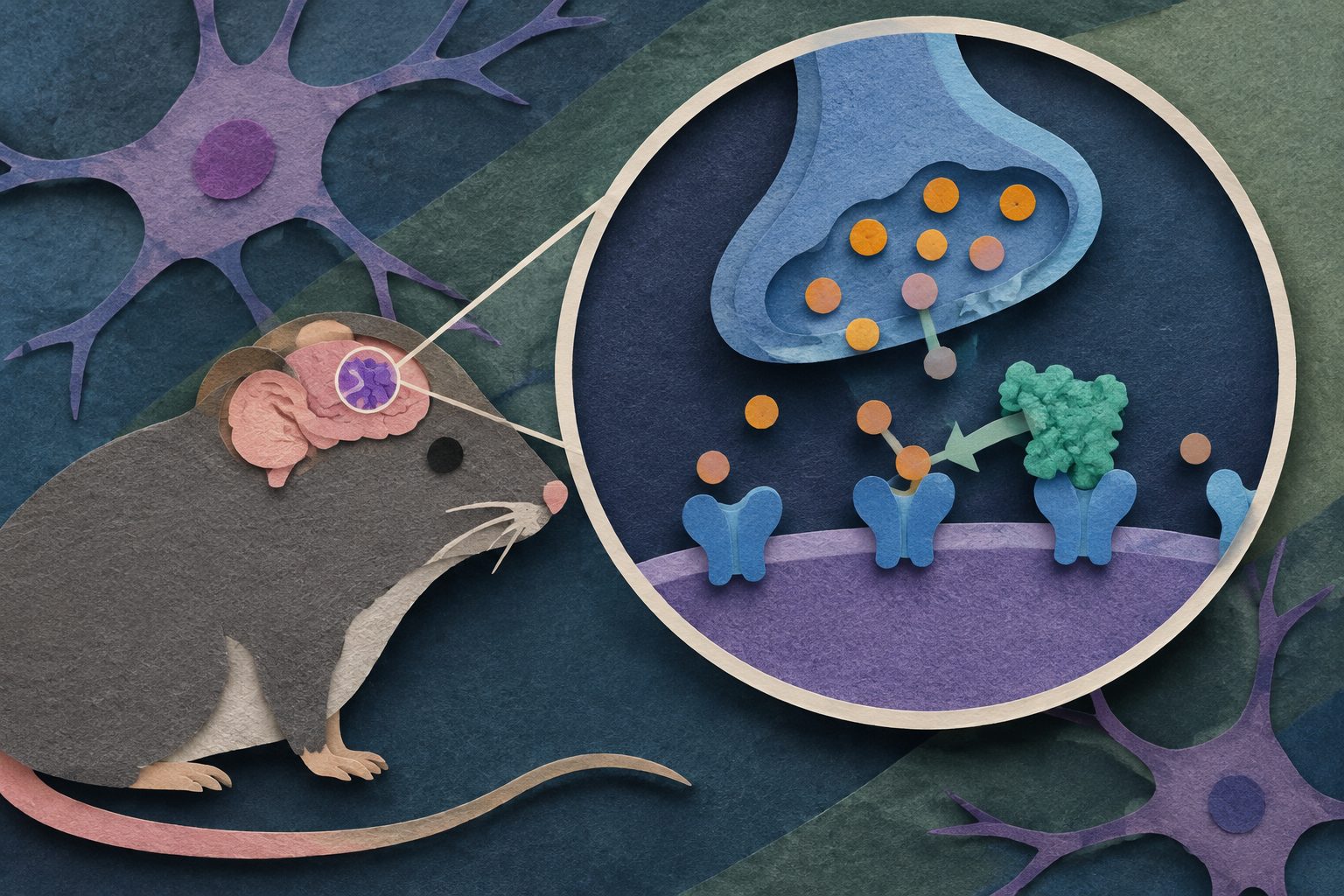
Editorial illustration — not from the study.
The team developed Nb64 to bind the active form of opioid receptors on the inside of cells, where it interferes with the receptors’ interaction with signaling proteins. In experiments with cells and brain slices, Nb64 suppressed opioid-receptor signaling while leaving signaling through a different receptor that uses the same downstream potassium-channel pathway intact.
The researchers then expressed Nb64 in GABA-producing neurons in the ventral tegmental area, a brain region involved in opioid-related signaling. This reduced fentanyl-triggered dopamine release in a connected region and attenuated behavioral responses in mice. The protein could also be directed to cellular compartments or delivered into cells using a reversible cell-penetrating peptide.
What Nb64 did in mice
Structure-guided engineering produced Nb64, an intracellular nanobody that preferentially binds activated opioid receptors. It rapidly reduced the receptors’ engagement with signaling proteins, internalization and downstream signaling. In acute slices from the ventral tegmental area, Nb64 abolished μ-opioid-receptor-driven potassium currents in receptor-positive neurons but preserved currents triggered through GABA B receptors in the same cells.
When Nb64 was expressed specifically in ventral tegmental area GABAergic neurons, fentanyl produced less dopamine release in the ventral striatum and reduced opioid-related behavioral responses in mice. The researchers also showed that targeting Nb64 to organelles could alter where opioid-receptor signaling was blocked, while a reversible cell-penetrating peptide allowed delivery into cells without genetic modification.
Why targeted blocking matters
Opioid receptors operate in different cell types and parts of cells, but standard drugs and genetic methods do not readily separate those signaling pools. Nb64 offers a way to block activated opioid receptors inside selected cells while preserving inactive receptors and avoiding broad disruption of shared downstream signaling components.
In the mouse experiments, restricting Nb64 to a defined population of ventral tegmental area neurons linked receptor-level inhibition with changes in dopamine release and fentanyl-related behavior. The approach could therefore help researchers test how particular opioid-receptor populations contribute to brain and behavioral effects.
Evidence and caveats
The evidence comes from engineered-cell experiments, acute brain-slice recordings and mouse experiments. The mouse findings involved Nb64 expression in a specific population of ventral tegmental area GABAergic neurons, so they do not show that the same effects would occur in other cells, species or people. The provided material reports reduced fentanyl-related dopamine release and behavior, but it does not establish a treatment for opioid effects or dependence. More broadly, the work presents Nb64 as a research tool and a framework for controlling native receptor signaling; its safety, effectiveness and broader applicability beyond these experiments were not established here.
// Source
Nature Chemical Biology · 2026 · DOI: 10.1038/s41589-026-02390-z
After people learned a short story, brain cells linked to its people and objects became active again during slow-wave sleep. The cells were reactivated together, especially during brief bursts called sharp-wave ripples, but their firing order did not match the story’s sequence.
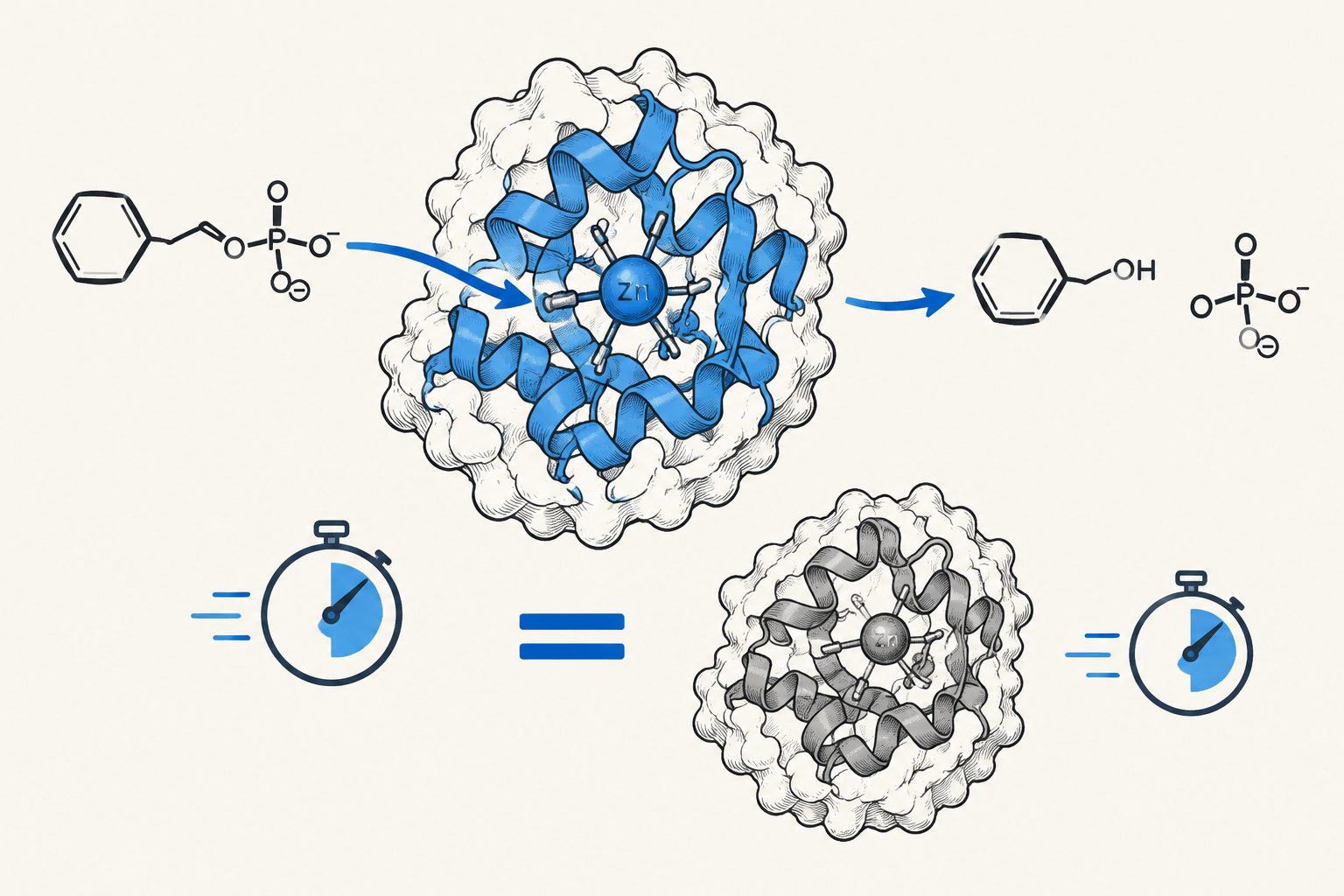
Researchers designed a zinc-containing enzyme from scratch, without a natural template, catalytic motif or evolutionary data. The enzyme showed activity against both phosphomonoesters and phosphodiesters, with rate enhancement comparable to characterized natural phosphatases.
A study of illicit alcohol in two Ugandan cities found that alcohol strength was inconsistent and sometimes under-declared, reaching 44.2%. Some spirits contained methanol above safe limits, while opaque beers showed bacterial contamination and many production and retail sites had poor sanitation.