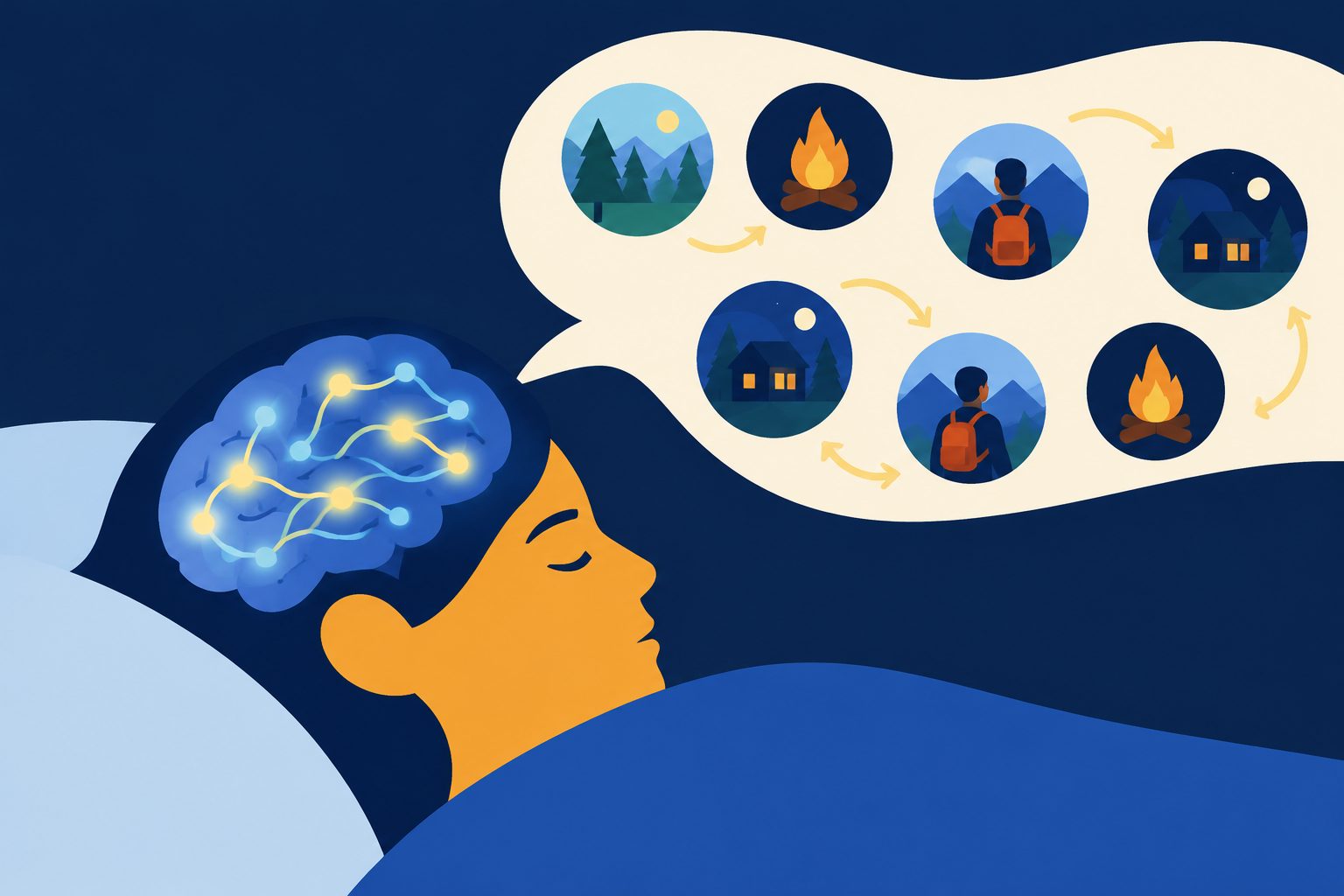
Recordings from neurosurgical patients found that sleep reactivated cells linked to story concepts, but not in the sequence those concepts appeared.
Researchers recorded activity from 1,415 neurons in the temporal lobes of 17 people undergoing monitoring for epilepsy surgery. The participants learned stories made from familiar pictures and concepts, then recalled them in the evening and again the next morning.
During subsequent slow-wave sleep, neurons representing concepts from the stories were reactivated together, particularly during sharp-wave ripples—short periods of coordinated brain activity. However, the order in which these neurons fired did not reproduce the order of concepts in the learned stories.
What sleep replayed
The study found that human concept neurons—cells that respond to a particular person or object across different forms, such as pictures, written names or spoken names—were reactivated during slow-wave sleep after learning. These neurons were more likely to reactivate together than other neurons, especially during sharp-wave ripples. Their activity showed time differences short enough to be consistent with possible changes in connections between neurons.
The direction of activity between pairs of neurons was not related to the order of their preferred concepts in the story. In other words, sleep reactivation preserved aspects of the story’s content, but did not reproduce its sequence of events.
Evidence and caveats
The evidence comes from direct recordings of single neurons during wakefulness and sleep in 17 epilepsy patients undergoing presurgical monitoring. Participants learned a deliberately constructed picture-based story and recalled it accurately, allowing the researchers to compare the story’s concept order with neuronal activity during later sleep.
Because the study involved neurosurgical patients and an artificial short-story task, the findings may not apply to all people or to everyday memories. The recordings show coordinated reactivation and timing patterns, but they do not by themselves establish that the neurons cause memory consolidation. The reported short time lags are consistent with possible synaptic changes, rather than a direct measurement of those changes.
// Source
Nature Communications · 2026 · DOI: 10.1038/s41467-026-79544-z
Authors: Johannes Niediek, Thomas Peter Reber, Marcel Bausch, F. Schwimmbeck, H. Gast, V. A. Coenen, Jan Patrick Boström, CE Elger, Florian Mormann
Institutions: Technische Universität Berlin, University of Bern, University of Bonn, University Hospital of Bern, University of Salzburg, University Hospital Bonn, UniDistance Suisse