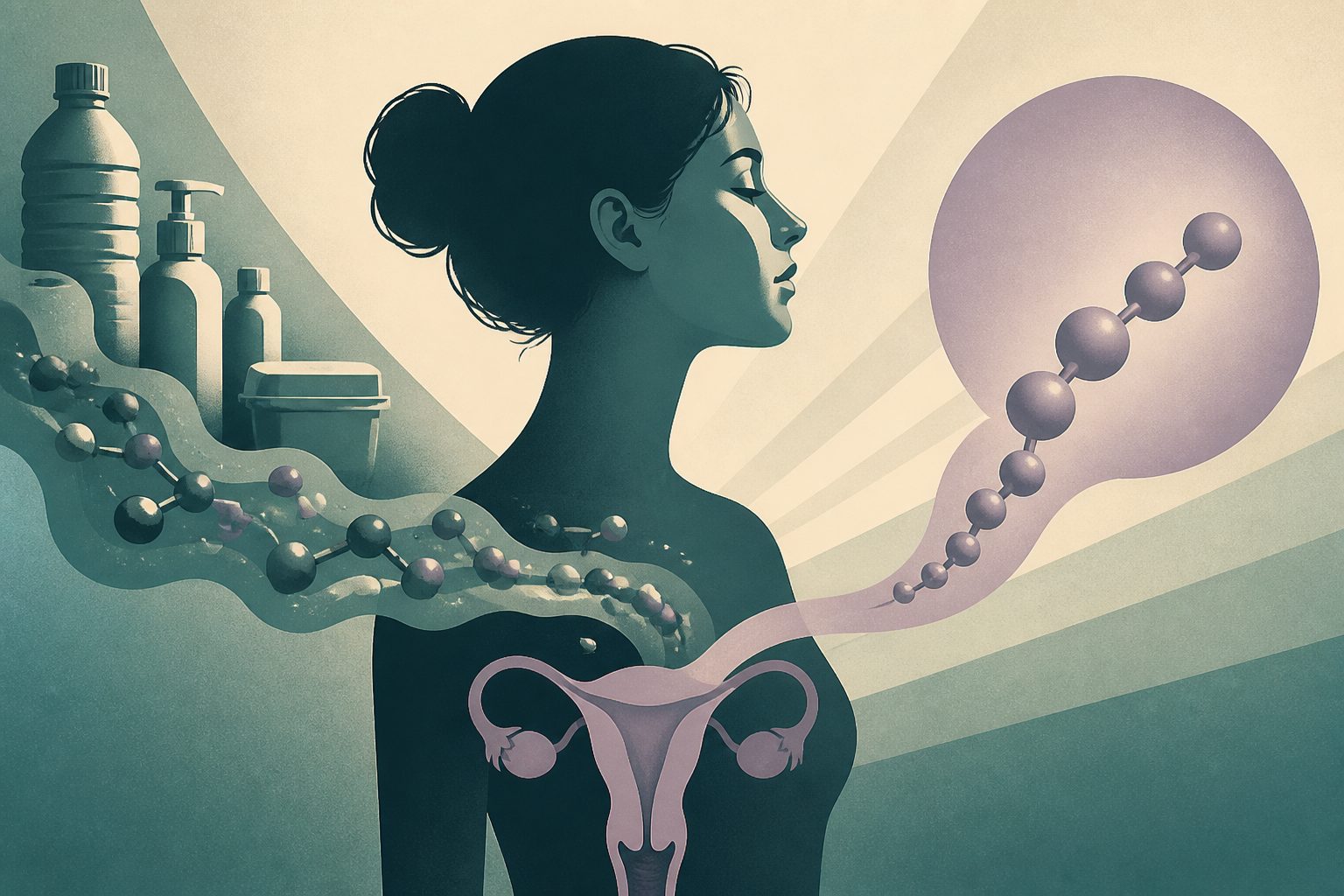
A study of 90 women found that higher levels of these chemicals were associated with changes in estrogen and progesterone.
Researchers compared 50 women classified as exposed to phthalates and bisphenol A with 40 women in a control group. They analyzed 11 urinary phthalate breakdown products and BPA alongside blood levels of estrogen and progesterone.
Higher levels of BPA, monobutyl phthalate and combined diethylhexyl phthalate metabolites were associated with higher estrogen levels. Monobutyl phthalate, monoethyl phthalate and BPA were also positively associated with progesterone. The researchers additionally reported that smoking, bottled water and beverage consumption, ready-to-eat foods and cosmetics use were associated with exposure to combined diethylhexyl phthalate metabolites and BPA.
Evidence and caveats
This was a cross-sectional study of 90 women, with 50 in an exposed group and 40 in a control group. The researchers used urine measurements, blood hormone concentrations and several statistical analyses, including a method for examining the combined effect of chemical mixtures. Because exposure and hormone levels were assessed at the same point in time, the study shows associations rather than cause and effect. The sample was also small, and the abstract does not establish whether the findings apply to women in other populations or whether the hormone changes lead to health outcomes.
// Source
Scientific Reports · 2026 · DOI: 10.1038/s41598-026-67569-9
Authors: Fallah Hashemi, Lori Hoepner, Farahnaz Soleimani Hamidinejad, Elma Omeragić, Daniela Haluza, Hassan Hashemi, Alireza Esmaeili, Cui Guo, Gabriela Stanciu, Bahareh Kabiri, Ali Seidhani-Nahal
Institutions: University of Hong Kong, Shiraz University of Medical Sciences, Ilam University, Medical University of Vienna, University of Sarajevo, Medical University of Ilam, Ovidius University, St. George's University, Bogomolets National Medical University, St Anna Children's Hospital