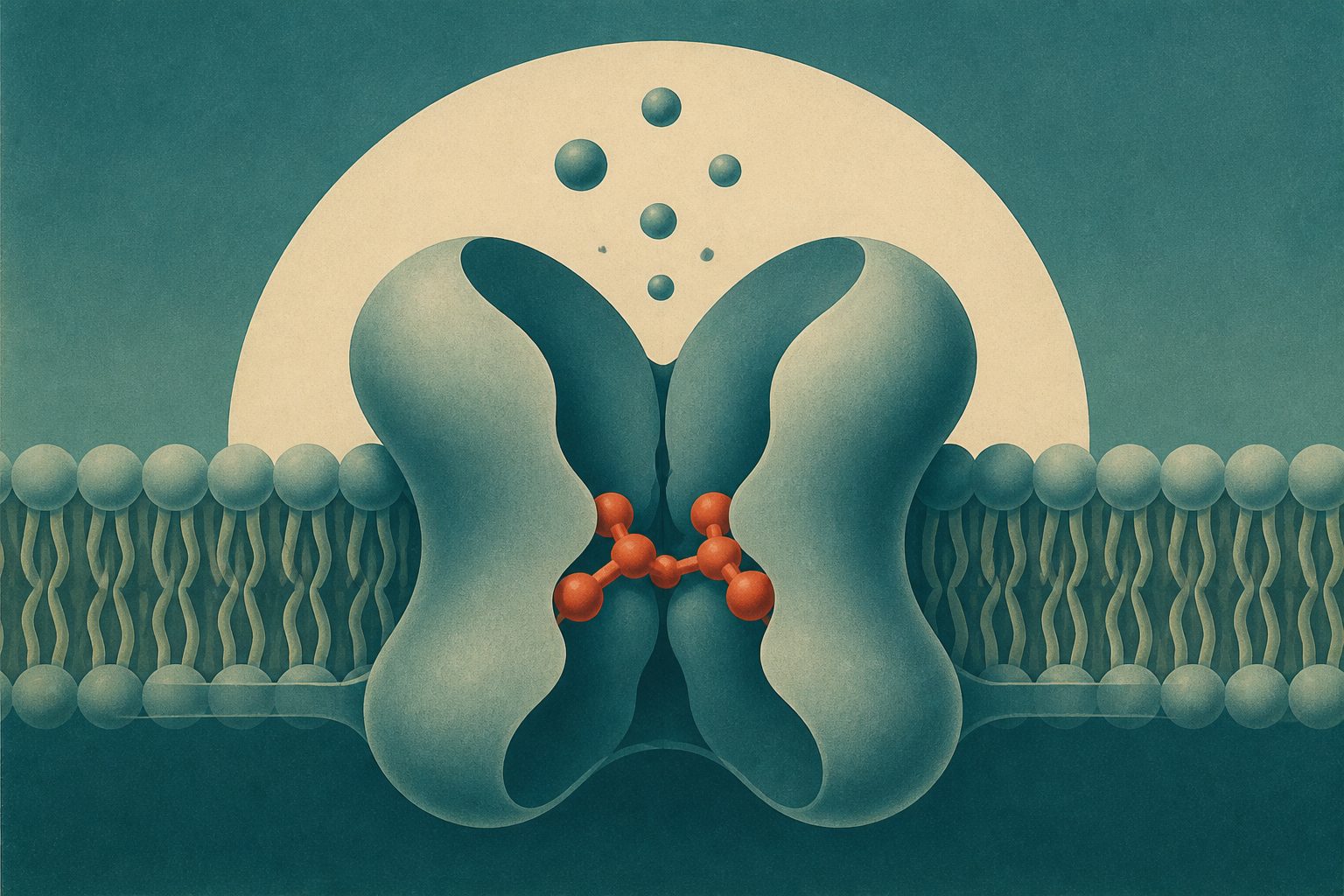
Structures of the calcium-release channel RyR1 show how the emergency drug works with ADP or ATP to promote channel closure.
Malignant hyperthermia is a life-threatening reaction to some anesthetics in people with disease-causing variants in RyR1, a channel that releases calcium inside muscle cells. Dantrolene has long been used to treat the condition, but its binding site and mechanism had been unclear.
Using cryo-electron microscopy, the researchers mapped dantrolene’s binding site and compared RyR1 with the channel bound to the trigger compound 4-chloro-m-cresol. Dantrolene binds alongside ATP or ADP in a region called the RY12 domain, causing a shape change that is linked to closure of the channel’s pore.
Where dantrolene binds
The cryo-electron microscopy structures showed dantrolene bound in the RY12 domain, at a corner of the RyR1 receptor, stacked with ATP or ADP. Functional tests found that ATP or ADP was required for dantrolene to inhibit RyR1. A single mutation that disrupted a peripheral ATP-binding site eliminated this ATP- or ADP-dependent inhibition.
Without dantrolene, the same site selectively bound two ADP molecules. This suggests that the RY12 domain may help RyR1 sense the balance between ATP and ADP, although the study describes this as a possible role rather than a directly established function.
// Source
Nature Communications · 2026 · DOI: 10.1038/s41467-026-76519-y
Authors: Kookjoo Kim, Huan Li, Yuan Qi, Zephan Melville, Ran Zalk, Amédée des Georges, Joachim Frank, Wayne A. Hendrickson, Andrew R. Marks, Oliver B. Clarke
Institutions: Columbia University, New York University, Columbia University Irving Medical Center, Ben-Gurion University of the Negev, New York Structural Biology Center