Study compares two AI systems’ accuracy and usability for anesthesiology crisis scenarios
Researchers tested OpenAI o1 and DeepSeek R1 in English and Chinese on simulated emergencies rated by experts and junior physicians.
Moderate evidenceReviewInterpret with caution
Medical disclaimer: This article summarizes research findings and is for informational purposes only. It is not medical advice.
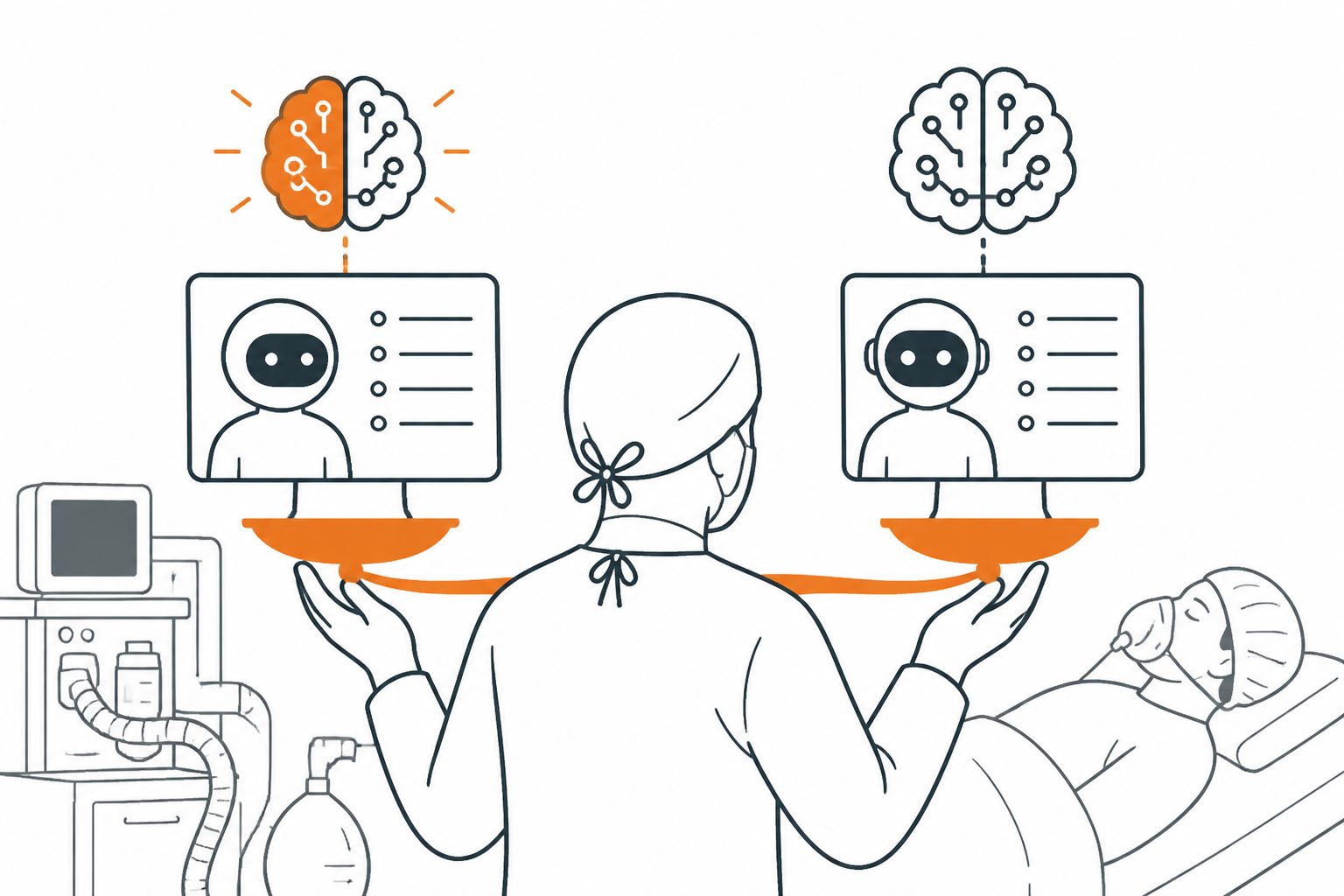
Editorial illustration — not from the study.
Researchers asked whether large language models can support junior physicians during the transition to unsupervised practice in a high-stakes specialty like anesthesiology. They compared model outputs for accuracy and clinical logicality using structured scoring, and also assessed practicality (such as step clarity and how well guidance fit guidelines) using ratings from junior physicians.
Overall, the models showed a trade-off. OpenAI o1 tended to be more accurate, while DeepSeek R1—especially the Chinese version—was rated as more practical. The study also reported that all models struggled with a specific part of urgent decision-making (the connection from “Situation” to “Assessment”) despite similar overall logicality ratings.
What the review examined
The study evaluated OpenAI o1 and DeepSeek R1 in English (DSE) and Chinese (DSC) by generating responses to 30 anesthesia crisis scenarios. Scenarios were developed through Delphi consensus. Expert panels (20 experts) rated responses for accuracy and clinical logicality using Likert-based systems, and junior physicians (20) rated practicality using Likert scales across step clarity, guideline applicability, and learning assistance. Model performance was compared across nine pre-specified, order-constrained hypotheses using Bayes Factor Design Analysis (with n = 600 per group per the abstract).
What the review concluded
OpenAI o1 showed higher accuracy than the English and Chinese DeepSeek versions (OA > DSE > DSC), with PP = 0.94 and BF₄ᵤ = 4.70 (“strong evidence” per the abstract). DeepSeek R1 (especially the Chinese version) showed greater practicality, with OA < DSE < DSC (PP = 0.82; BF₇ᵤ = 3.67). In practicality subcomponents, DSC performed better for step clarity (PP = 0.75) and guideline applicability (PP = 0.82).
For high-complexity tasks involving urgent decision-making, the abstract reports that all models failed to establish an effective SBAR Situation-to-Assessment linkage. Despite equivalent overall clinical logicality (PP = 0.59; BF₁ᵤ = 161.05, “decisive evidence” per the abstract), the specific linkage was not effective across models. The abstract also reports that 95.2% of junior physicians said DSC alleviated decision-making anxiety versus 28.6% for OA, indicating a preference for more actionable scaffolding even when accuracy was lower (as reported in the abstract).
Where this may apply
These results may apply most directly to organizations considering how AI chat systems might support junior clinicians in anesthesiology-like decision tasks that resemble the specific crisis scenarios used in this study. They do not establish that any model improves patient outcomes, and they should not be treated as evidence of clinical safety in real practice. The results also may not generalize to other specialties, other languages, different model versions, or real-world deployments where errors, context, and supervision differ.
The significance
Because anesthesiology can involve time-critical decisions, the study’s focus on crisis scenarios is relevant to understanding potential risks when AI is used to support clinicians who may have limited experience. However, these findings come from structured scenario-based evaluation of text outputs rather than measured clinical outcomes, so they may not directly reflect real-world patient safety.
Limitations & evidence assessment
Key limitations include that the work is based on simulated crisis scenarios and evaluations of generated text, not on real clinical use or patient outcome tracking. The abstract also provides limited detail on how the 30 scenarios represent the full range of anesthesia emergencies. Sample sizes for raters were 20 experts and 20 junior physicians, which is specific to this evaluation setup. The study compares model versions and languages tested (English and Chinese), so performance for other settings is unknown. The abstract labels the framework and evaluation as urgent for safeguards, but it does not describe implementation testing, monitoring, or safety systems beyond the scoring results.
Why this evidence level: This is an evaluation study with expert scoring and junior-physician ratings across 600-sized evaluation groups, which supports fairly detailed comparisons. However, it is based on simulated crisis scenarios and model outputs rather than real-world clinical outcomes, so results may not translate directly to patient safety.
Evidence levels are editorial estimates derived from study metadata — they are not clinical appraisals.
// Source
Anesthesiology and Perioperative Science · 2026 · DOI: 10.1007/s44254-026-00176-z
This systematic review examined randomized human trials of concurrent chemotherapy and radiation for locally advanced head and neck, cervical, esophageal, and non-small-cell lung cancers. Across the included trials, combined treatment was reported to provide better overall survival than radiation alone, but it also caused more severe short-term side effects. The review did not provide enough information in its abstract to show how many trials or patients were included.
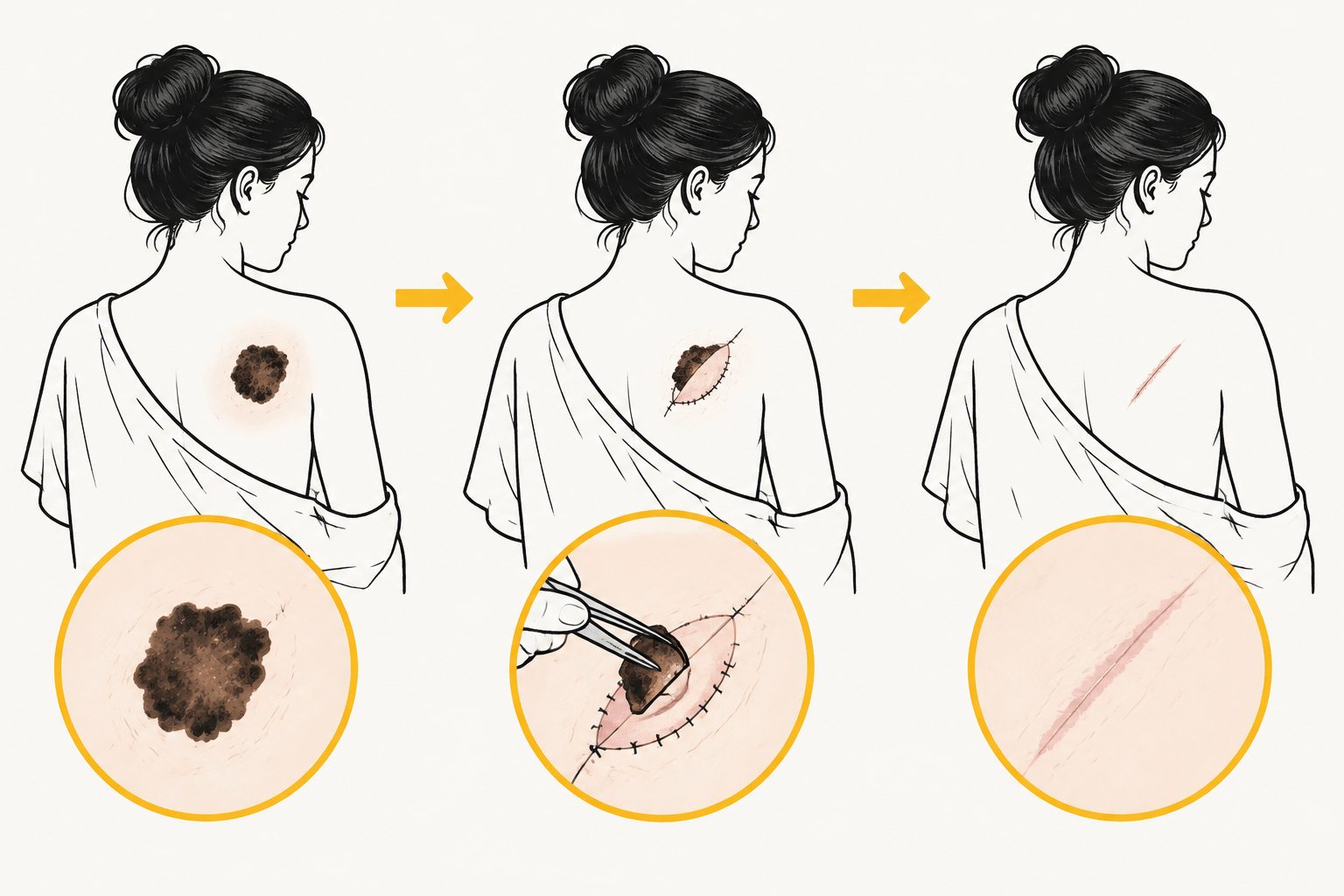
Researchers pooled results from seven human studies comparing multiple-staged with single-stage removal and reconstruction of congenital melanocytic nevi, sometimes called congenital moles. Staged surgery was associated with fewer major wound complications and recurrences, as well as slightly shorter and narrower scars, but the studies did not find a clear difference in cosmetic or overall patient satisfaction.
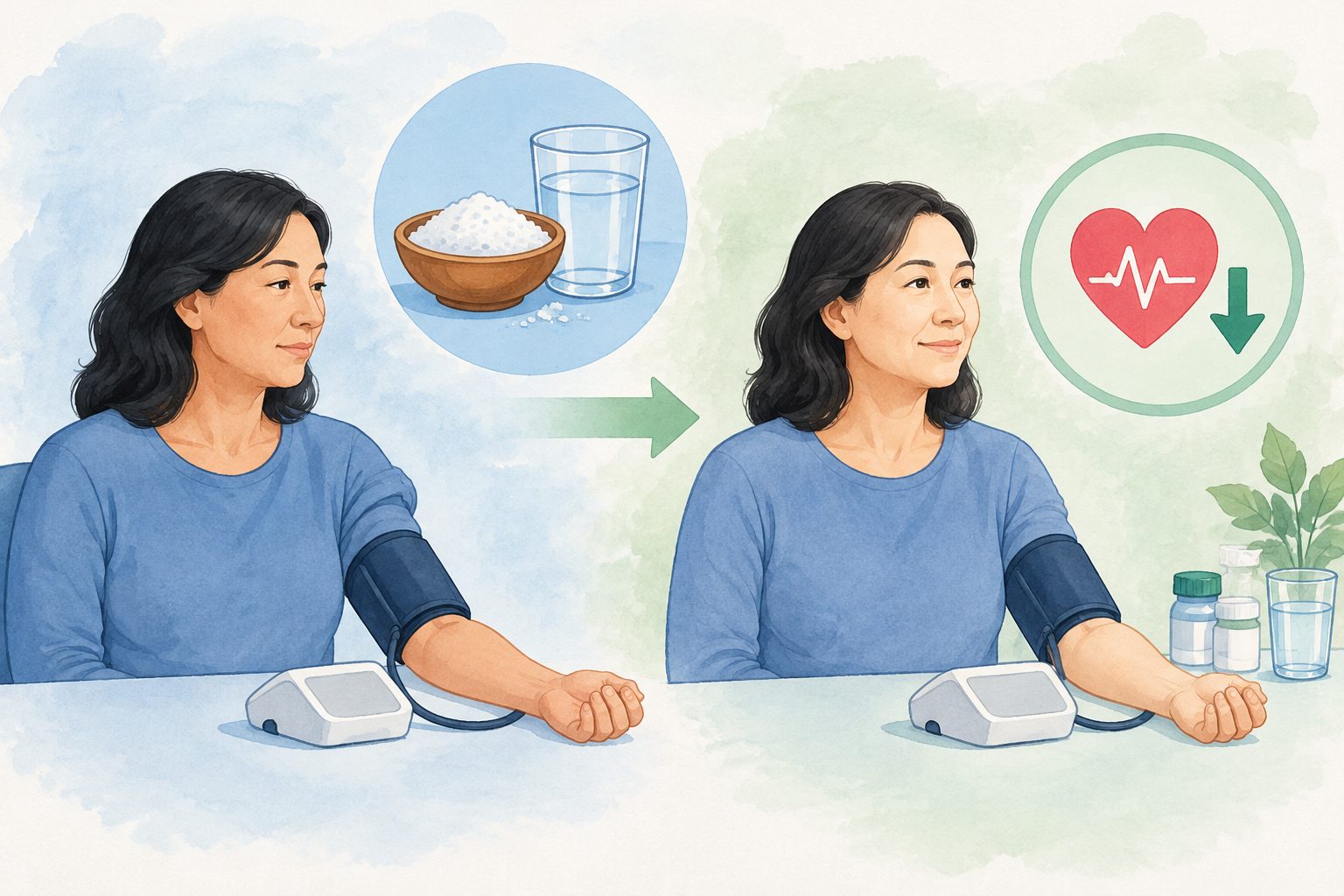
A cluster-randomized human study in 210 adults with recently detected stage 1 hypertension in Uzbekistan compared salt-sensitivity testing followed by assigned medication choices with conventional management. After 12 weeks, more participants in the testing-guided group reached the study's blood pressure target, although the study was small, short, and conducted in only three primary care centers.