Review examines passion fruit and blood pressure in animal and human studies
The analysis reports possible blood-pressure effects, but says the limited human research needs larger, longer studies.
High evidenceMixed evidenceInterpret with caution
Medical disclaimer: This article summarizes research findings and is for informational purposes only. It is not medical advice.
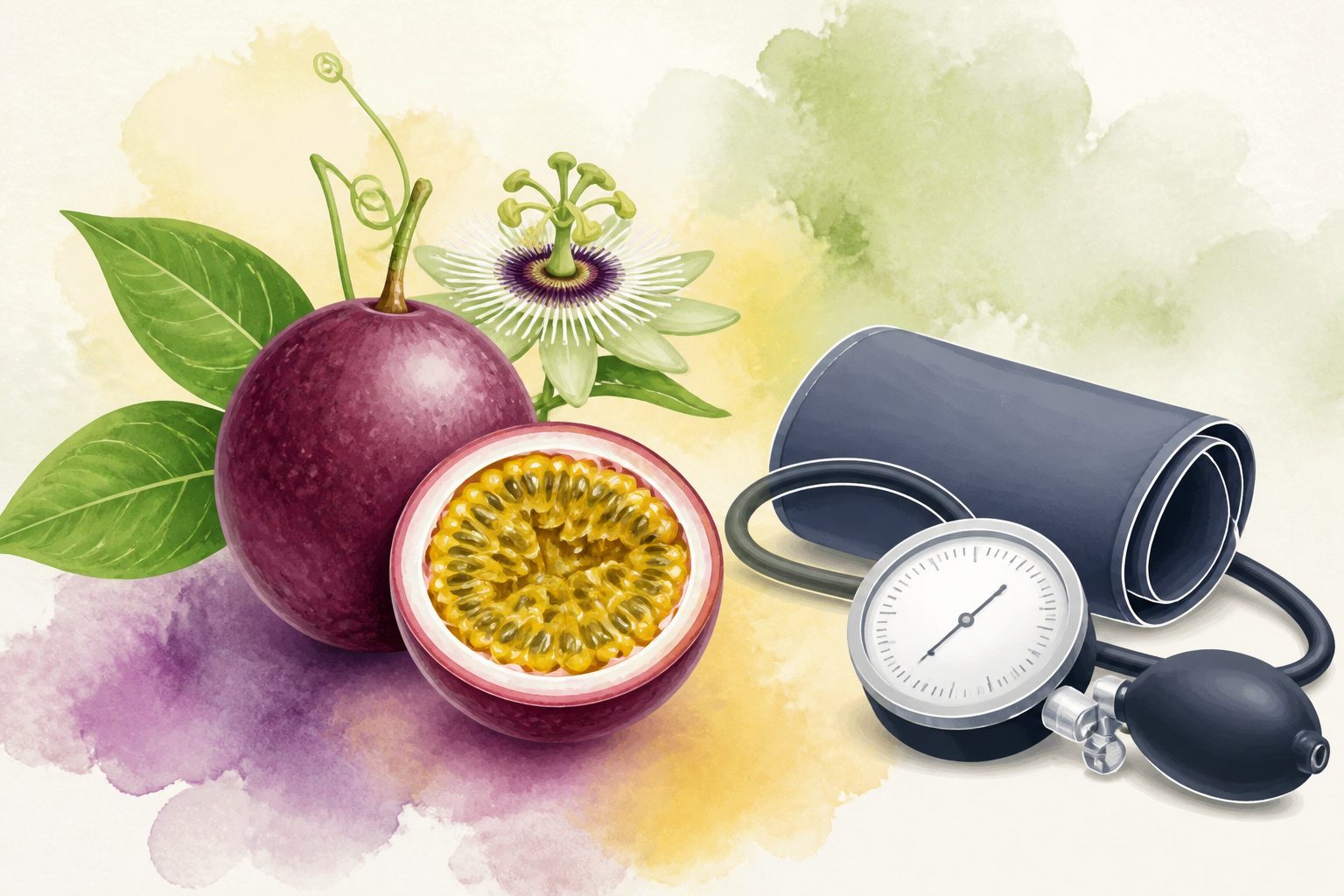
Editorial illustration — not from the study.
Researchers searched three scientific databases for preclinical and clinical studies that measured blood pressure or blood-vessel outcomes after Passiflora edulis was given. Eight studies met the review criteria. In preclinical work, extracts were associated with lower blood pressure and relaxation of blood vessels, while the two human trials reported reductions in systolic and diastolic blood pressure.
The review also described proposed biological mechanisms, including effects involving nitric oxide, potassium channels, angiotensin II, and central nervous-system signaling. These mechanisms were proposed from the included research and do not show that passion fruit products cause a particular benefit in people. The authors said better-designed studies using standardized preparations are needed to clarify effects, safety, and longer-term use.
What the review covered
This systematic review assessed whether Passiflora edulis—passion fruit—could affect blood pressure or related blood-vessel outcomes. The researchers searched PubMed, Web of Science, and Scopus using predefined terms and included eight studies: six preclinical studies and two clinical human trials. The abstract does not provide the total number of human participants, details of the control groups, or enough information to determine whether all human studies were randomized. The included preclinical research involved animal and ex-vivo laboratory models; these findings are separate from the human trial findings.
Key conclusions
In the six preclinical studies, Passiflora edulis preparations were reported to reduce systolic blood pressure, diastolic blood pressure, or mean arterial pressure. Effects were reported both within 1–7 hours and after several days to weeks. In ex-vivo laboratory studies, seed extracts produced stronger blood-vessel relaxation responses—70% to 86%—than whole-fruit extracts, which produced responses of 20% to 31%. These are laboratory findings and do not directly represent effects in people. Proposed mechanisms included increased nitric oxide activity, potassium-channel activation, reduced angiotensin-II-related vessel tightening, and gamma-aminobutyric-acid-related reduction in sympathetic signaling.
The two human trials reported reductions in systolic blood pressure of 7.7 to 30.9 mmHg and reductions in diastolic blood pressure of up to 24.6 mmHg. The abstract does not provide enough information to judge the precision, statistical reliability, or comparability of these estimates. Improvements in left-ventricular function were reported in animal models, not established in humans.
Who this may apply to
The human findings may be relevant only to people similar to those enrolled in the two included trials, whose characteristics and total sample size are not stated in the abstract. Animal and ex-vivo laboratory findings apply to those models and do not yet apply to any patient population. The review does not establish effects for people with hypertension generally, long-term safety, interactions with medicines, or the effects of specific commercial passion fruit products.
Why it matters
The review brings together early evidence about a commonly known fruit and blood-pressure-related outcomes. It suggests that Passiflora edulis merits further study, but the human evidence is too limited and inconsistent to establish its role in blood-pressure management. Findings from animals and ex-vivo laboratory models may not translate to humans, and proposed mechanisms are not proof of a clinical effect.
Limitations & evidence assessment
Only eight studies were included, with just two human trials. The human studies had small sample sizes, according to the abstract, and used different extract preparations; their follow-up periods were short. The review does not provide enough information in the abstract about participant numbers, study controls, randomization, or the quality of each included study. Much of the evidence came from animal and ex-vivo laboratory models, which cannot by themselves establish effects in patients. The authors also noted that standardized extracts, longer-term safety data, and well-designed clinical trials are still needed.
Why this evidence level: Systematic review aggregating primary studies with explicit methodology.
Evidence levels are editorial estimates derived from study metadata — they are not clinical appraisals.
This systematic review examined randomized human trials of concurrent chemotherapy and radiation for locally advanced head and neck, cervical, esophageal, and non-small-cell lung cancers. Across the included trials, combined treatment was reported to provide better overall survival than radiation alone, but it also caused more severe short-term side effects. The review did not provide enough information in its abstract to show how many trials or patients were included.
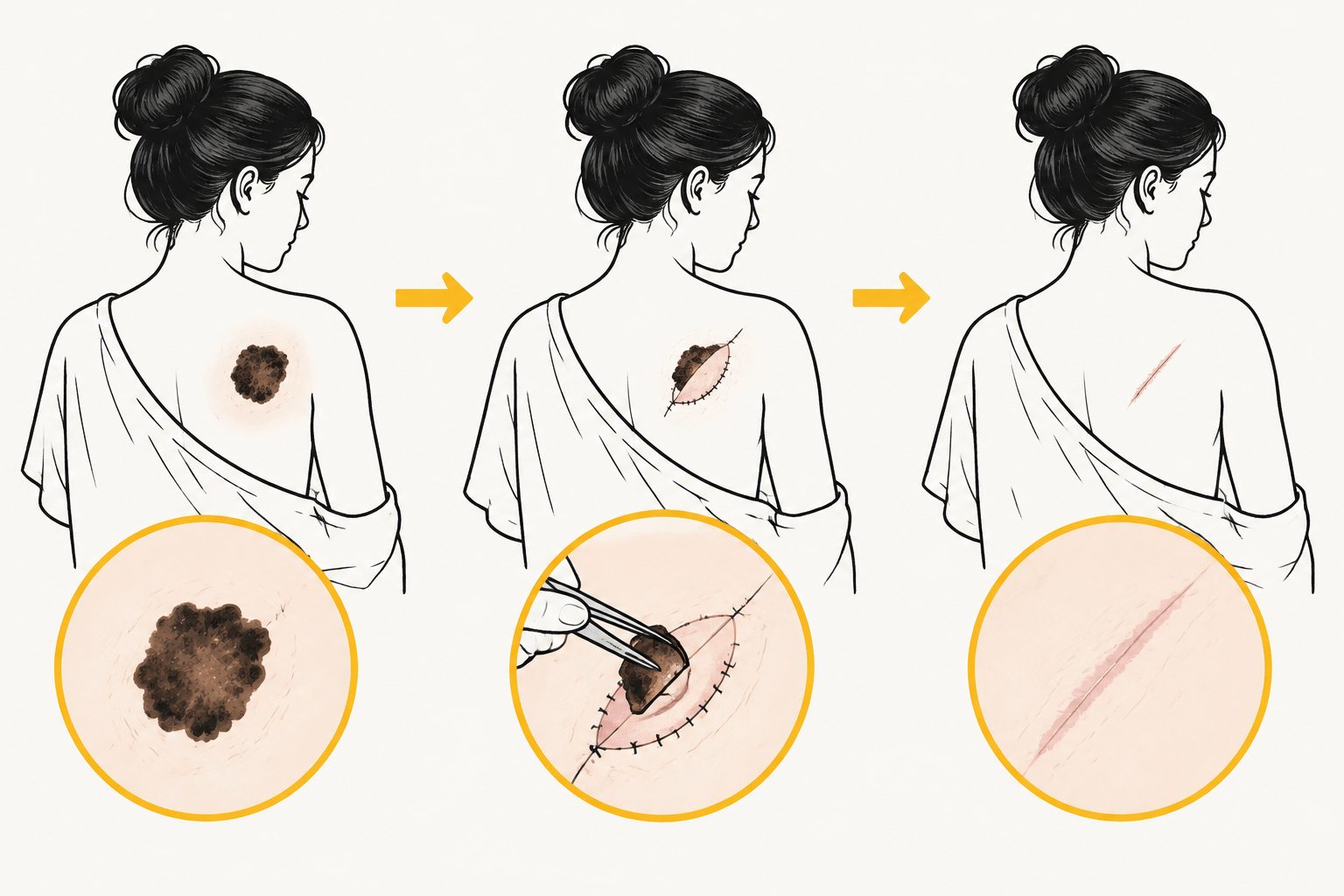
Researchers pooled results from seven human studies comparing multiple-staged with single-stage removal and reconstruction of congenital melanocytic nevi, sometimes called congenital moles. Staged surgery was associated with fewer major wound complications and recurrences, as well as slightly shorter and narrower scars, but the studies did not find a clear difference in cosmetic or overall patient satisfaction.
A cluster-randomized human study in 210 adults with recently detected stage 1 hypertension in Uzbekistan compared salt-sensitivity testing followed by assigned medication choices with conventional management. After 12 weeks, more participants in the testing-guided group reached the study's blood pressure target, although the study was small, short, and conducted in only three primary care centers.