Researchers report stone cultures were linked with more sepsis after urinary stone procedures
In 143 patients, bacteria were found more often in stones than in pre-surgery urine, but the study does not prove that stone cultures improve outcomes.
Low evidenceHuman studySome caution advised
Medical disclaimer: This article summarizes research findings and is for informational purposes only. It is not medical advice.
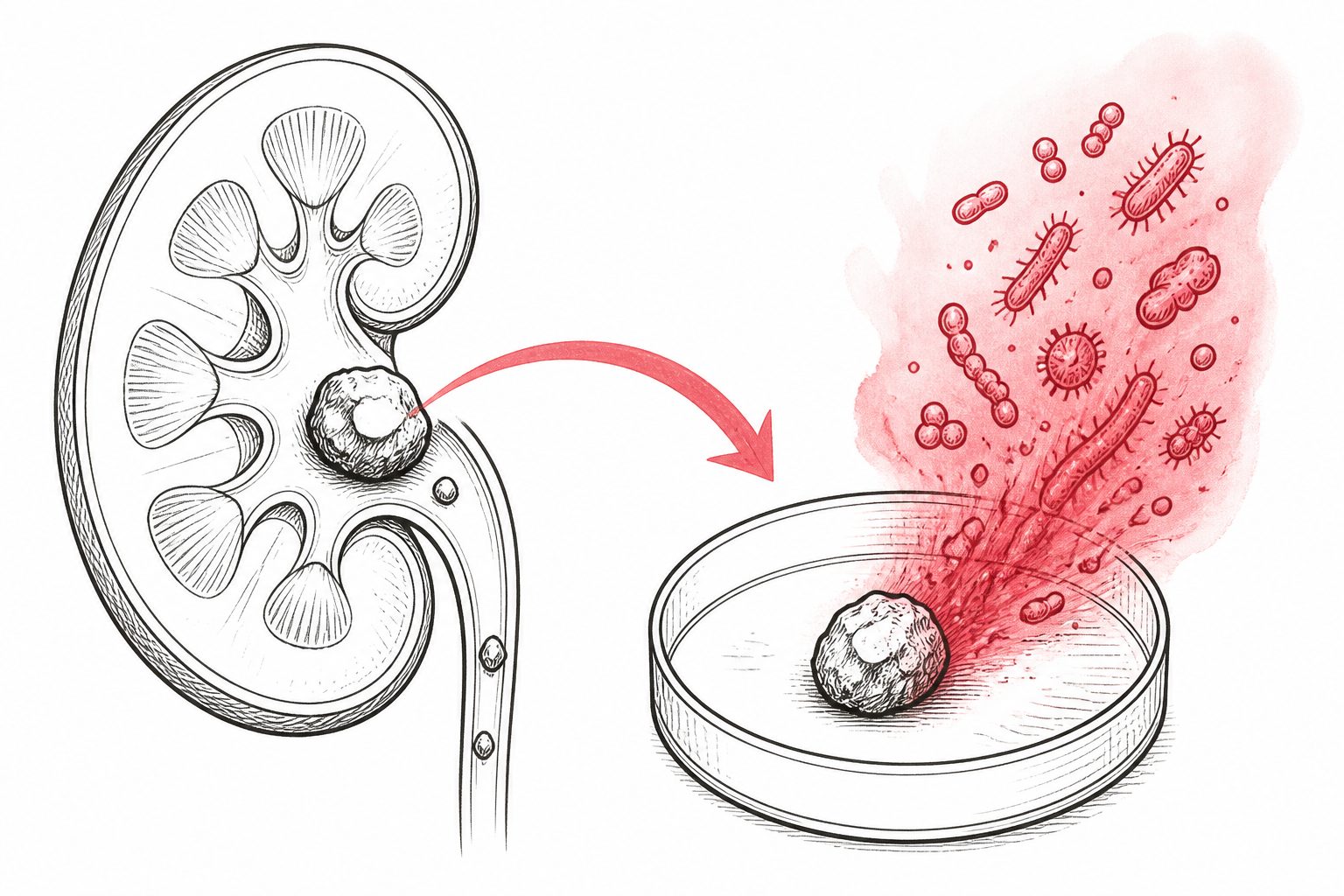
Editorial illustration — not from the study.
Researchers studied people undergoing percutaneous nephrolithotomy, ureteroscopic lithotripsy, or cystolithotripsy between March 2023 and May 2024. They compared mid-stream urine cultures collected before surgery with cultures taken from the stones during the procedure, then monitored participants for postoperative sepsis using infection plus standard Systemic Inflammatory Response Syndrome criteria.
Stone cultures were positive in 40 of 143 patients, compared with 15 positive pre-surgery urine cultures. Nine patients developed postoperative sepsis. Sepsis occurred more often among patients with positive stone cultures, but the study design cannot determine whether the cultures themselves affected this risk or whether other differences between patients contributed.
What the study looked at
The researchers examined whether pre-operative mid-stream urine cultures matched cultures taken directly from urinary stones during surgery, and whether either result was associated with postoperative urosepsis. The prospective observational study included 143 human patients who underwent percutaneous nephrolithotomy, ureteroscopic lithotripsy, or cystolithotripsy from March 2023 through May 2024. Researchers assessed whether cultures were positive, which bacteria were identified, and whether patients developed postoperative sepsis.
What the analysis found
Pre-operative urine cultures were positive in 15 patients, or 10.5%, while intra-operative stone cultures were positive in 40 patients, or 28%; the abstract reports this difference as statistically significant. Escherichia coli was the most common organism in both types of culture, accounting for 73.3% of positive urine cultures and 50% of positive stone cultures. Matching bacterial growth was reported in 4 of 55 cases, or 7.3%.
Nine patients, or 6.3%, developed postoperative sepsis. This included 7 of 40 patients with positive stone cultures and 2 of 103 with negative stone cultures. The abstract reports a statistically significant association between positive stone cultures and postoperative sepsis. Pre-operative urine culture status was not significantly associated with sepsis. These results do not establish that stone cultures cause differences in sepsis risk or that using them would improve treatment or outcomes.
Who this may apply to
These findings may be most relevant to patients similar to the 143 people studied who undergo the same types of procedures for urinary stones. They should not automatically be generalized to people having other procedures, people with different health conditions, or healthcare settings with different testing and infection practices. The study does not establish that every patient will have the same culture results or sepsis risk, and it does not by itself demonstrate a benefit from routine stone-culture testing.
Why it matters
The study suggests that bacteria in urinary stones may not always be detected by a pre-surgery urine culture, at least in this group of patients. This may be relevant to clinicians and researchers studying infections after urinary stone procedures, but the findings alone do not show that routinely performing stone cultures improves patient outcomes or that culture-guided treatment is more effective. Further research would be needed to evaluate those questions.
Limitations & evidence assessment
The study was observational and included only 143 patients, so unmeasured differences among patients or procedures could have influenced the association with sepsis. It included several different types of urinary stone procedures, and the abstract does not provide enough information about the study setting, patient characteristics, other risk factors, antimicrobial use, or the duration and completeness of follow-up. The abstract does not state whether the study was conducted at one or multiple centers. It reports associations but does not describe a randomized comparison of routine stone culture or show that stone culture-guided treatment changed outcomes.
Why this evidence level: This was a relatively small prospective observational study of 143 patients. It can identify associations between culture results and postoperative sepsis, but it cannot establish that stone cultures caused or prevented sepsis, and the abstract provides limited information about other factors that may have influenced the results.
Evidence levels are editorial estimates derived from study metadata — they are not clinical appraisals.
// Source
African Journal of Urology · 2026 · DOI: 10.1186/s12301-026-00606-1
This systematic review examined randomized human trials of concurrent chemotherapy and radiation for locally advanced head and neck, cervical, esophageal, and non-small-cell lung cancers. Across the included trials, combined treatment was reported to provide better overall survival than radiation alone, but it also caused more severe short-term side effects. The review did not provide enough information in its abstract to show how many trials or patients were included.
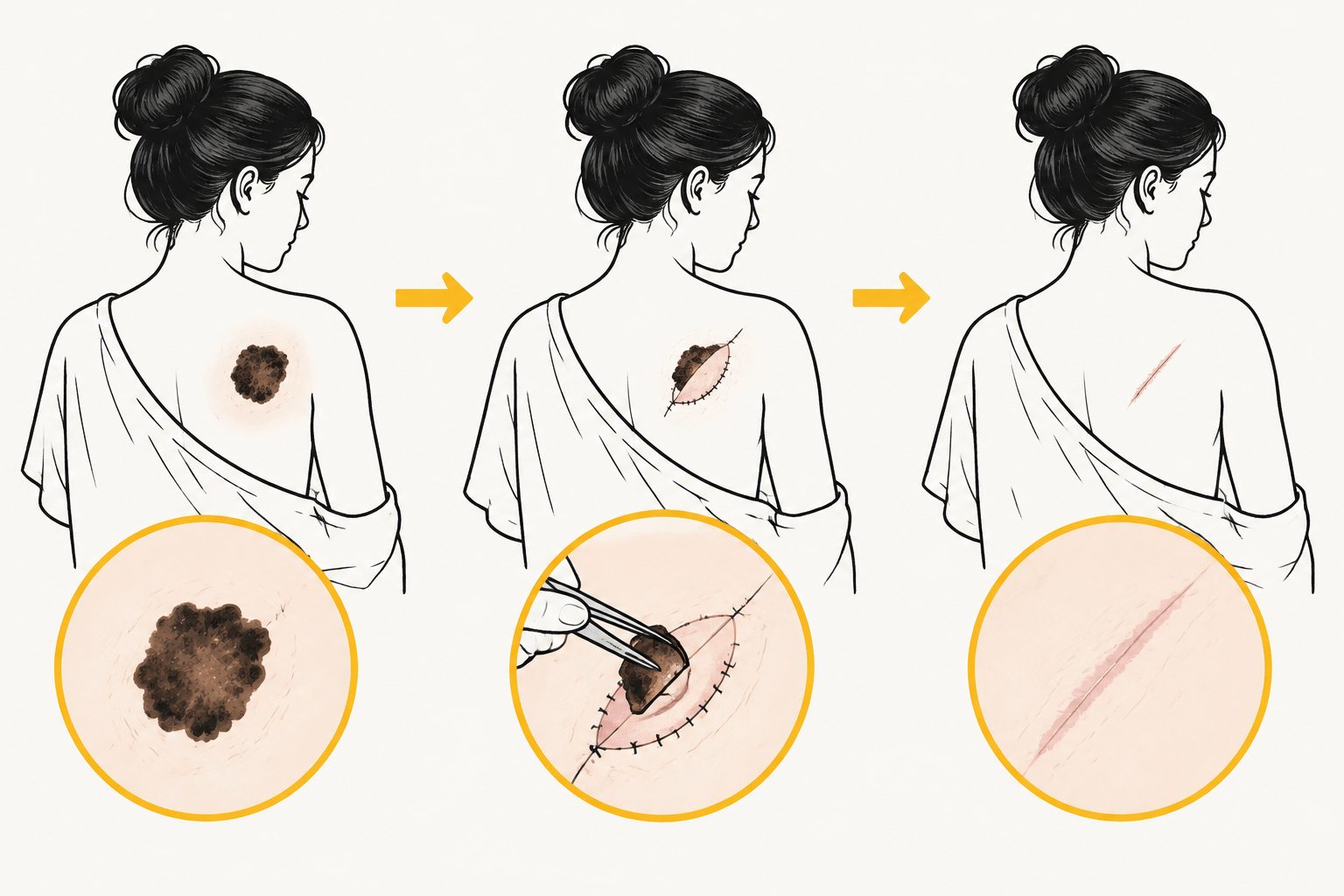
Researchers pooled results from seven human studies comparing multiple-staged with single-stage removal and reconstruction of congenital melanocytic nevi, sometimes called congenital moles. Staged surgery was associated with fewer major wound complications and recurrences, as well as slightly shorter and narrower scars, but the studies did not find a clear difference in cosmetic or overall patient satisfaction.
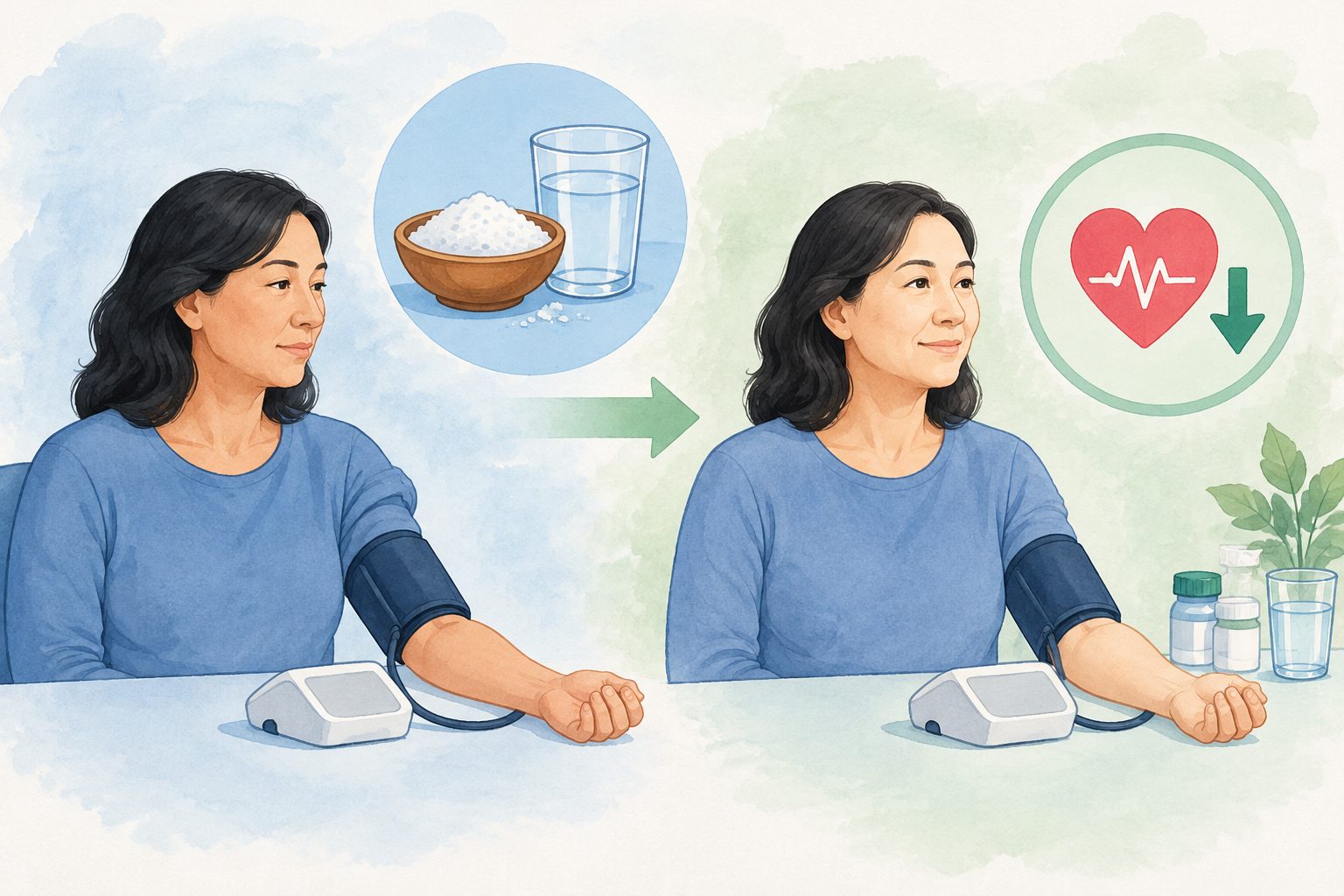
A cluster-randomized human study in 210 adults with recently detected stage 1 hypertension in Uzbekistan compared salt-sensitivity testing followed by assigned medication choices with conventional management. After 12 weeks, more participants in the testing-guided group reached the study's blood pressure target, although the study was small, short, and conducted in only three primary care centers.