Smarter nitrogen use could cut air pollution and bring climate benefits
Global model simulations suggest more efficient management could lower fine-particle pollution and ozone, reduce premature deaths and deliver longer-term climate and ecosystem gains.
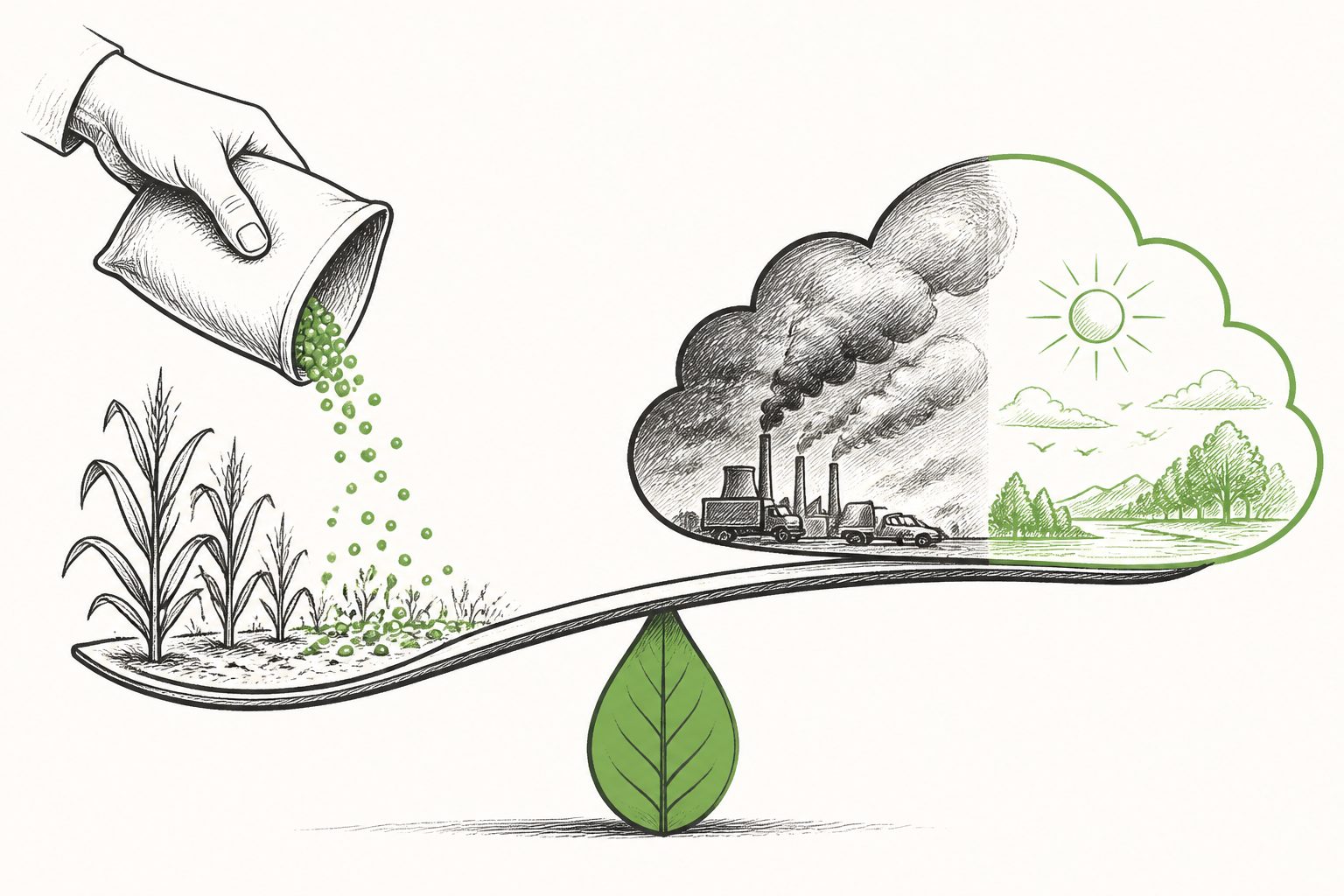
Editorial illustration — not from the study.
The study used ensemble simulations with the GISS and CESM global climate models to examine the combined effects of reducing reactive nitrogen pollution. By mid-century, both models projected lower global concentrations of fine particles and ground-level ozone, although the size of the changes differed between models.
The simulations also indicated that more than 80% of avoided premature deaths would occur between 0 and 60 degrees north latitude. Nitrogen management produced a modest, temporary near-term climate penalty, but reduced nitrous oxide emissions eventually outweighed that effect, producing longer-term climate, health and ecosystem co-benefits.
Cleaner air over time
By mid-century, global area-weighted average concentrations of fine particulate matter, known as PM2.5, fell by 0.16 micrograms per cubic metre in the GISS simulations and 0.13 micrograms per cubic metre in CESM. Regional reductions exceeded 5 micrograms per cubic metre.
The global area-weighted average of the daily eight-hour maximum ozone concentration fell by 1.69 parts per billion in GISS and 0.99 parts per billion in CESM. More than 80% of the avoided premature deaths occurred across 0–60 degrees north.
The models produced positive aerosol radiative forcing and negative ozone radiative forcing, resulting in a net positive forcing of 150 milliwatts per square metre in GISS and 60 milliwatts per square metre in CESM. In this study, that net effect represents a modest, temporary near-term climate penalty. Over the longer term, lower nitrous oxide emissions offset it and produced climate benefits.
Several gains from one change
Reactive nitrogen connects food production with air pollution and climate change. The results suggest that managing it more efficiently could address several problems at once: reducing harmful fine particles and ozone, avoiding premature deaths and lowering nitrous oxide emissions over the longer term.
The benefits would not be uniform. The simulations found that most avoided premature deaths occurred in the Northern Hemisphere between the equator and 60 degrees north, while regional air-quality improvements could be much larger than the global average.
Models and uncertainties
This is a modelling study, not a direct measurement of health or climate outcomes. The researchers ran ensemble simulations with two global climate models, GISS and CESM, and reported 95% confidence intervals for the projected radiative forcing and air-quality changes.
The models did not give identical results: for example, the projected global reductions in PM2.5 and ozone were larger in GISS than in CESM. The abstract does not specify the individual management measures represented or provide a single estimate of total avoided deaths, so the findings are projections whose size depends partly on the model and assumptions used.
// Source
npj Climate and Atmospheric Science · 2026 · DOI: 10.1038/s41612-026-01511-8
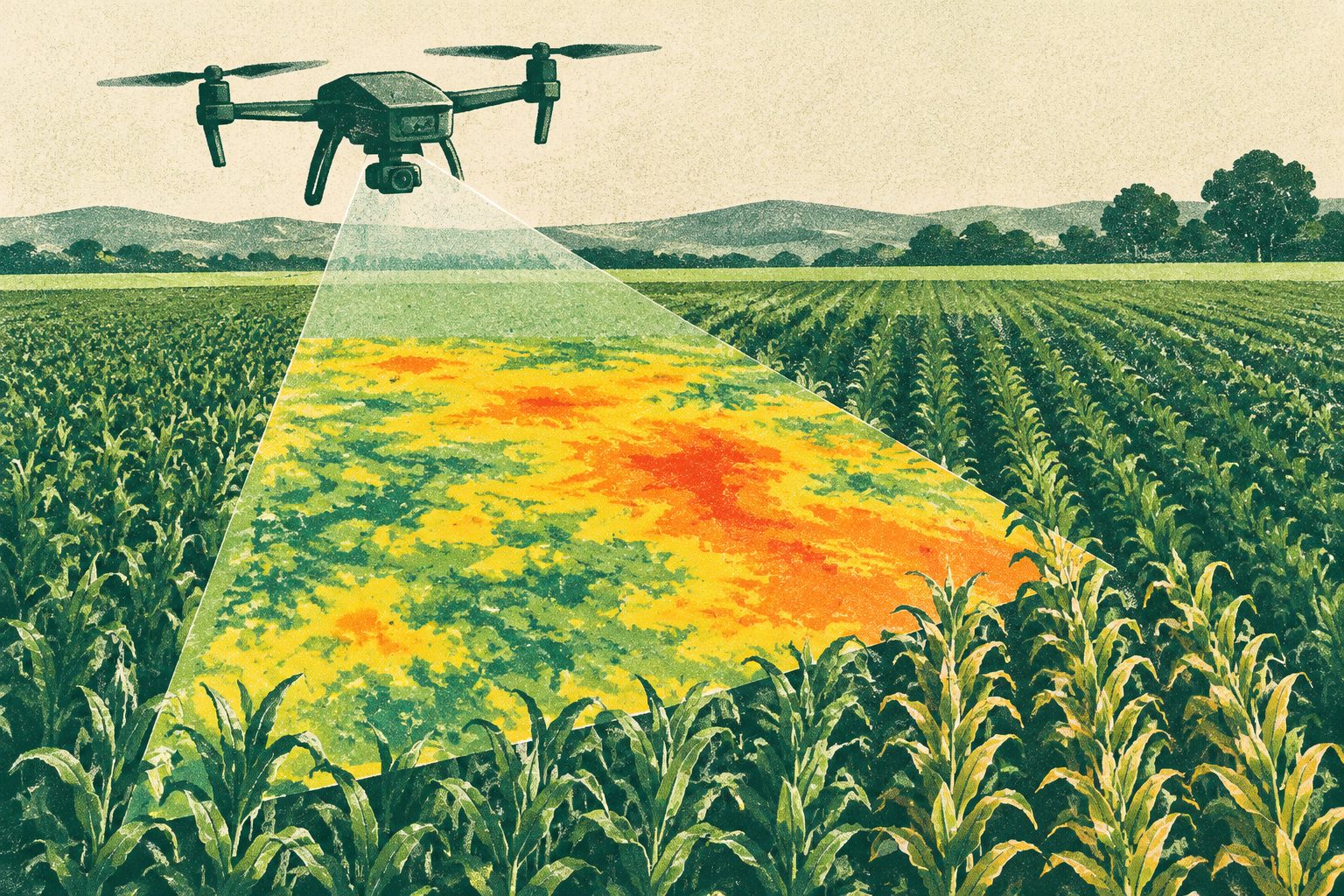
High-resolution drone maps detected early crop water stress before changes appeared in other plant measurements. The approach tracked evapotranspiration—the movement of water from soil and plants into the air—across sugar beet, potato and winter wheat fields.
A pilot-scale system removed long-chain PFAS, including PFOS and PFOA, from municipal wastewater and concentrated the compounds in a small volume of foam. Under the best-performing conditions, a subsequent treatment destroyed and removed more than 99% of measured PFAS in that concentrated foam.
Humpback whales in Monterey Bay fed more frequently when California sea lions were present. The whales appeared to spend less time searching and approaching prey, while the effort and movement of individual lunges showed no detectable increase.