Researchers report fewer shingles cases after LZ901 vaccination in adults 40 and older
The placebo-controlled study followed 26,018 adults for 12 months and also assessed short-term reactions and post-herpetic neuralgia.
Moderate evidenceHuman studySome caution advised
Medical disclaimer: This article summarizes research findings and is for informational purposes only. It is not medical advice.
Editorial illustration — not from the study.
In this large phase 3 trial, 26,018 adults aged 40 and older received either two doses of the LZ901 vaccine or two placebo injections 30 days apart. The trial was randomized and double-blind, meaning participants and researchers were not told which injection each person received during the study. Participants were followed for 12 months to assess shingles and safety outcomes.
Fewer confirmed shingles cases occurred among people who received LZ901 than among those who received placebo. Short-term injection-site and whole-body reactions were more common with LZ901, while severe reactions were uncommon and occurred at similar rates in both groups. The abstract reports no serious adverse events or safety concerns associated with LZ901.
What was studied
Researchers examined whether LZ901, a recombinant protein vaccine with an aluminum hydroxide adjuvant, could reduce shingles among adults aged 40 and older. The multicentre phase 3 trial randomly assigned 26,018 participants to receive two intramuscular LZ901 doses or two placebo doses 30 days apart. It was double-blind and placebo-controlled, and the primary outcome was shingles risk during the 12 months after vaccination. The study also assessed immune responses, post-herpetic neuralgia, and safety.
Key findings
During 12 months of follow-up, 15 of 13,010 LZ901 recipients and 178 of 13,008 placebo recipients were confirmed to have shingles. The reported overall vaccine efficacy was 91.6% (95% confidence interval, 86.3% to 95.3%). Reported efficacy was 93.9% among adults aged 40 to 69 and 66.9% among those aged 70 and older; the estimate for the older group was less precise, with a confidence interval of 14.6% to 89.2%.
Post-herpetic neuralgia occurred in 1 of 15 people with shingles in the LZ901 group and 24 of 187 people with shingles in the placebo group. This corresponded to a reported vaccine efficacy of 95.5%, although these results were based on a small number of cases. Injection-site and systemic reactions within seven days were more frequent after LZ901 than after placebo. Grade 3 reactions occurred in 0.3% of LZ901 recipients and 0.4% of placebo recipients. The abstract reports no serious adverse events or safety concerns associated with LZ901.
Who this is relevant to
The findings may apply to adults aged 40 and older who are similar to the 26,018 trial participants. They do not establish effects in people younger than 40, protection beyond 12 months, or results in populations that differ substantially from those studied.
The significance
Shingles can occur when the virus that causes chickenpox becomes active again, and post-herpetic neuralgia is a painful complication that can follow shingles. This trial provides human evidence about LZ901's short-term performance in adults aged 40 and older, including older participants. It does not determine how long protection lasts, how the vaccine compares with other vaccines, or whether the results apply to people outside the studied population. It also does not show that every vaccinated person will avoid shingles or its complications.
Limitations & evidence assessment
The follow-up period was 12 months, so the study does not show how long protection or safety effects last. The findings on post-herpetic neuralgia were based on relatively few shingles cases, especially in the LZ901 group, and the wide confidence interval for participants aged 70 and older indicates uncertainty in that age subgroup. The abstract provides limited information about participant characteristics, study locations, and detailed safety outcomes. As with any trial, results may not apply fully to people who differ from the study population.
Why this evidence level: Clinical trial without confirmed randomization details in the available metadata.
Evidence levels are editorial estimates derived from study metadata — they are not clinical appraisals.
This systematic review examined randomized human trials of concurrent chemotherapy and radiation for locally advanced head and neck, cervical, esophageal, and non-small-cell lung cancers. Across the included trials, combined treatment was reported to provide better overall survival than radiation alone, but it also caused more severe short-term side effects. The review did not provide enough information in its abstract to show how many trials or patients were included.
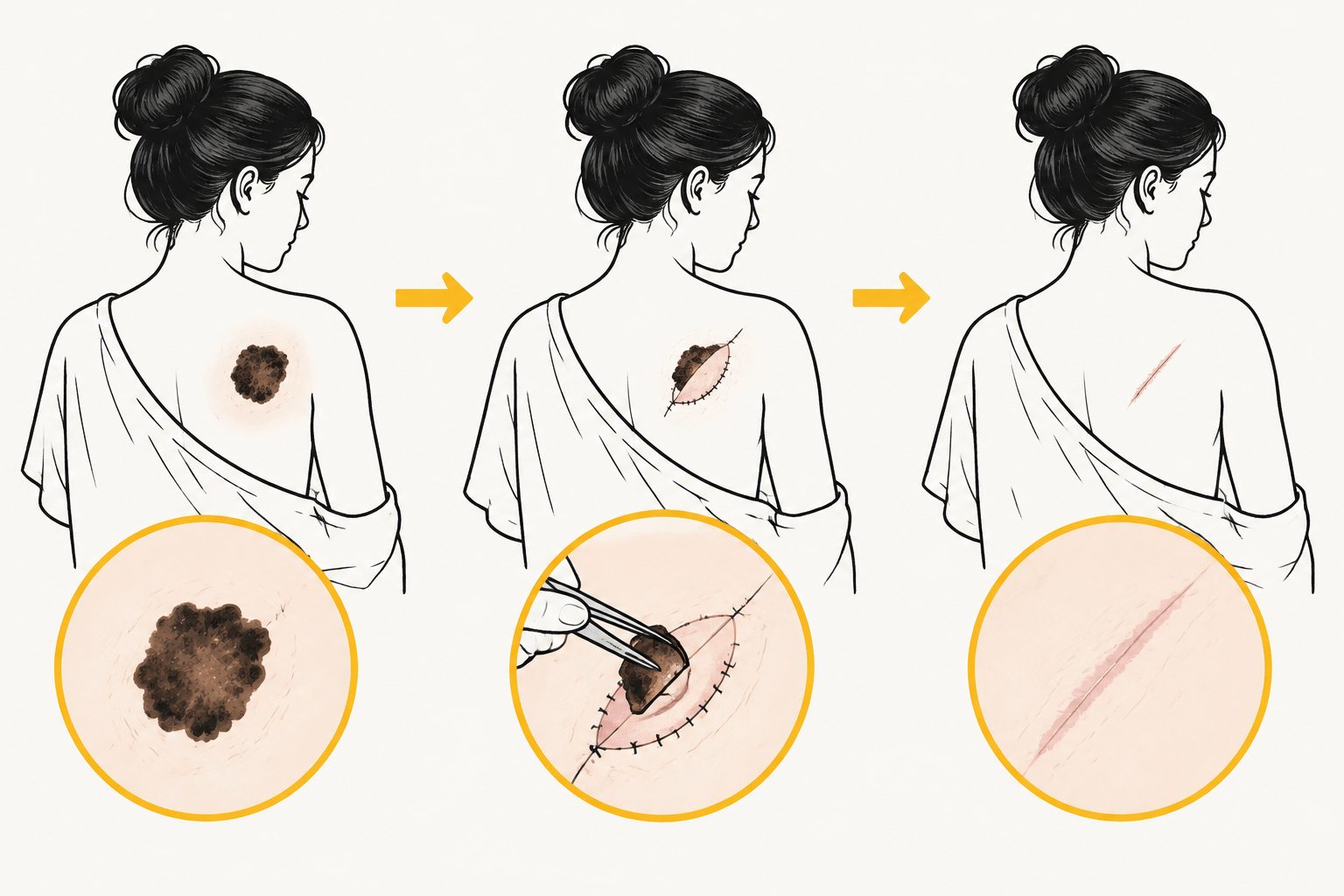
Researchers pooled results from seven human studies comparing multiple-staged with single-stage removal and reconstruction of congenital melanocytic nevi, sometimes called congenital moles. Staged surgery was associated with fewer major wound complications and recurrences, as well as slightly shorter and narrower scars, but the studies did not find a clear difference in cosmetic or overall patient satisfaction.
A cluster-randomized human study in 210 adults with recently detected stage 1 hypertension in Uzbekistan compared salt-sensitivity testing followed by assigned medication choices with conventional management. After 12 weeks, more participants in the testing-guided group reached the study's blood pressure target, although the study was small, short, and conducted in only three primary care centers.