Researchers used foam air samplers to identify the bacteria and fungi people may be breathing in 10 sites across five countries.
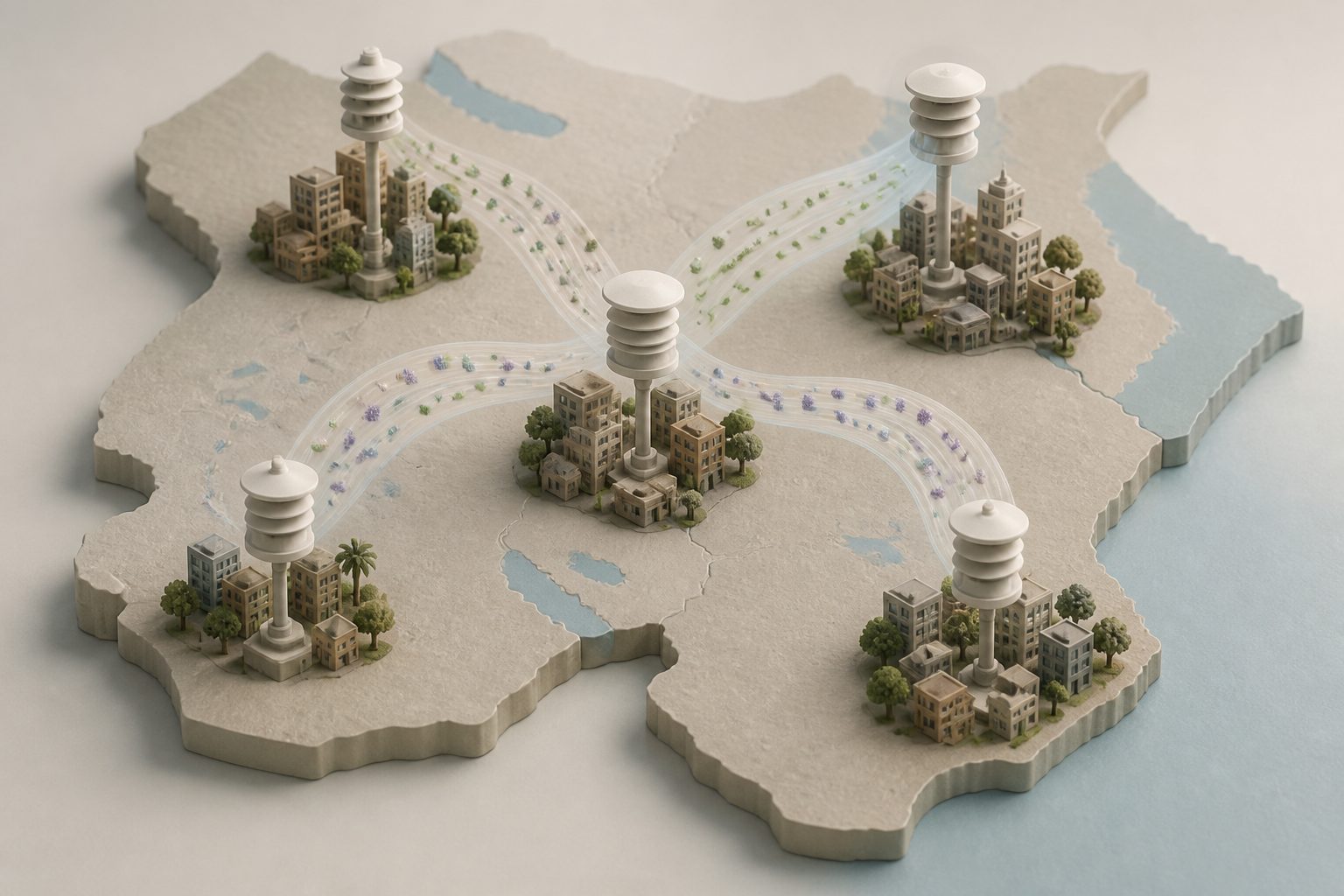
The researchers collected airborne microbes from 10 locations in five East African countries—Burundi, the Democratic Republic of the Congo, Kenya, Rwanda, and Tanzania—using polyurethane foam passive air samplers deployed at the same time. They then used DNA sequencing to identify bacterial and fungal groups in the air.
At the genus level, several bacteria and fungi commonly found outdoors were detected across sites. Country-level comparisons showed no significant differences for bacteria, while fungi differed significantly among countries; the patterns also did not consistently track distance between nearby locations.
What they found in air
Using DNA sequencing of samples collected with polyurethane foam passive air samplers, the study detected multiple bacterial genera commonly found in outdoor air (including Massilia, Sphingomonas, Pseudomonas, Bacillus, and Kocuria) and multiple fungal genera (including Cladosporium, Alternaria, Aspergillus, Curvularia, and Penicillium).
When the team compared sites by country, bacterial communities did not show significant differences (ANOSIM R = −0.045, p = 0.597). Fungal communities did show significant differences among countries (ANOSIM R = 0.652, p = 0.002). In cross-border comparisons, nearby sites within 10 km did not consistently have similar microbial profiles.
// Source
npj Clean Air · 2026 · DOI: 10.1038/s44407-026-00093-2
Authors: Egide Kalisa, Tom Harner, Andrew Sudmant, Matthew Adams, Francisco Olea-Popelka, Yves Ujeneza, Franck Kwabe, Kevin Lee, Stephen B. Pointing, Antoine Nsabimana, Theoneste Ntakirutimana, Amandeep Saini, Jacob Mastin
Institutions: Western University, University of Toronto, National University of Singapore, University of Edinburgh, University of Rwanda, Environment and Climate Change Canada, University of Kigali, Rwanda Biomedical Center, Institut Supérieur Pédagogique de Bukavu, Auckland University of Technology