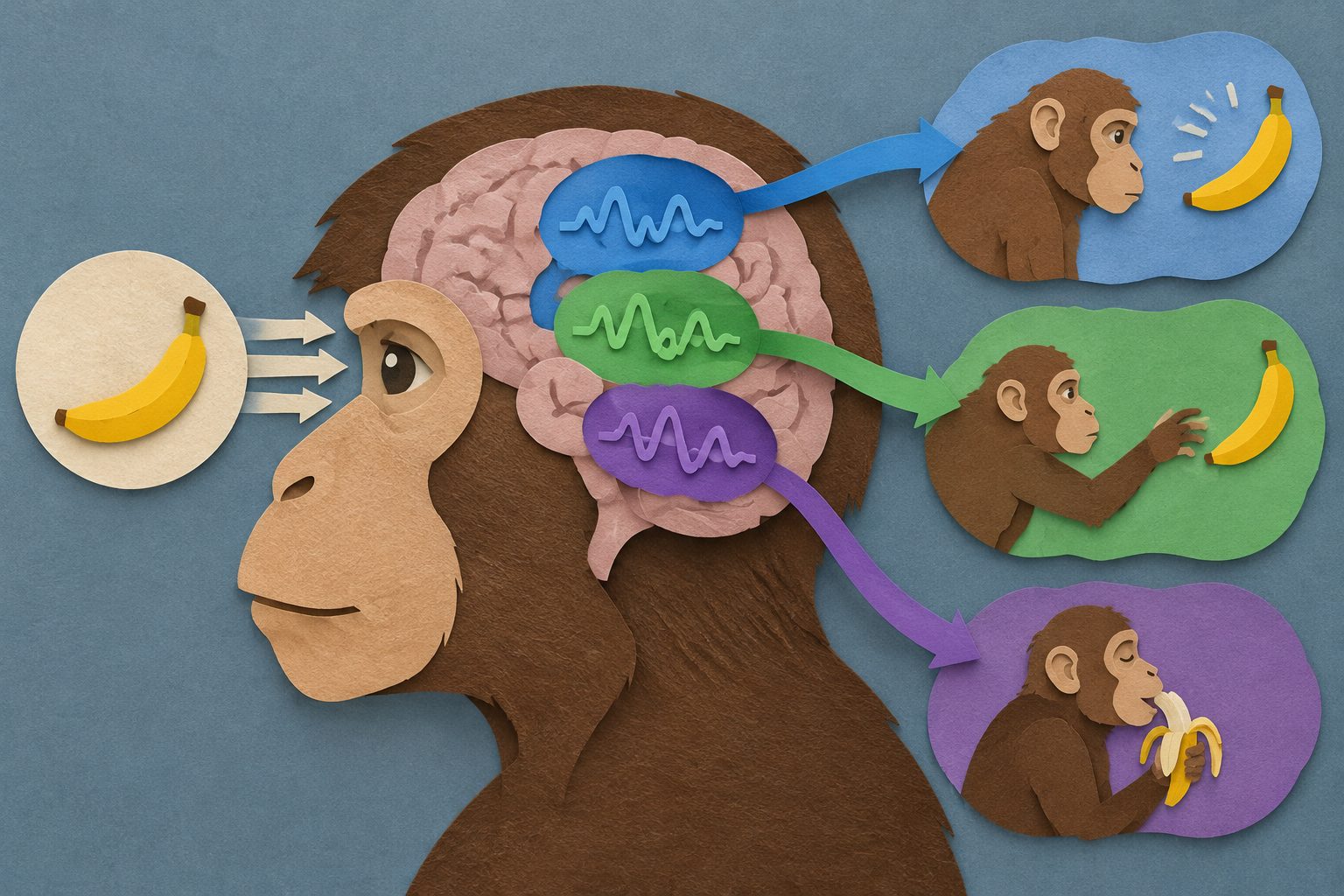
Researchers compared the middle temporal area, which is involved in visual motion perception, with the dorsolateral prefrontal cortex, which is implicated in decision-making and reward. Both regions encoded motion and reward information, but the middle temporal area kept the information separate while the prefrontal cortex combined it in a decision-related format.
A recurrent network model trained to reproduce these patterns predicted different effects of stimulation. In experiments with monkeys, stimulating the middle temporal area biased choices, while stimulating the dorsolateral prefrontal cortex produced “winner-take-all” outcomes.