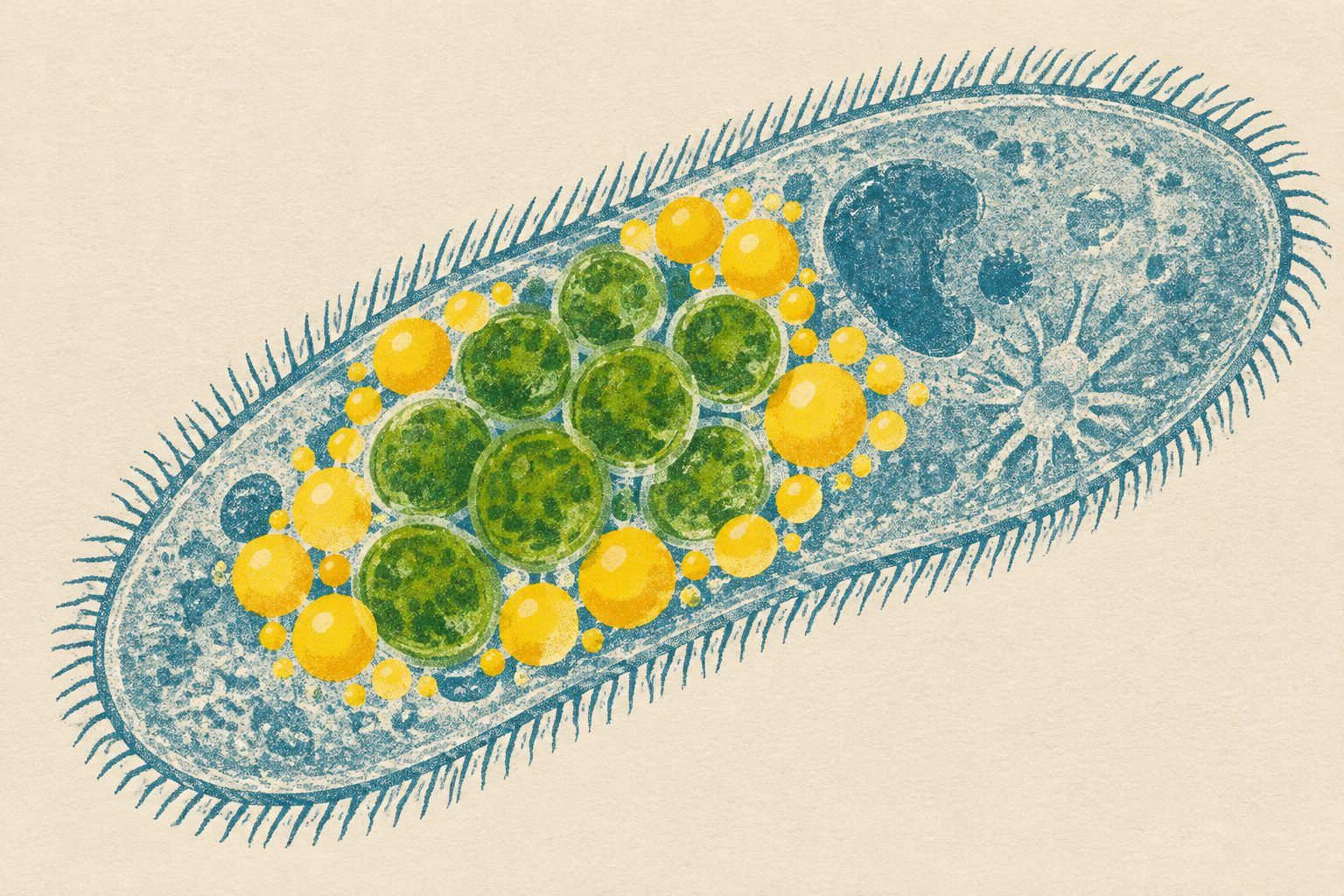
Researchers used mass spectrometry-based proteomics to map where proteins are found in P. bursaria cells with and without endosymbiotic algae. The work characterized the protein contents of the compartment that houses the algae and identified substantial changes in the host cell’s lipid droplets.
Imaging showed that the droplets changed in size, shape and position, accumulating near intracellular algae. When researchers used chemical inhibitors of lipid metabolism, the number of algae in symbiotic cells fell, indicating that lipid droplets contribute to the host–alga interaction.