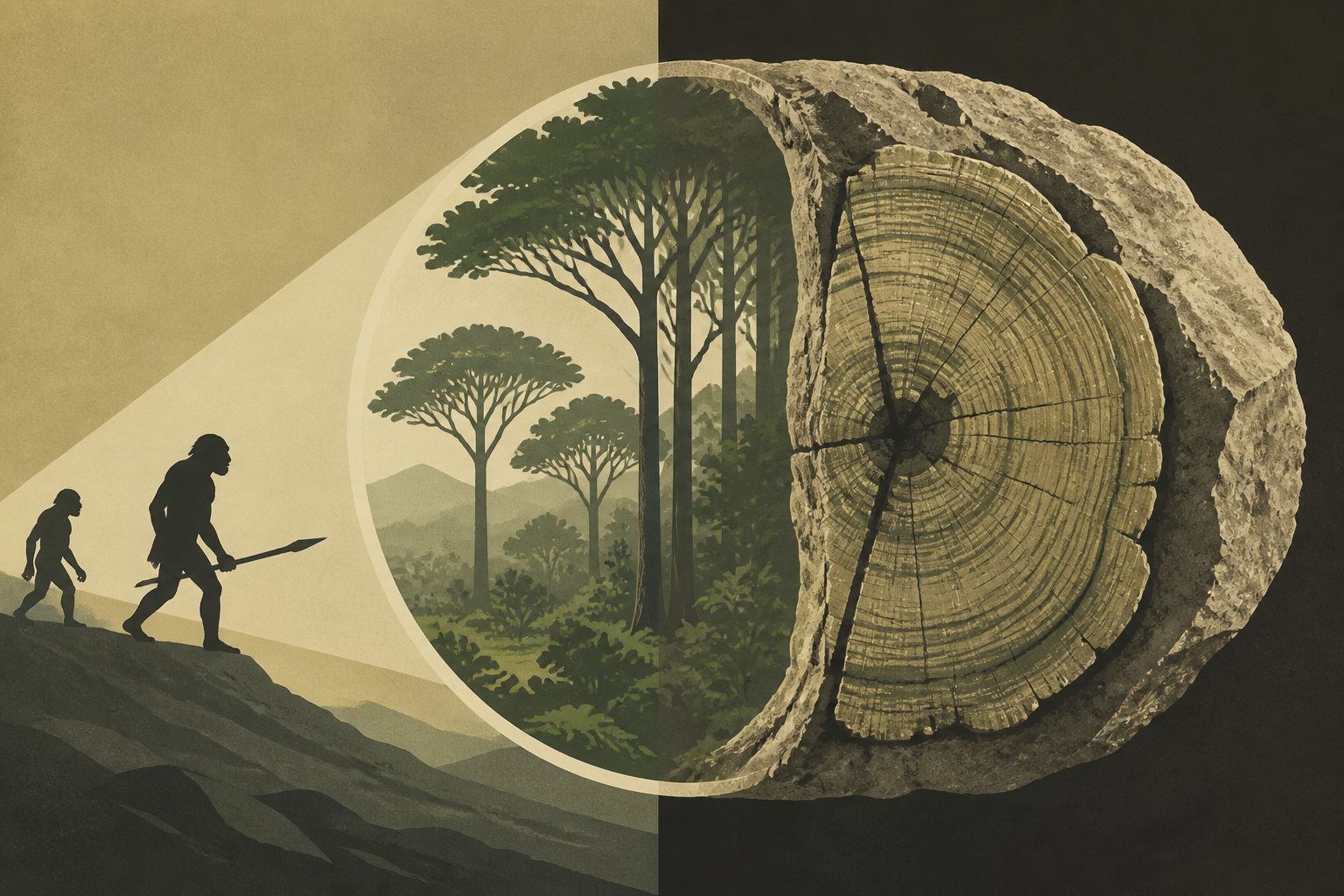
Three old fossil collections trace productive coastal woodlands from about 400,000 to 100,000 years ago and suggest seasonal hunting in different habitats.
Researchers reassessed three legacy animal collections from Naame, Nahr Ibrahim and Ras el-Kelb in Lebanon. They established direct dates for the collections and used animal remains, tooth-wear evidence and reconstructions of past landscapes to examine the ecology of the animals and hominins who lived alongside them.
Together, the collections provide a long record of the region's past environments. The results indicate that productive Mediterranean woodlands supported diverse hoofed-animal communities along the central Levantine coast, while hominins used seasonal, habitat-specific hunting strategies in coastal transition zones.
Woodlands and seasonal hunting
The three Lebanese collections represent a record spanning roughly 400,000 to 100,000 years ago, one of the longest described paleoecological records in the region. Productive Mediterranean woodland ecosystems persisted along the central Levantine coast through much of the Middle and Late Pleistocene and supported diverse communities of hoofed mammals. The evidence also indicates that hominins hunted seasonally in different habitats, including coastal transition zones. When placed in the wider Levantine context, the findings show clear ecological differences between the central and southern parts of the region.
// Source
Communications Earth & Environment · 2026 · DOI: 10.1038/s43247-026-03926-w
Authors: Gabriele Russo, Florent Rivals, Mathieu Duval, Scott D. McLin, Majid Aljaber Abo Fakher, Maya Haïdar-Boustani, Virginia Martínez-Pillado, Altuğ Hasözbek, Andrew Garrard, Faysal Bibi, Yamandú H. Hilbert, Sireen El Zaatari
Institutions: La Trobe University, University College London, University of Tübingen, Institució Catalana de Recerca i Estudis Avançats, Museum für Naturkunde, Griffith University, Universitat Rovira i Virgili, Bernstein Center for Computational Neuroscience Tübingen, Saint Joseph University, Ingeniería y Soluciones Informáticas (Spain), Senckenberg Centre for Human Evolution and Palaeoenvironment, Institut Català de Paleoecologia Humana i Evolució Social, Centro Nacional de Investigación sobre la Evolución Humana