Larger hydrocarbons make atmospheric models disagree about particle formation
A comparison of two chemistry models found similar results for simple compounds but growing differences as carbon structures became larger and more complex.
Editorial illustration — not from the study.
Researchers evaluated the open-source GECKO-A v1.0 model and its companion box model against the Master Chemical Mechanism, a widely used atmospheric chemistry model. They simulated the oxidation of butane, octane, dodecane, toluene and alpha-pinene under idealized conditions representing environments from urban to remote.
The models broadly agreed for small, structurally simple compounds. Their predictions separated more strongly as the carbon backbone grew or became more complex, especially after the first generation of oxidation products. The differences included the predicted volatility and particle-forming potential of the resulting organic compounds.
Where the models diverged
The two models followed broadly similar early oxidation pathways and produced similar overall distributions of organic groups. For a simple compound such as butane, their simulated trajectories remained comparable. Differences became more pronounced for larger and more complex hydrocarbons, after products from later stages of oxidation became dominant.
The study attributes this divergence to simplifications used when the Master Chemical Mechanism is constructed manually. Those simplifications appear to reduce the formation of compounds with several oxygen-containing functions and to encourage earlier breaking of the carbon backbone. The resulting predictions differed markedly for the volatility and water solubility of secondary organic carbon. The Master Chemical Mechanism produced low secondary organic aerosol yields across the tested compounds and environments, while GECKO-A's yields generally increased with the size and complexity of the starting hydrocarbon.
Differences in broad gas-phase measures, including ozone-related production and the chemical reactivity of air toward hydroxyl radicals, remained moderate in nitrogen-oxide-rich conditions but grew under more nitrogen-oxide-limited conditions.
Why particle predictions matter
Atmospheric models use chemical reaction mechanisms to estimate how emitted hydrocarbons are transformed into ozone, oxygen-containing compounds and secondary organic aerosol. If models treat later generations of oxidation products differently, they can give notably different estimates of how volatile those products are and how much particle material they form.
The results show that agreement between models for simpler hydrocarbons does not necessarily extend to larger, more structurally complex compounds. GECKO-A v1.0 is intended to make near-explicit mechanisms easier to generate and is now available as open-source software, which may support comparisons and sensitivity studies involving compounds that are difficult to represent manually.
What the comparison shows
This was a model comparison, not a set of atmospheric measurements or a direct test of which mechanism is more accurate. The researchers simulated five representative hydrocarbons under idealized conditions spanning urban to remote environments. The study therefore documents differences between the two mechanisms and their consequences within these simulations; it does not by itself establish the real-world secondary organic aerosol yield for every hydrocarbon or environment.
GECKO-A also has a defined chemical scope. Its current version does not represent polycyclic aromatic compounds, amines or, more generally, organic compounds containing elements beyond carbon, hydrogen, oxygen and nitrogen. The model-generation approach relies on predefined reaction pathways and structure-based estimates of reaction rates and products when measurements are unavailable.
// Source
Geoscientific model development · 2026 · DOI: 10.5194/gmd-19-10395-2026
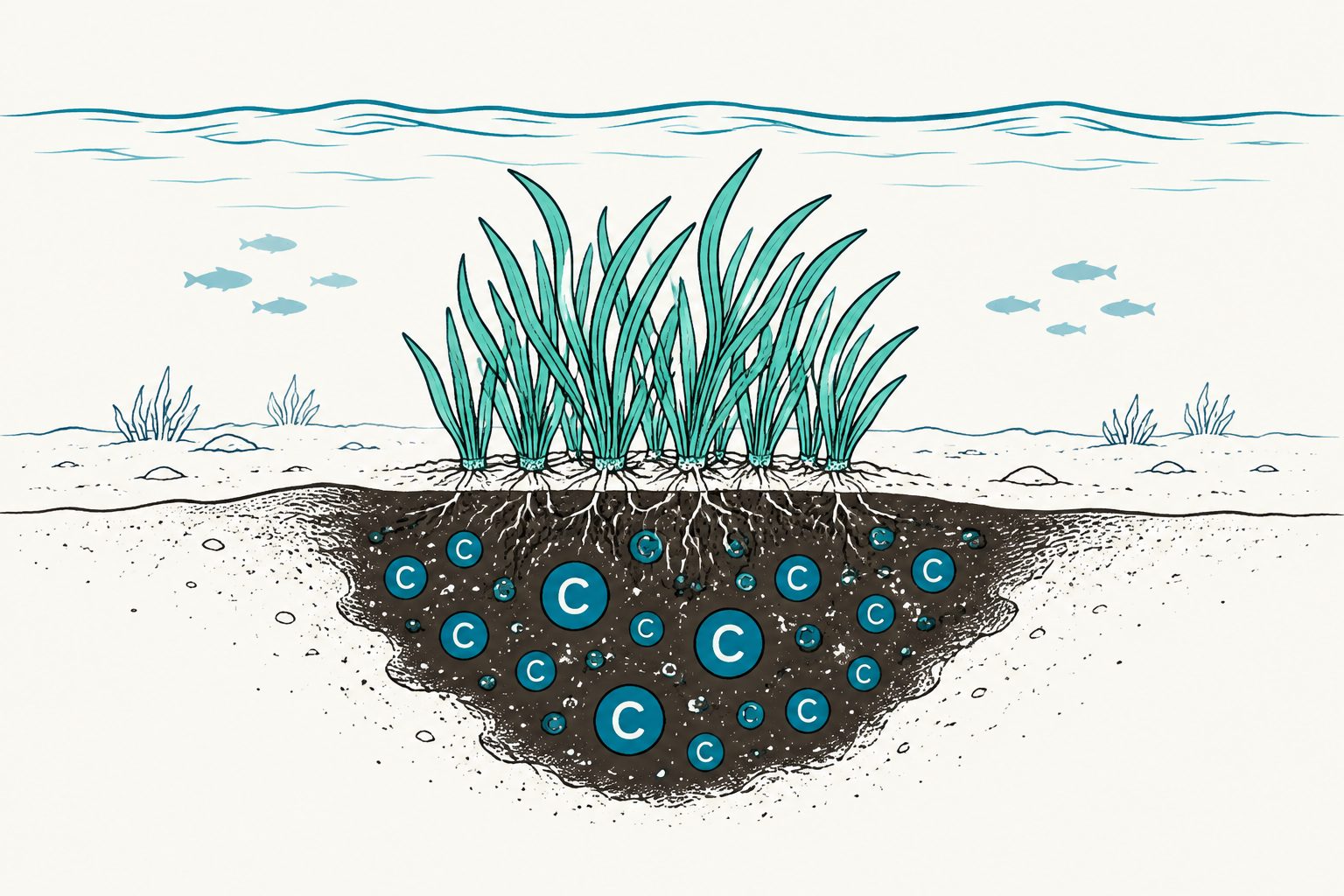
A synthesis of 326 dated sediment cores revises downward the estimated rate at which seagrass meadows bury organic carbon. Even so, the study estimates that seagrass sediments account for 3–6% of total oceanic organic-carbon burial.
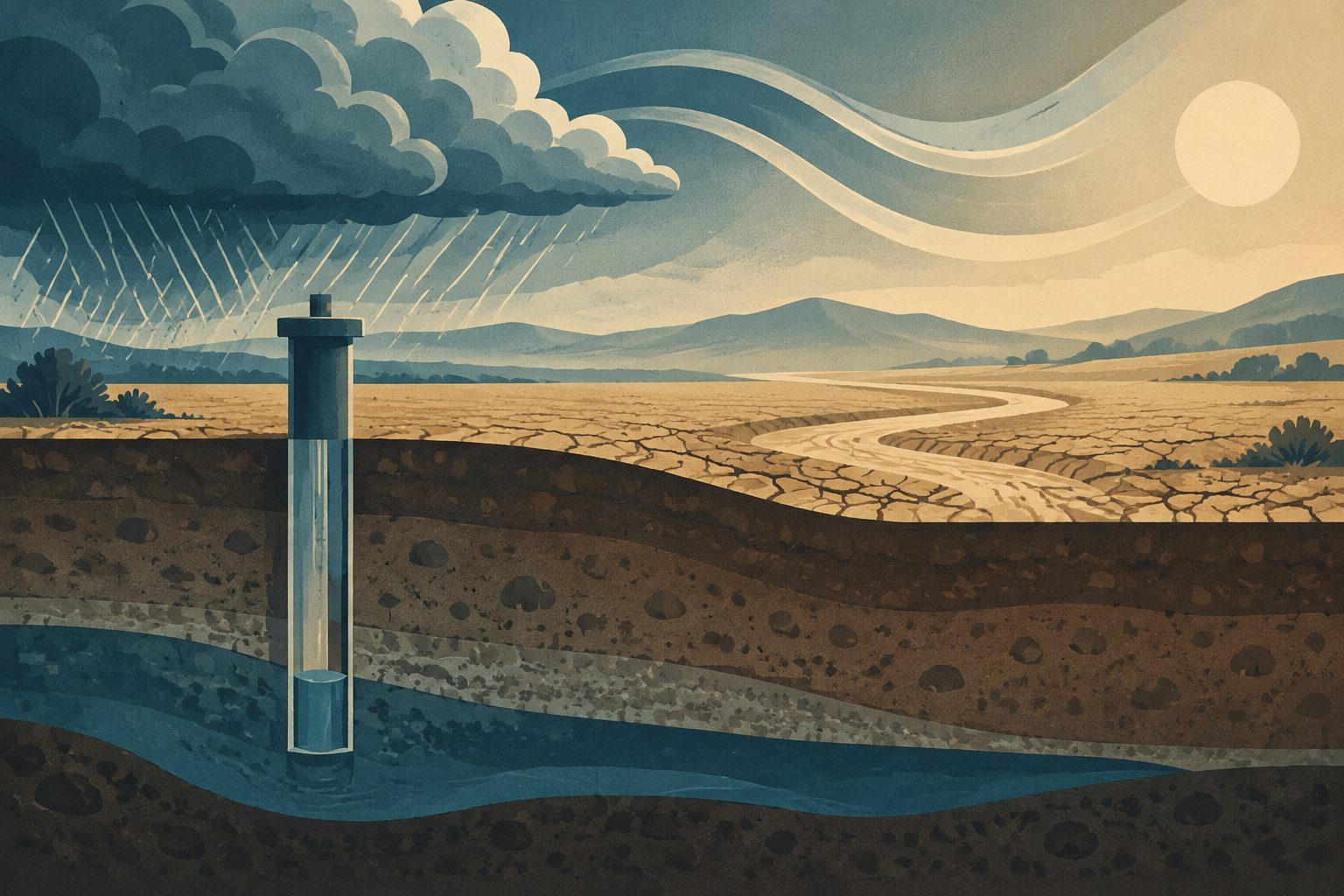
A study of global groundwater conditions from 1960 to 2019 finds that 35% of the world had an average groundwater drought duration lasting multiple years. In most of these areas, underground conditions extended the drought signal from the weather, while some areas may be monitored using weather patterns as an early warning.
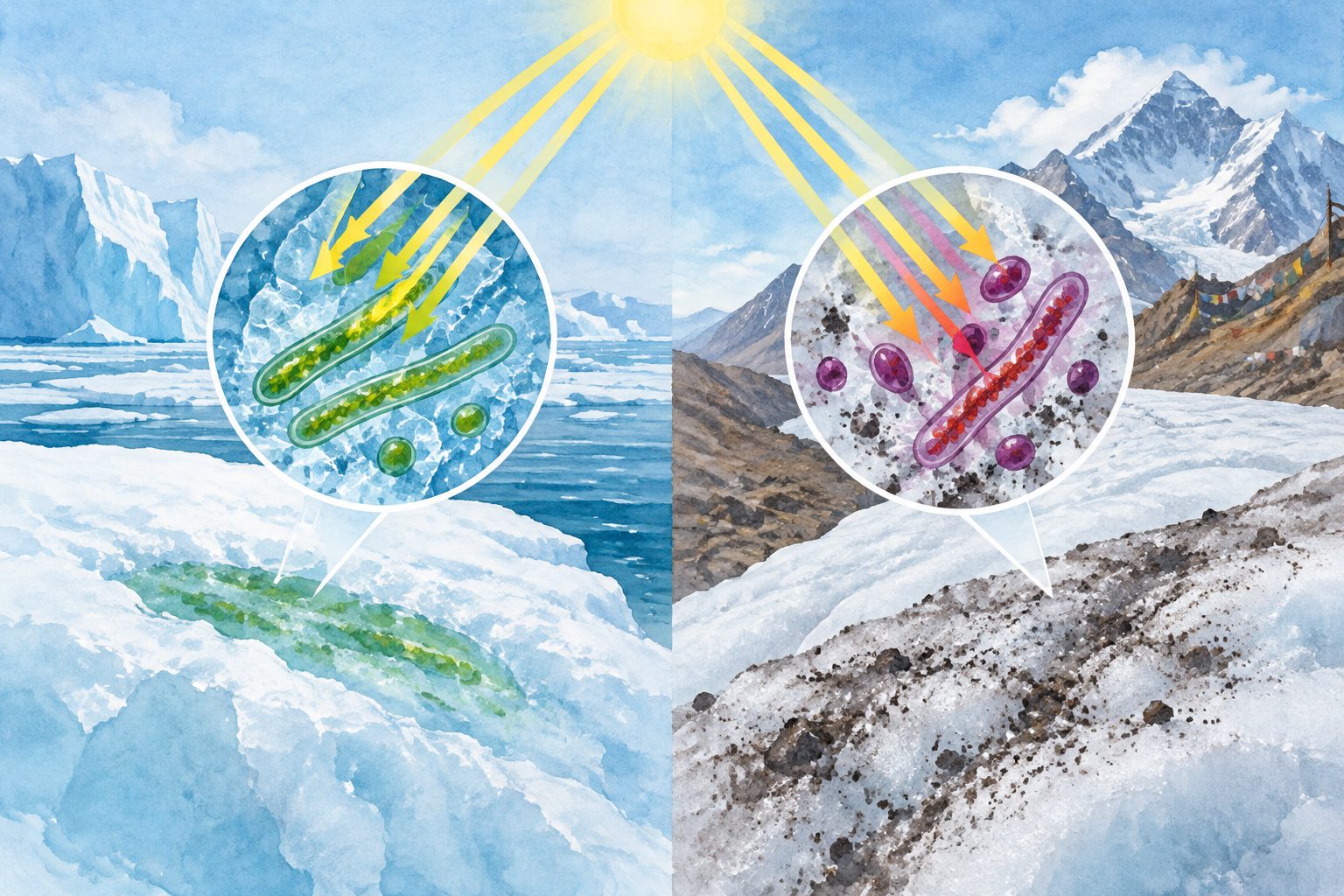
A comparison of 85 glacier-surface microbial communities found different potential ways of harvesting light in the Arctic and on the Tibetan Plateau. Arctic communities were richer in rhodopsin-based pathways, while Tibetan communities had more photosynthetic pathways and higher potential for biomass production.