Seagrass covers little seafloor but buries a notable share of ocean carbon
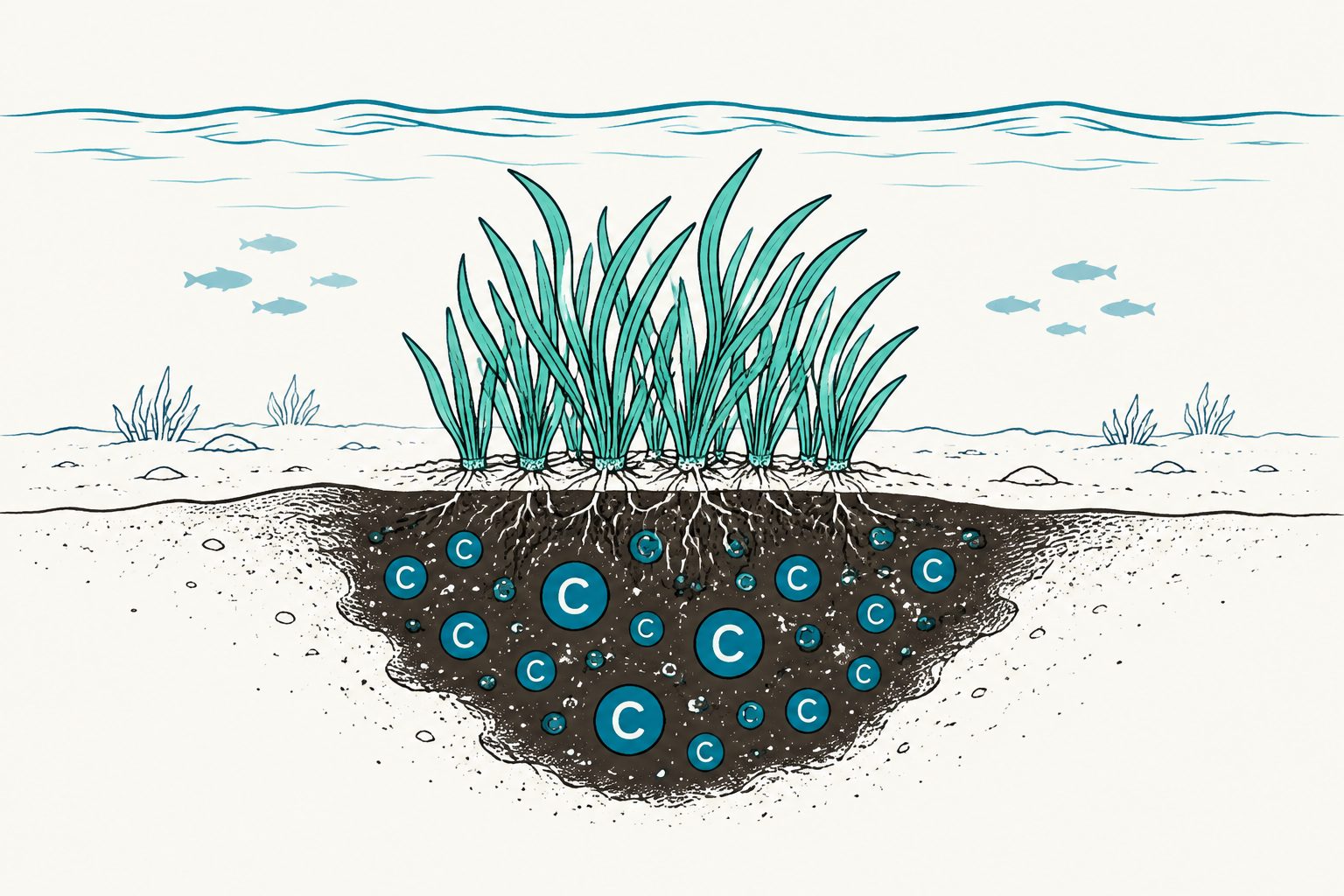
A global review finds seagrass sediments account for 3–6% of oceanic organic-carbon burial, even though they cover less than 0.1% of the seafloor.
Editorial illustration — not from the study.
Researchers reassessed organic-carbon burial in seagrass sediments using measurements from 326 dated sediment cores covering roughly the past century. They estimate a global area-weighted burial rate of 33 ± 10 grams of organic carbon per square metre per year, equivalent to 6–16 teragrams of carbon per year across the mapped seagrass area.
The estimate is about one-quarter of earlier widely used values, which were based largely on indirect methods and a limited set of sites. The researchers also estimate that seagrass meadows export about three times as much organic carbon as they bury locally, but the fate of that exported carbon remains unresolved.
How much carbon seagrass buries
The researchers estimate that seagrass meadows bury organic carbon at a geometric mean rate of 26 ± 2 grams per square metre per year. After accounting for differences in the distribution of seagrasses among regions, the global average is 33 ± 10 grams per square metre per year.
Using a mapped seagrass extent of 247,800–366,400 square kilometres, they estimate global burial at 6–16 teragrams of carbon per year. Seagrass sediments therefore account for about 3–6% of total oceanic organic-carbon burial, despite covering less than 0.1% of the seafloor. Together with mangrove and tidal-marsh sediments, vegetated coastal ecosystems account for an estimated 8–13%.
The study estimates that about 15% of seagrass net community production is retained and buried locally. It also finds that seagrass meadows export roughly three times more organic carbon than they bury within the meadow itself.
Why the estimate matters
The findings indicate that seagrass beds occupy a very small area but make a measurable contribution to the amount of organic carbon buried in the ocean. They also show why carbon stocks alone are not enough to estimate burial: local sediment conditions and the time required for sediment to accumulate affect burial rates.
The results provide a lower and more direct estimate of seagrass carbon burial than earlier assessments. They also identify an important unresolved part of the carbon cycle: much of the carbon associated with seagrass meadows is exported beyond them, and determining where that carbon goes is needed to refine estimates of their contribution to ocean carbon storage.
Evidence and open questions
The study is a data synthesis based on 326 dated sediment cores, integrating organic-carbon burial over approximately the last century. The researchers combined sediment carbon measurements with sediment accumulation rates and accounted for regional differences in seagrass distribution.
The global estimate depends on the mapped area of seagrass, which may be incomplete. The study does not yet constrain the fate or total amount of carbon exported from meadows. The authors also note that historical losses of seagrass and potentially larger total seagrass areas could mean past or overall contributions were greater than this estimate. The revised rate is lower than earlier estimates partly because those estimates relied on limited, geographically biased data and indirect approaches.
Two atmospheric chemistry models produced similar oxidation pathways for simple hydrocarbons but diverged for larger, more complex compounds. The differences changed predictions of how easily oxidation products form secondary organic aerosol, or particles created in the atmosphere.
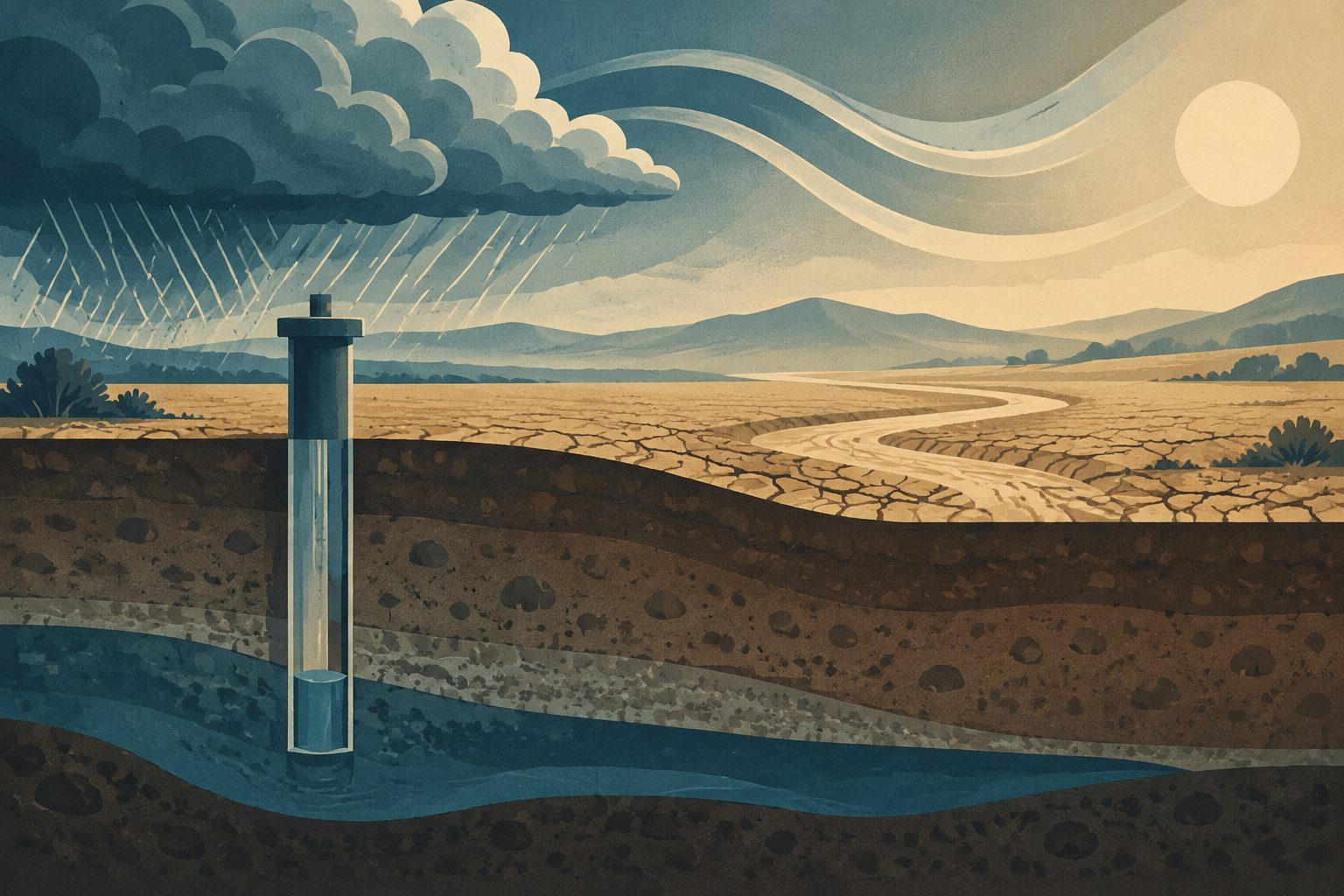
A study of global groundwater conditions from 1960 to 2019 finds that 35% of the world had an average groundwater drought duration lasting multiple years. In most of these areas, underground conditions extended the drought signal from the weather, while some areas may be monitored using weather patterns as an early warning.
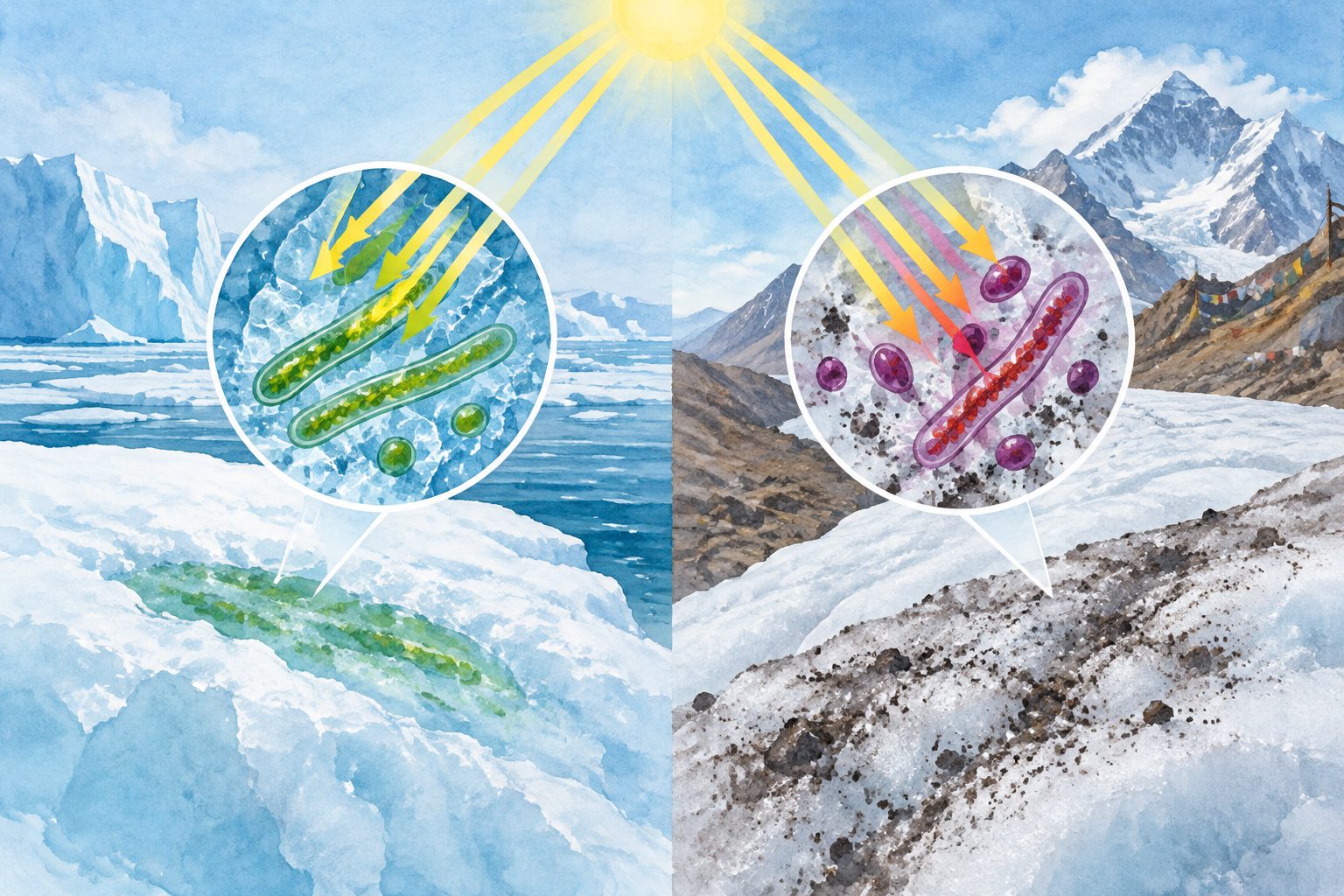
A comparison of 85 glacier-surface microbial communities found different potential ways of harvesting light in the Arctic and on the Tibetan Plateau. Arctic communities were richer in rhodopsin-based pathways, while Tibetan communities had more photosynthetic pathways and higher potential for biomass production.