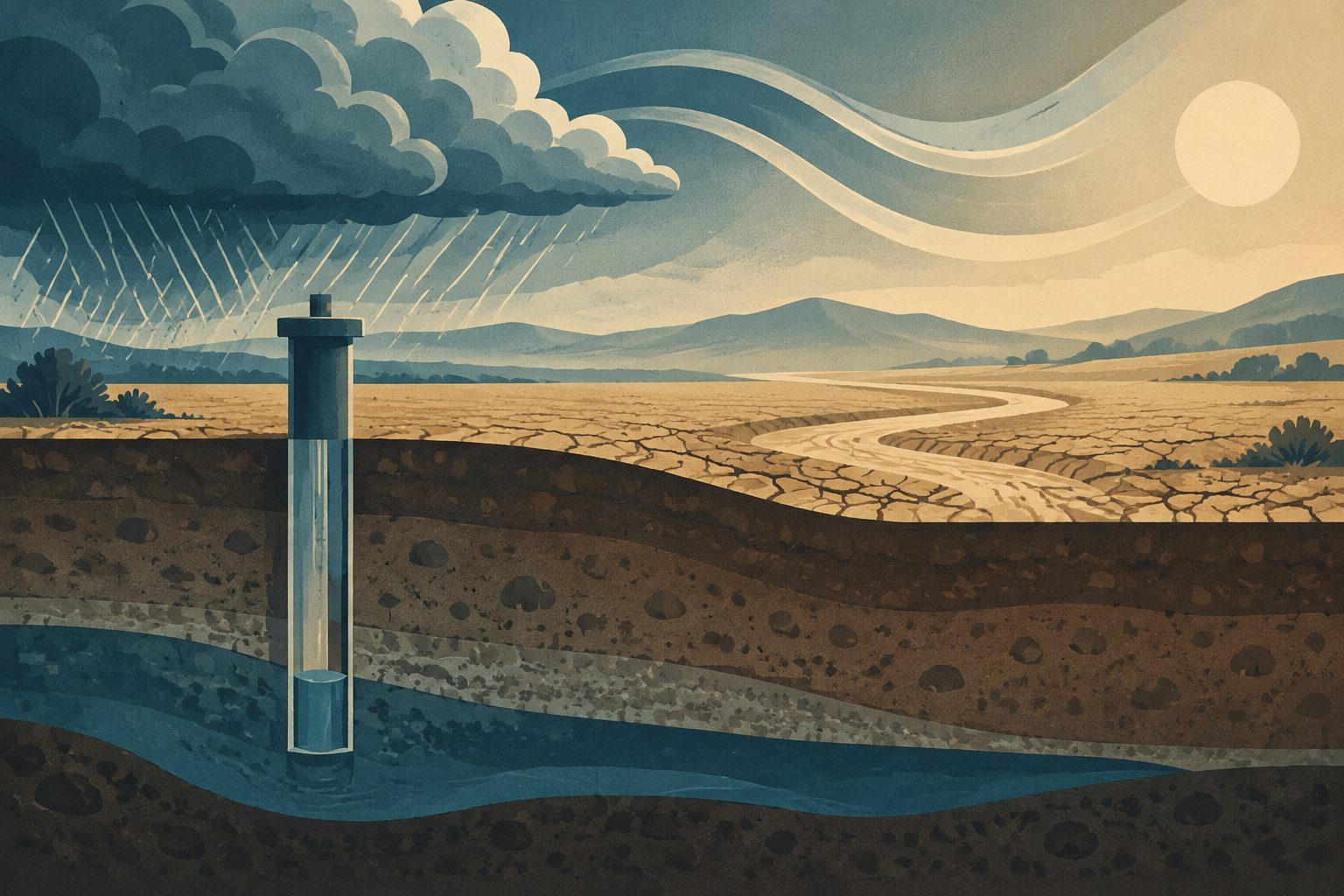
A global analysis finds that groundwater drought lasts multiple years on average across 35% of the world, often longer than the weather drought that helps trigger it.
Researchers used a new global groundwater dataset with roughly 1-kilometre resolution to examine how weather-related drought was followed by groundwater drought between 1960 and 2019. They focused especially on droughts lasting multiple years and assessed how underground conditions changed the duration and pattern of the drought signal.
The analysis grouped groundwater responses into three broad types. It identified areas that have been vulnerable to prolonged groundwater drought and areas where weather anomalies may help anticipate these events, potentially informing responses to future water shortages.
Where groundwater drought lasts
Across 35% of the world, the average groundwater drought duration was multi-year. In 83% of those locations, conditions below the surface extended the drought signal seen in the weather. In the remaining 17%, groundwater drought duration appeared to be driven mainly by weather anomalies.
The researchers also developed three global groundwater response types to describe how groundwater responds during ordinary and multi-year droughts. The analysis identified regions that have been most vulnerable to multi-year groundwater drought in the past, as well as areas that could be more vulnerable in the future. It also highlighted places where weather drought anomalies may provide advance indication of a multi-year groundwater drought.
Why the warning matters
Groundwater supplies drinking water, irrigation and ecosystems, so droughts that continue underground for several years can create prolonged pressure on water resources. The study’s global map of past vulnerability and its classification of groundwater responses could help water managers distinguish places where groundwater may remain in drought after weather conditions improve from places where weather patterns offer a more direct warning.
The findings also show why weather drought alone does not describe groundwater risk everywhere: in most locations with multi-year groundwater drought, underground processes lengthened the drought signal.
Evidence and caveats
This is a global, dataset-based analysis covering 1960–2019. The researchers used a new groundwater dataset at roughly 1-kilometre resolution and compared groundwater drought with 12-month weather drought conditions. They also examined the role of subsurface processes and accounted in their framework for the ways that human influences and groundwater pumping can alter the weather signal.
The abstract does not provide the names of the regions identified, details of the dataset’s validation, or the performance of the proposed warning approach. The conclusions therefore depend on how well the global dataset represents local groundwater conditions, underground processes and human abstractions.