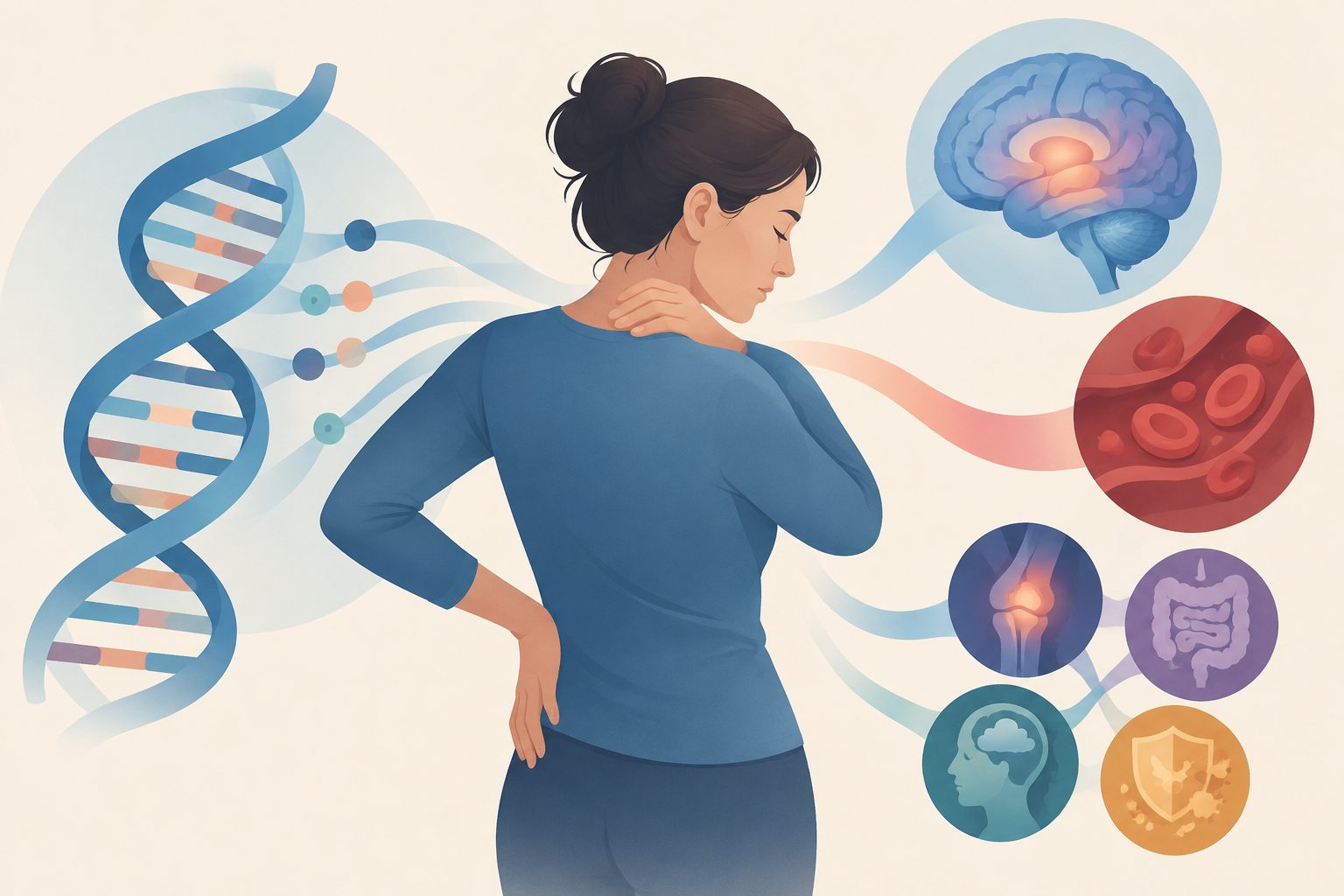
A study of more than 1.2 million people identified hundreds of pain-related genetic regions and links with psychiatric disorders, substance use and inflammation.
Researchers combined genetic data from three biobanks in a study of multidimensional pain, using measures that included self-reported pain, the number of painful body sites and diagnosis codes. They found 343 independent genetic signals, 92 of them new pain associations, and prioritized 490 genes whose activity was associated with pain through brain-specific or blood-specific regulation.
Separate analyses found different sets of signals in males and females. Genetic analyses also indicated associations between pain and psychiatric disorders, substance use disorders, C-reactive protein levels, a marker of inflammation, and several brain imaging measures.
The pain-related gene signals
The main analysis identified 343 independent genetic regions associated with multidimensional pain. Ninety-two were new pain associations, including 43 involving protein-coding variants. The researchers prioritized 490 genes linked to pain through effects on gene regulation in the brain and blood.
The sex-specific analyses identified 115 independent regions in males, including 12 new associations, and 12 in females, including two new associations. The study also reported genetic evidence of causal associations between multidimensional pain and psychiatric disorders, substance use disorders and C-reactive protein levels. Pain-related variants were additionally associated with several brain imaging-derived traits.
Why these links matter
The findings show that the genetic architecture of chronic pain involves more than pain-specific biology. Signals connected with brain regulation, blood-based regulation, inflammation, psychiatric disorders and substance use point to overlapping biological pathways that may help explain why these conditions often occur together.
The gene and brain findings provide targets for further research into how pain develops and how objective measures or more tailored treatments might eventually be developed. The study does not itself establish a clinical test or treatment.
Evidence and caveats
This was a large genome-wide association study and meta-analysis of three biobanks, followed by gene-prioritization, brain-imaging and Mendelian randomization analyses. Genome-wide association studies identify statistical links between genetic variants and traits; they do not by themselves show that a particular gene causes pain. The gene-prioritization results likewise identify candidates rather than proving their role.
All participants were of European ancestry, so the results may not apply equally to other populations. The biobanks measured pain in different ways, including self-reported pain, the number of painful body sites and diagnosis codes. The estimated SNP heritability was modest, ranging from 0.05 to 0.08 in the reported analyses. Mendelian randomization can indicate potential causal relationships but depends on its underlying assumptions and does not demonstrate that changing one of these factors would treat pain.
// Source
Nature Neuroscience · 2026 · DOI: 10.1038/s41593-026-02455-1
Authors: Sylvanus Toikumo, Christal N. Davis, Zeal Jinwala, Yousef Khan, Mariela V. Jennings, Lea Karatheodoris Davis, Sandra Sanchez‐Roige, Rachel L. Kember, Henry R. Kranzler
Institutions: University of Pennsylvania, University of California San Diego, Vanderbilt University, Philadelphia VA Medical Center