Caribbean DNA decays faster—but much of its human history may remain
A study of more than 300 human remains finds that preservation varies widely, but suitable samples could still reveal much of the region’s past.
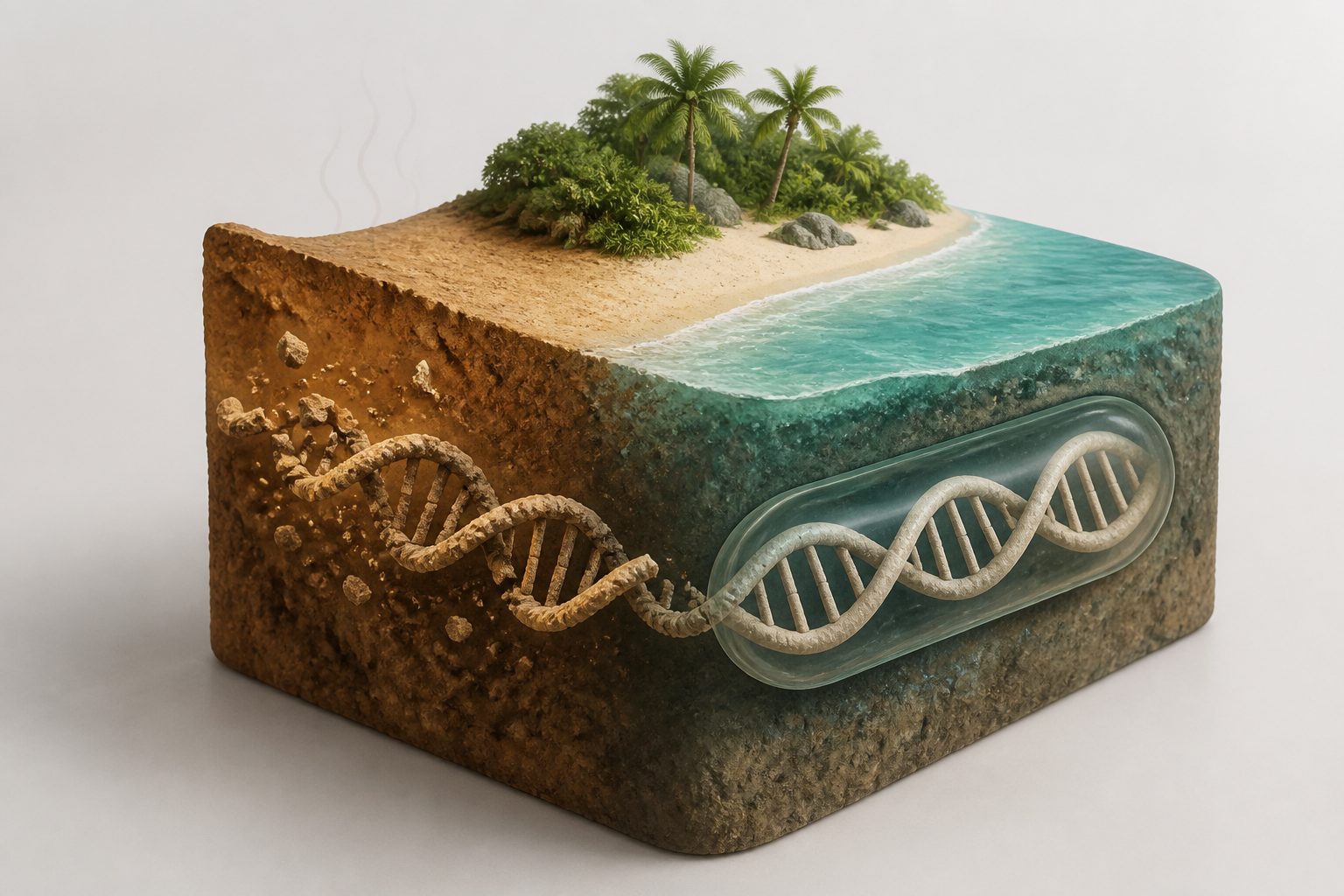
Editorial illustration — not from the study.
The study examined low-coverage genetic data from human remains dating from 3,300 to 400 years ago across 33 Caribbean archaeological sites. DNA preservation varied substantially between and within sites, with the type of remains and their burial conditions having strong effects.
The researchers found that DNA decays about four times faster in the Caribbean than in temperate regions and about 14 times faster than in subpolar settings. They also found that visual inspection of remains, although imperfect, can help identify samples likely to retain usable DNA.
How Caribbean DNA survives
The researchers analysed more than 300 human samples from 33 archaeological sites in the Caribbean, dating from 3,300 to 400 years ago. DNA preservation varied markedly both between and within sites. Sample type and burial context strongly affected whether DNA was preserved, while macroscopic inspection—looking at the remains with the naked eye—was an imperfect but useful first screening step.
Their decay-rate modelling indicates that DNA breaks down roughly four times faster in the Caribbean than in temperate regions and about 14 times faster than in subpolar settings. Under these conditions, they predict that recovering DNA from remains significantly older than approximately 5,000 years will be challenging.
Why the age limit matters
Ancient DNA research can provide evidence about human migration and population history, but sampling is destructive. Knowing which remains and burial conditions are most likely to preserve DNA can help researchers choose samples more carefully and reduce unnecessary damage to archaeological material.
The predicted age limit is important because it still includes most of the Caribbean’s human history. The findings suggest that genetic evidence from much of that history may remain recoverable, provided researchers locate suitable remains and use appropriate excavation and post-excavation procedures.
Evidence and caveats
The study is based on low-coverage genetic data from more than 300 human samples collected at 33 archaeological sites. It evaluates how sample age, the type of remains and burial context relate to DNA preservation, and uses decay-rate modelling to estimate how long DNA may remain recoverable.
Preservation varied widely, so the age estimates do not apply equally to every sample or site. Visual inspection was useful but imperfect, and the prediction that remains much older than about 5,000 years will be difficult to analyse is a model-based estimate rather than a guarantee that no older DNA can be recovered.
// Source
Royal Society Open Science · 2026 · DOI: 10.1098/rsos.260217
Certain Streptomyces bacteria improved maize growth when plants were grown with limited water in a greenhouse experiment. The effects varied among the four bacterial isolates, and further testing is needed before they can be considered for field use.
A review of five medicinal plants finds evidence that leaves, young stems, small branches and fruits may sometimes replace roots, bark or heartwood as sources of similar plant chemicals. The authors say these substitutions could reduce destructive harvesting, but therapeutic and safety testing is still needed.
Adding LED lighting and solid carbon dioxide generators to winter greenhouse cucumber production increased yield by 18% and income by 21% compared with the control. Plants also grew larger and produced wider, heavier fruit during the trial.