Computer-based predictions indicate that many uncultivated microbes may live in close relationships with other organisms.
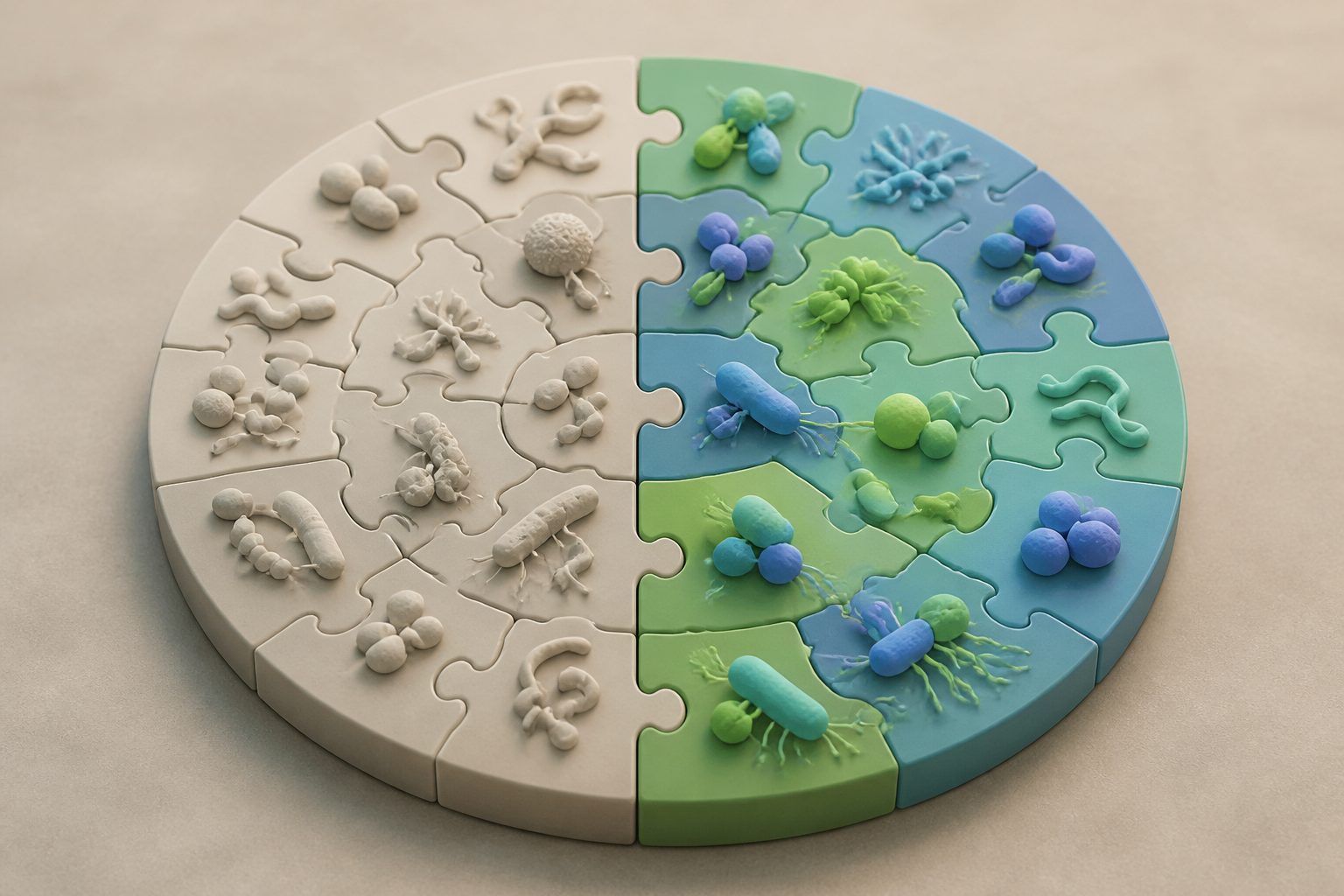
Researchers used a machine-learning framework called symclatron to search hundreds of thousands of microbial genomes from environmental samples and reference collections for genetic patterns linked to symbiosis. They placed the predictions in a new Symbiont Genomes catalog, or SymGs.
The analysis suggested that 15% to 23% of uncultivated microbes may engage in relationships with other organisms. The predicted symbionts occurred across half of all known bacterial and archaeal phyla, and showed patterns including the loss of some metabolic functions and the different presence of others that may support life dependent on a host.
Predicted microbial partners
The researchers used symclatron, a machine-learning framework developed for this study, to predict symbiotic lifestyles from genomic data. Across hundreds of thousands of genomes, the analysis indicated that 15% to 23% of uncultivated microbes likely engage in symbiotic relationships.
The predicted symbiotic lifestyles appeared in half of all known bacterial and archaeal phyla. The genomes also showed recurring patterns, including the loss of certain metabolic functions and differences in the presence of other functions that may help microbes live with dependence on a host. The predictions were deposited in the Symbiont Genomes catalog.
// Source
Nature Biotechnology · 2026 · DOI: 10.1038/s41587-026-03213-1
Authors: Juan C. Villada, Yumary M. Vasquez, Gitta Szabó, E. W. Ainley Walker, Miguel F. Romero, Sarina Qin, Neha Varghese, Emiley A. Eloe‐Fadrosh, Nikos C. Kyrpides, Ramūnas Stepanauskas, Christopher Francis, Rick Cavicchioli, Katherine Trina McMahon, Steven Hallam, Wen‐Tso Liu, T. Mock, James Tiedje, Jiarong Guo, Axel Visel, Tanja Woyke, Frederik Schulz
Institutions: University of British Columbia, The Ohio State University, UNSW Sydney, Michigan State University, Stanford University, University of Illinois Urbana-Champaign, University of Wisconsin–Madison, University of California, Santa Cruz, University of East Anglia, Lawrence Berkeley National Laboratory, Bigelow Laboratory for Ocean Sciences, Joint Genome Institute, University of California, Merced