A Jupiter-bound spacecraft’s instrument passes its Earth-Moon test
Observations during JUICE’s 2024 Earth-Moon flyby support the instrument’s ability to measure light around Jupiter.
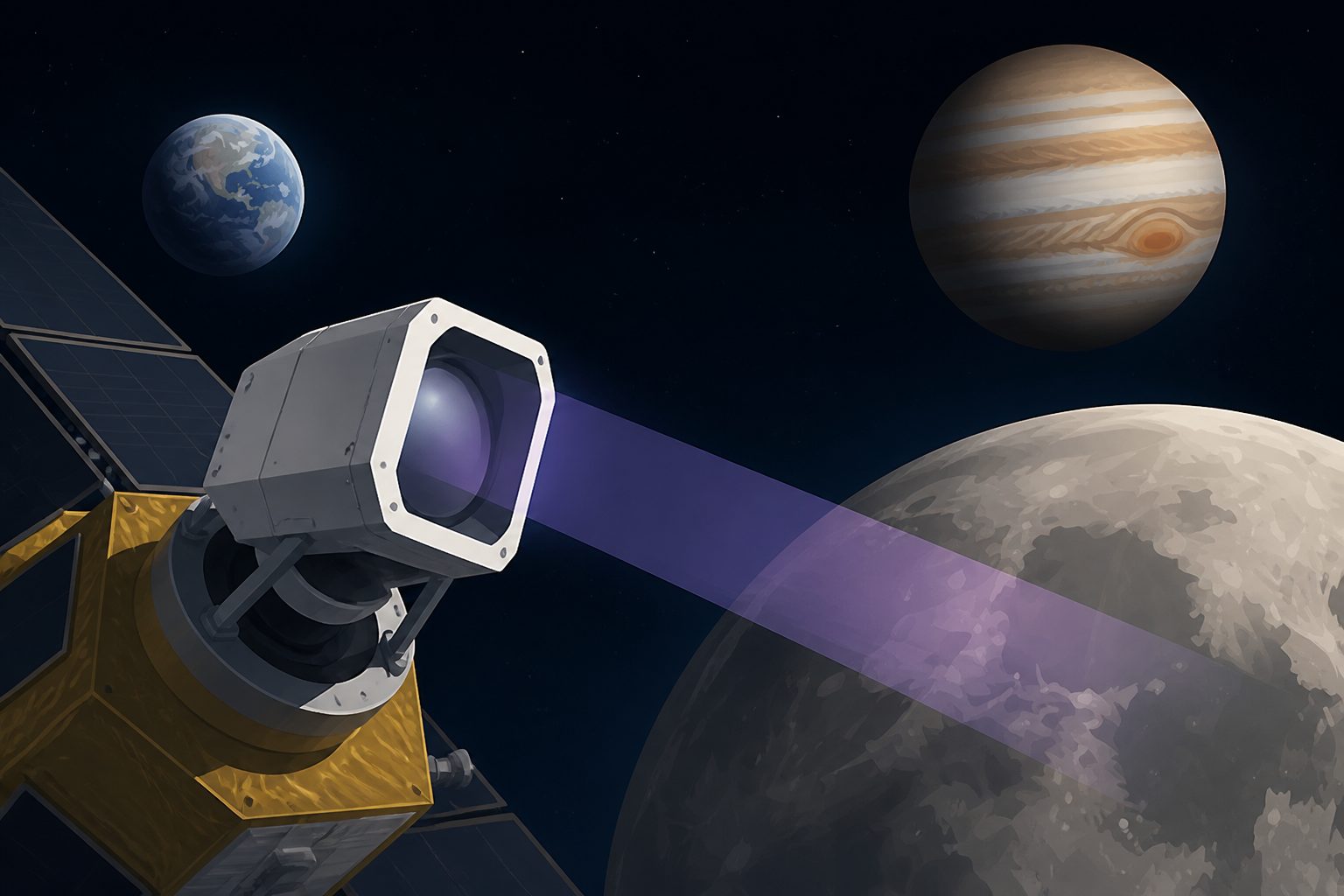
Editorial illustration — not from the study.
Researchers evaluated MAJIS, an imaging spectrometer that measures visible, near-infrared and infrared light, using observations of Earth and the Moon during JUICE’s 19–20 August 2024 Earth-Moon assist. They also examined measurements from the instrument’s built-in calibration unit.
Earth observations matched known atmospheric absorption features across MAJIS’s 0.5–5.56 micrometre wavelength range, including wavelengths above 3.5 micrometres that were difficult to test before launch. Comparisons of Earth and Moon measurements with data from other instruments also supported the instrument’s post-launch calibration.
How the instrument performed
The atmospheric features measured in Earth observations agreed very well with those recorded by Earth-observation instruments, validating MAJIS’s updated wavelength calibration. This was especially useful for wavelengths longer than 3.5 micrometres, where ground-based calibration had been limited.
MAJIS’s brightness measurements of Earth agreed well with comparisons despite difficult viewing conditions, including a viewing angle of about 90 degrees and changing cloud patterns. Measurements of the Moon were consistent with results from instruments on lunar orbiters, indicating that MAJIS’s absolute brightness calibration is close to the expected values.
The instrument operated at a high level during the Earth-Moon assist, with a signal-to-noise ratio of up to 400, and higher values when measurements were combined. Extrapolating its operation from Earth’s distance from the Sun to Jupiter’s distance supported the expectation that MAJIS will collect high-quality data during the mission’s science operations.
Why the test matters
MAJIS is intended to study Jupiter and its icy moons by recording light across a broad range of wavelengths. Showing that its wavelength and brightness measurements remain reliable after launch gives researchers a stronger basis for interpreting observations made around Jupiter.
The Earth-Moon assist also provided a practical test of the instrument under spaceflight conditions, including the longer wavelengths that were harder to assess before launch. The results support the mission’s expectation that MAJIS will provide high-quality measurements at Jupiter’s distance from the Sun.
Evidence and limits
The assessment is based on MAJIS observations of Earth and the Moon during JUICE’s 19–20 August 2024 Lunar-Earth Gravitational Assist, together with observations of the instrument’s internal calibration unit. Researchers compared the results with atmospheric features and measurements from other Earth- and Moon-observing instruments.
Earth brightness comparisons are not straightforward because MAJIS viewed Earth at a phase angle of about 90 degrees, including a glint spot, while cloud patterns changed over time. The performance at Jupiter’s distance was extrapolated from operation at 1 astronomical unit rather than measured there during science operations. The results therefore validate the calibration and support expected performance, but do not yet constitute observations made in the Jupiter system.
Researchers transported 92 trapped antiprotons 7.5 kilometres by road without losing particles or measurably worsening the trap’s vacuum. The demonstration could allow future matter–antimatter tests in laboratories with less magnetic-field noise than CERN’s Antimatter Factory.
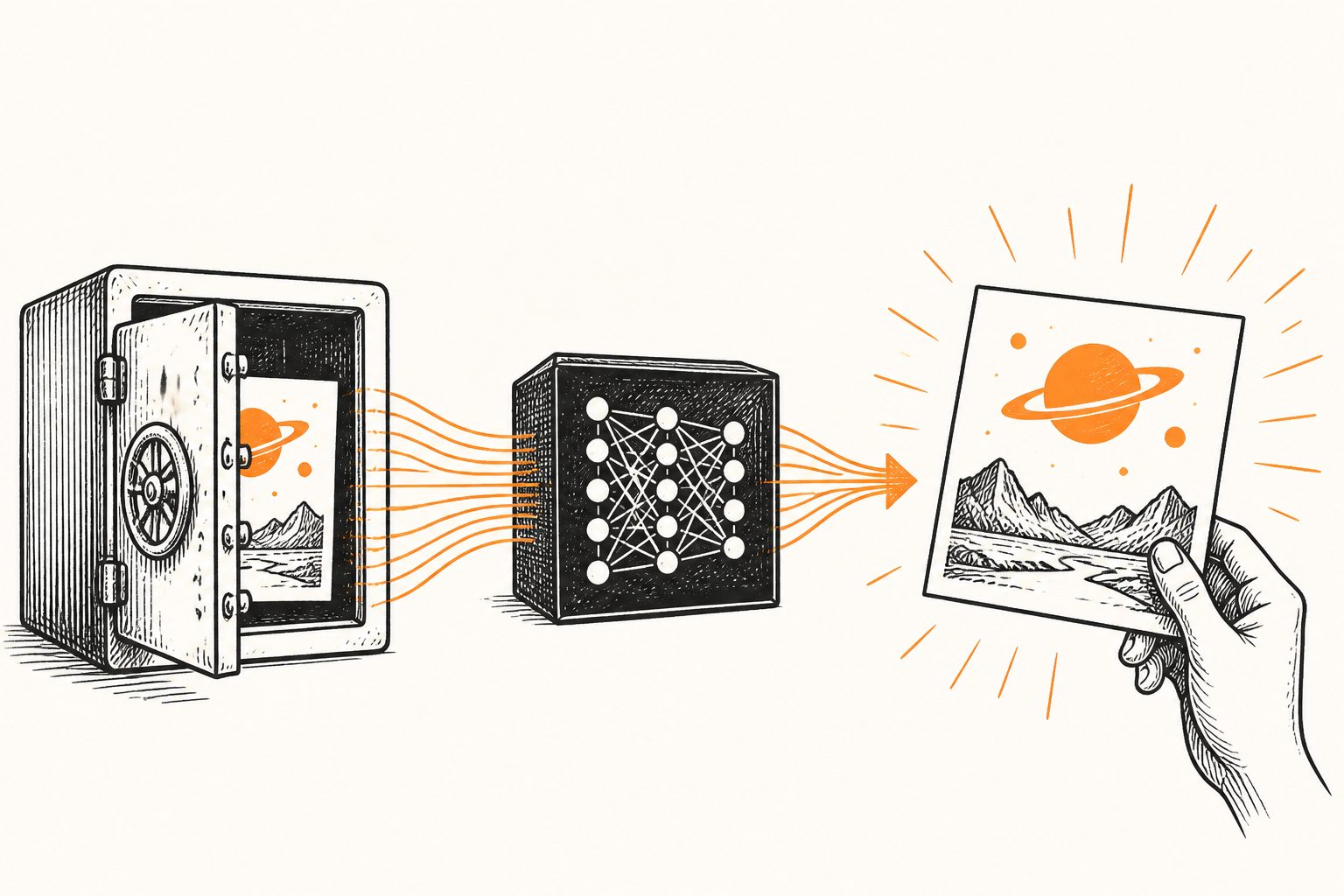
Researchers developed an attack that uses an AI classifier to reconstruct representative images from its private training data. In tests, the approach produced more faithful images than earlier methods while maintaining similar accuracy in identifying their target classes.
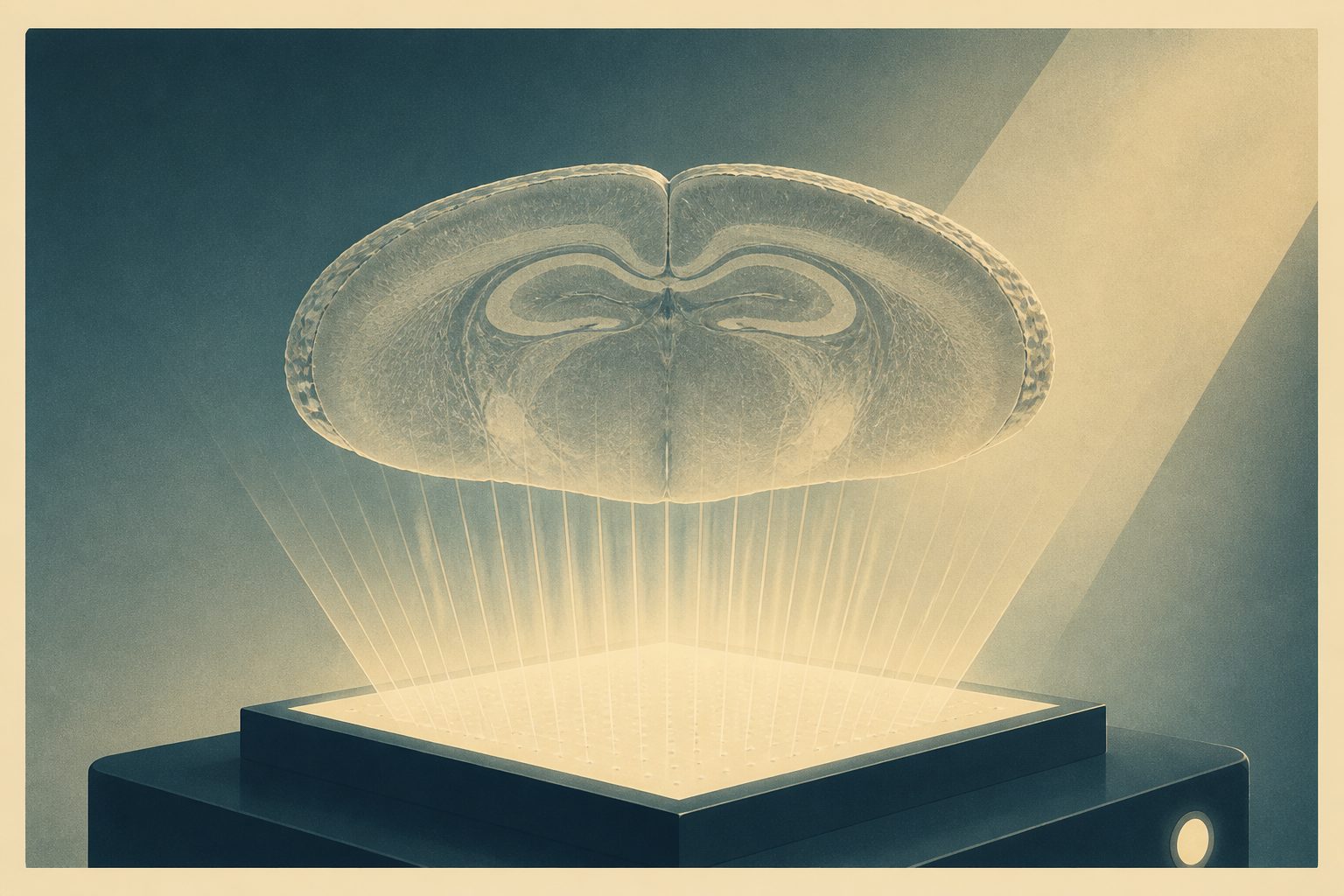
Researchers report a lensless microscope that imaged an entire 500-micrometer-thick, optically cleared mouse-brain slice without labels. The system combines a large field of view with millimeter-scale depth and approximately 2.4-micrometer pixel-level resolution, reaching a three-dimensional imaging volume above a gigavoxel scale in tests.