A faster way to test designed proteins could bring each test down to $5
A new laboratory workflow can produce and assess hundreds of protein designs a day, with more than 1,000 possible at lower cost.
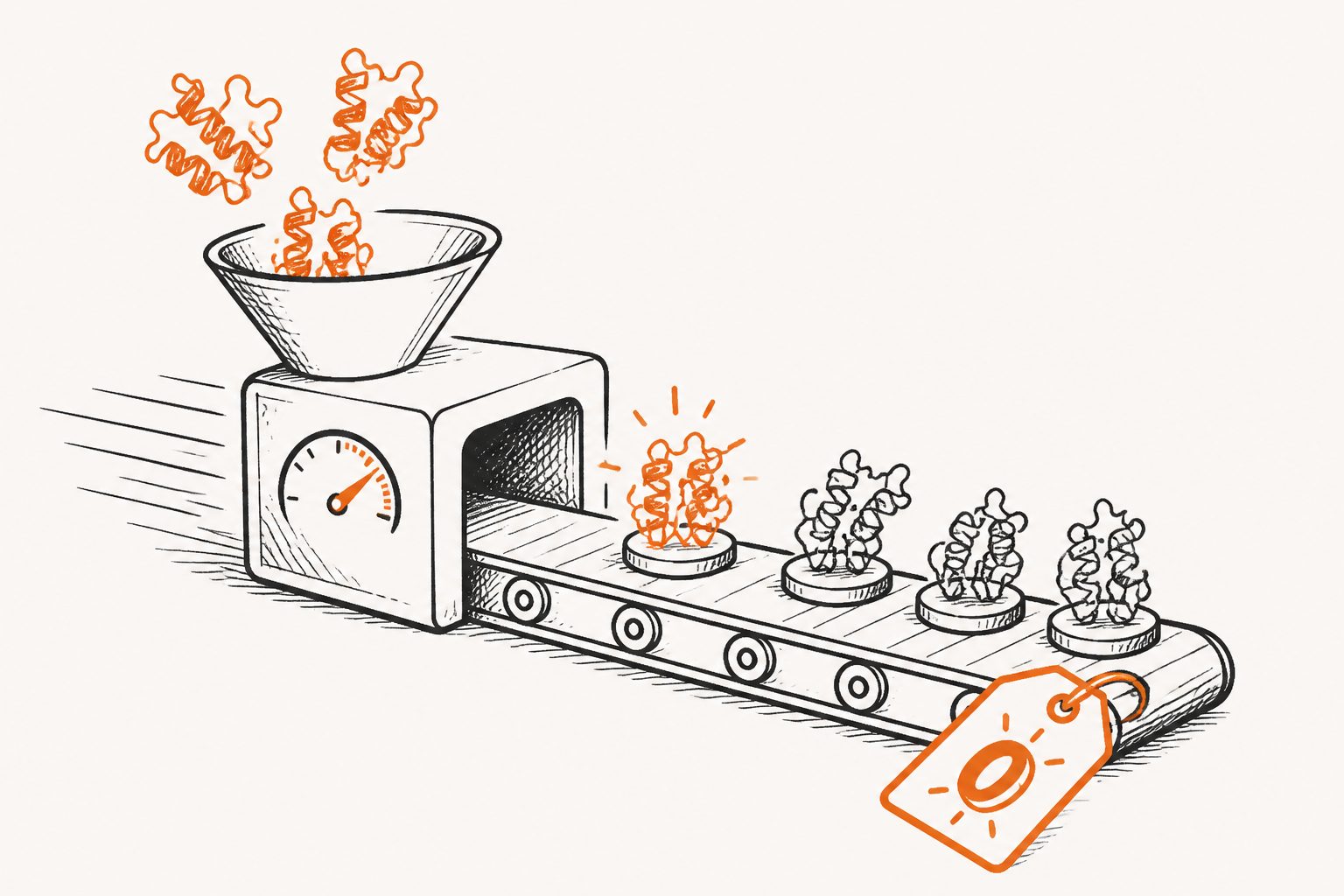
Editorial illustration — not from the study.
The workflow, called Semi-Automated Protein Production, combines experimental and computational steps to produce up to milligram-scale amounts of proteins and assess their yield, consistency and molecular organization. End-to-end processing takes 48 hours, including about six hours of hands-on laboratory work, using mostly standard equipment.
The researchers also developed a method for separating DNA from pooled samples so that many designs can be tested individually. This reduced costs fivefold and enabled more than 1,000 designs to be purified and characterized in separate samples at a cost of about $5 per construct. They demonstrated the platform by testing newly designed inhibitors of respiratory syncytial virus.
What the workflow can test
The researchers report that Semi-Automated Protein Production can characterize hundreds of protein designs per day, including their production yield, dispersity—the consistency of the protein preparation—and oligomeric state, or whether the proteins occur as single units or groups. The full process takes 48 hours, with about six hours of bench work, and can produce up to milligram-scale quantities of protein.
They say the workflow has been used at their institute to validate dozens of projects involving tens of thousands of designs. Because synthetic DNA accounts for at least 80% of the total cost, the team added a pooled-DNA method that reduced costs by fivefold and enabled more than 1,000 designs to be tested in separate, clonal samples at about $5 per construct. The researchers used the combined platform to characterize de novo designed inhibitors of respiratory syncytial virus.
Why larger testing matters
Experimental testing can limit how quickly researchers evaluate proteins designed by newer computational methods. A workflow that handles hundreds of designs per day, and more than 1,000 at about $5 each, could make it easier to identify which designs merit further study.
The approach relies on partial automation and standard laboratory equipment rather than complex, fully robotic systems. That design may make the workflow easier for other laboratories to adopt, although the abstract does not establish how it will perform across all protein types or research settings.
Evidence and caveats
This is a journal article describing experimental and computational protocols, their use at the researchers’ institute, and a demonstration involving designed respiratory syncytial virus inhibitors. The abstract reports throughput, processing time and cost estimates, but does not provide detailed results for the inhibitors or comparisons showing how every part of the workflow performs against existing methods.
The reported scale includes work across dozens of projects and tens of thousands of designs at the institute, but the abstract does not describe independent testing by other laboratories. It also does not establish that every designed protein will be produced or characterized successfully using the workflow.
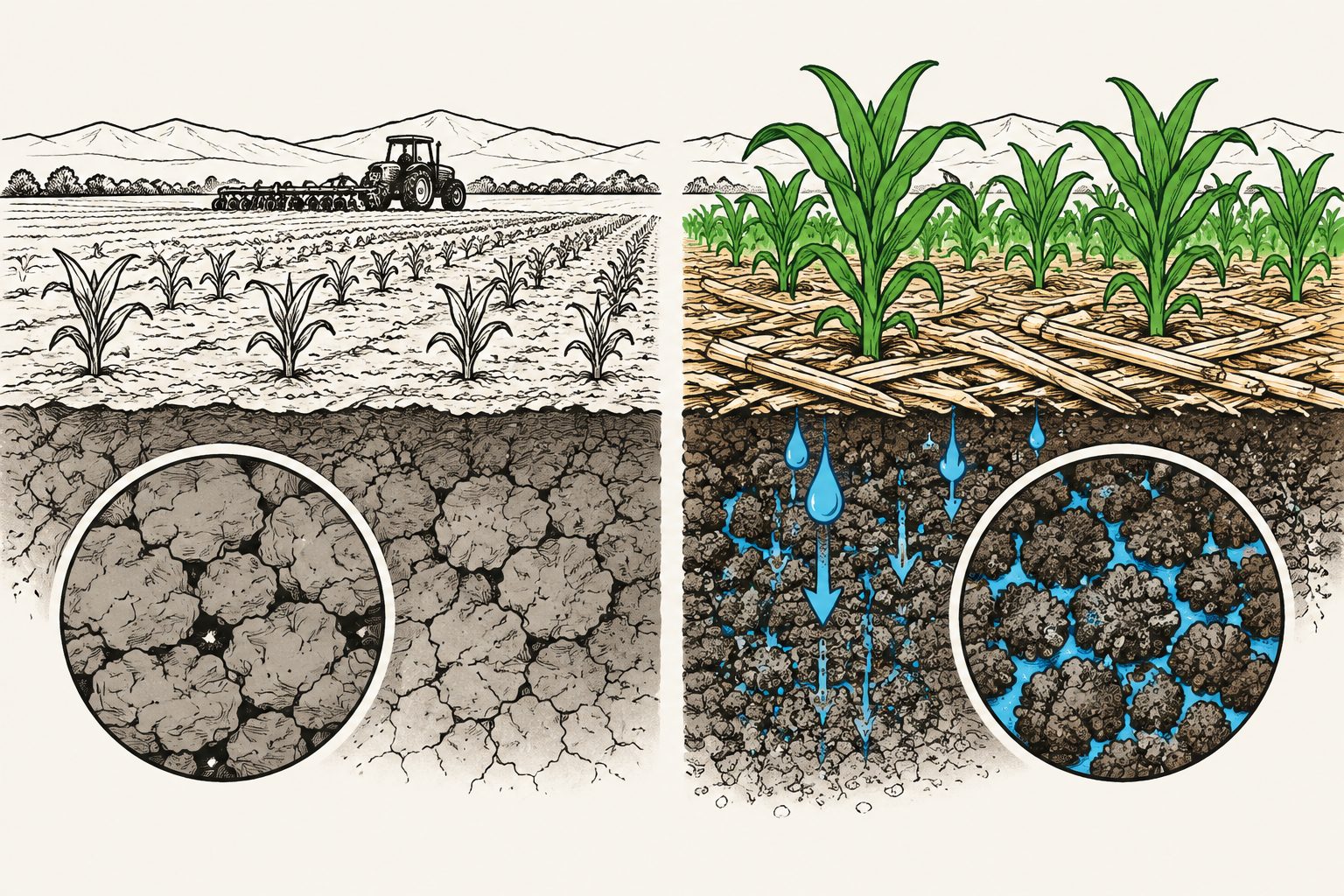
A 20-year comparison in California’s Central Valley found that reduced tillage with cover crops produced more stable soil aggregates, greater water retention and different forms of carbon protection than standard tillage without cover crops. The conservation system also retained room for additional carbon storage, although the study measured potential rather than future gains.
Human forebrain organoids classified artificial tactile Braille signals after a sensor converted the touch data into electrical stimulation. Accuracy averaged 61% with one organoid and rose to 83% when responses from three organoids were combined.
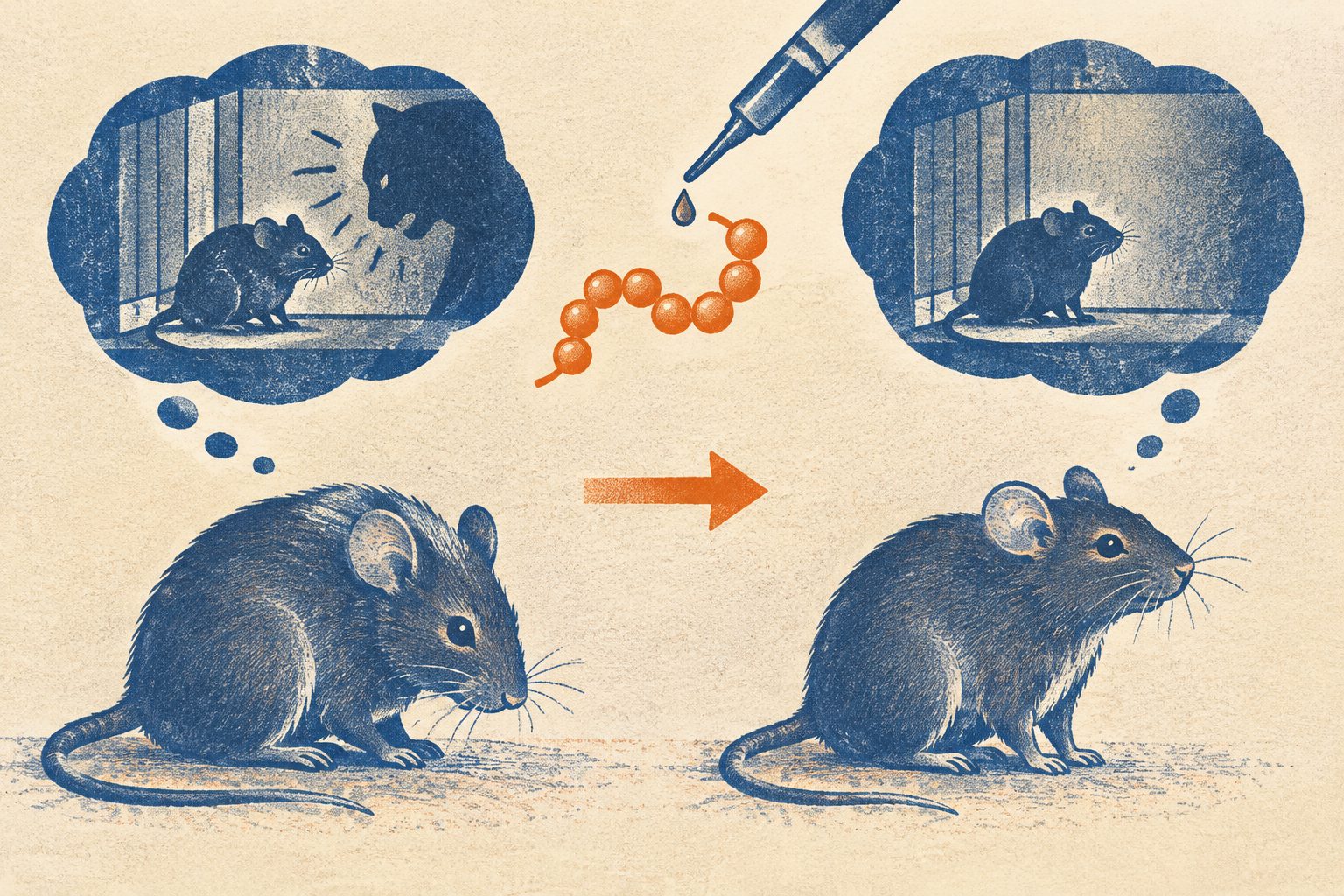
A study in mice found that a peptide targeting the memory-related protein CPEB3 reduced the persistence of traumatic memories and anhedonia, a loss of pleasure. The findings are an early genetic preclinical test of a possible approach for PTSD, not evidence of a treatment in people.