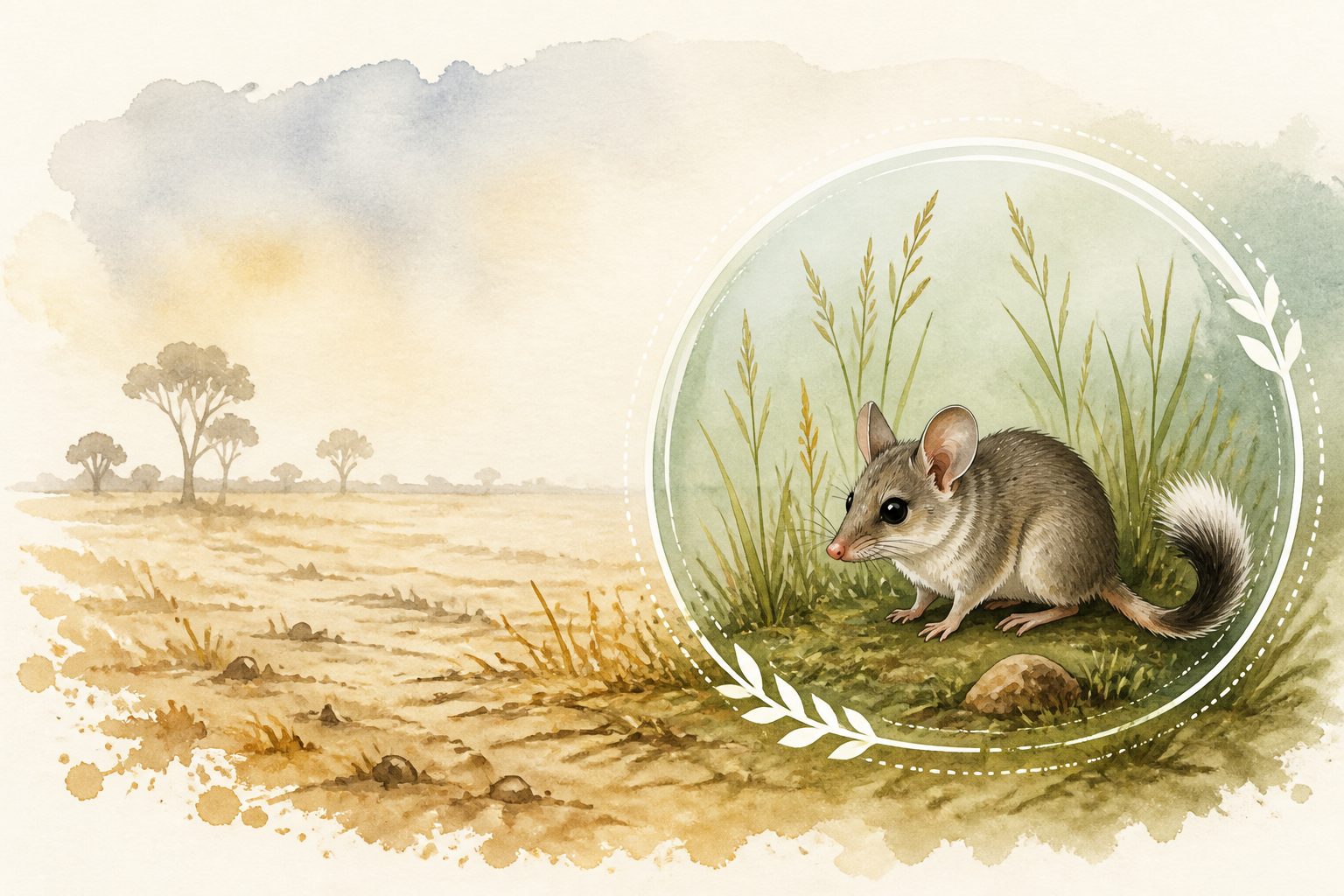
A review says habitat destruction and other pressures have left this small marsupial dependent on urgent conservation and restoration.
The article examines the loss of Victoria’s semi-arid and mesic lowland grasslands, ecosystems described as among the most endangered in the world. Fertile grasslands were cleared for agriculture soon after European colonisation, and further losses have followed from development, invasive predators and competitors, and inadequate management.
The authors assess what this history means for the fat-tailed dunnart, described as the only small marsupial of Victoria’s temperate grasslands that has not yet become extinct. They identify conservation and restoration priorities and call for greater action by federal and state governments.
What threatens the dunnart
The review finds that both major climatic types of Victorian lowland temperate grassland are threatened by extensive habitat destruction, invasive species and improper management. Remaining fragments are often small, isolated and degraded, contributing to declines in native species and the loss of many mammal populations. The authors warn that further extinctions, including of the fat-tailed dunnart, are imminent if considerable conservation and restoration action is not implemented.