A structural study shows how polymerase lambda and PNKP can assemble together during a key stage of DNA repair.
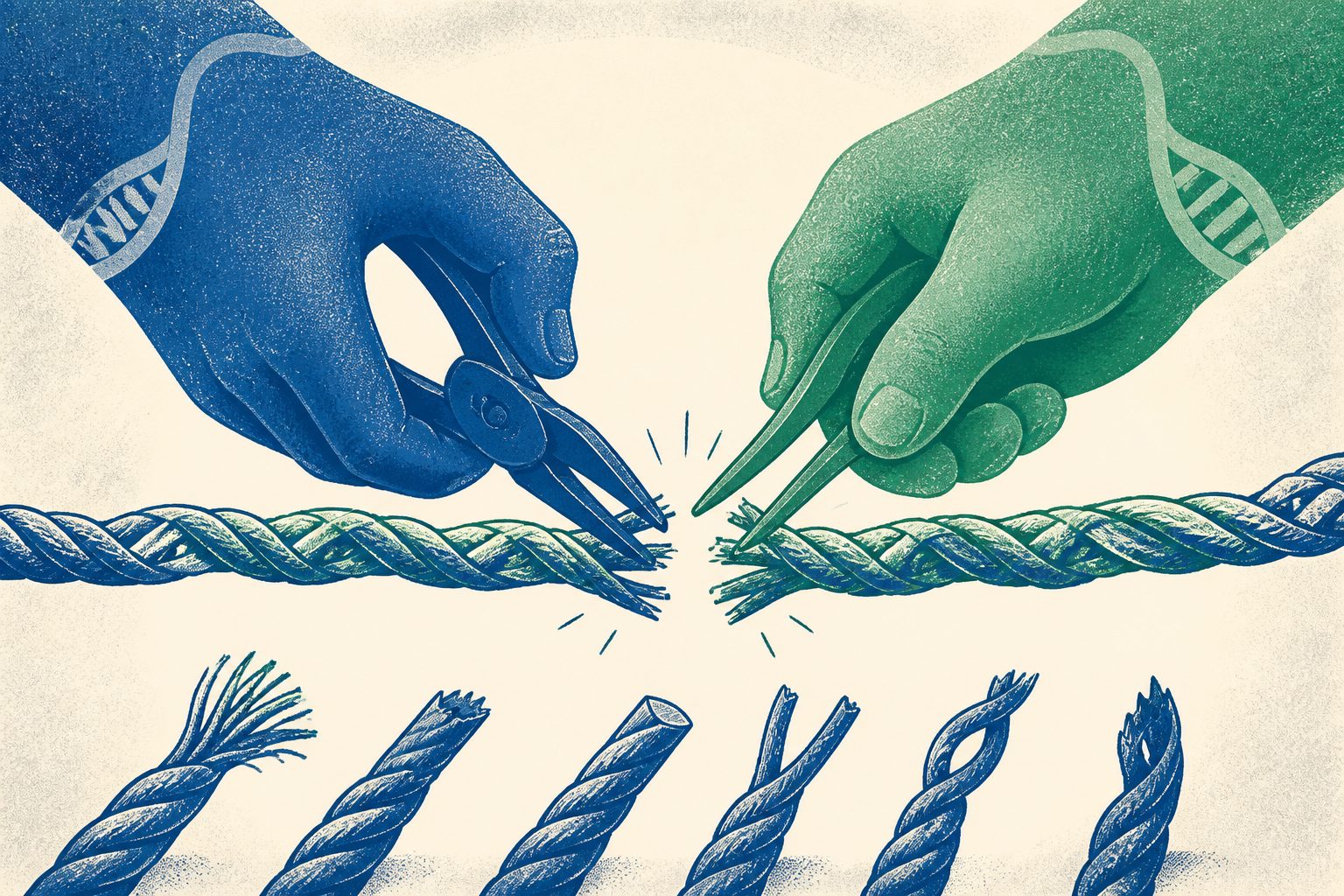
Non-homologous end joining is a DNA repair pathway that reconnects broken DNA strands. Because broken ends can carry chemical blocks, overhangs or gaps, the pathway uses accessory proteins to prepare them for joining.
Using cryo-electron microscopy, the researchers determined the structure of polymerase lambda bound to a short-range repair complex. They also showed that the same complex can bind polymerase lambda and PNKP at the same time, coordinating their end-processing activities on different DNA-end structures.
// Source
Nature Communications · 2026 · DOI: 10.1038/s41467-026-77503-2
Authors: Alex Vogt, Andrea M. Kaminski, Jason Williams, Tasmin Naila, Danny Laurent, Alan E. Tomkinson, Susan P. Lees‐Miller, Lars C. Pedersen, Thomas A. Kunkel, Yuan He
Institutions: Northwestern University, Johns Hopkins University, University of Calgary, National Institutes of Health, University of New Mexico, National Institute of Environmental Health Sciences, New Mexico Cancer Center, UNM Comprehensive Cancer Center, Petrel Robertson Consulting (Canada)