Biochemistry, Genetics and Molecular Biology · Molecular Biology

DNA Repair Mechanisms

Log in to follow
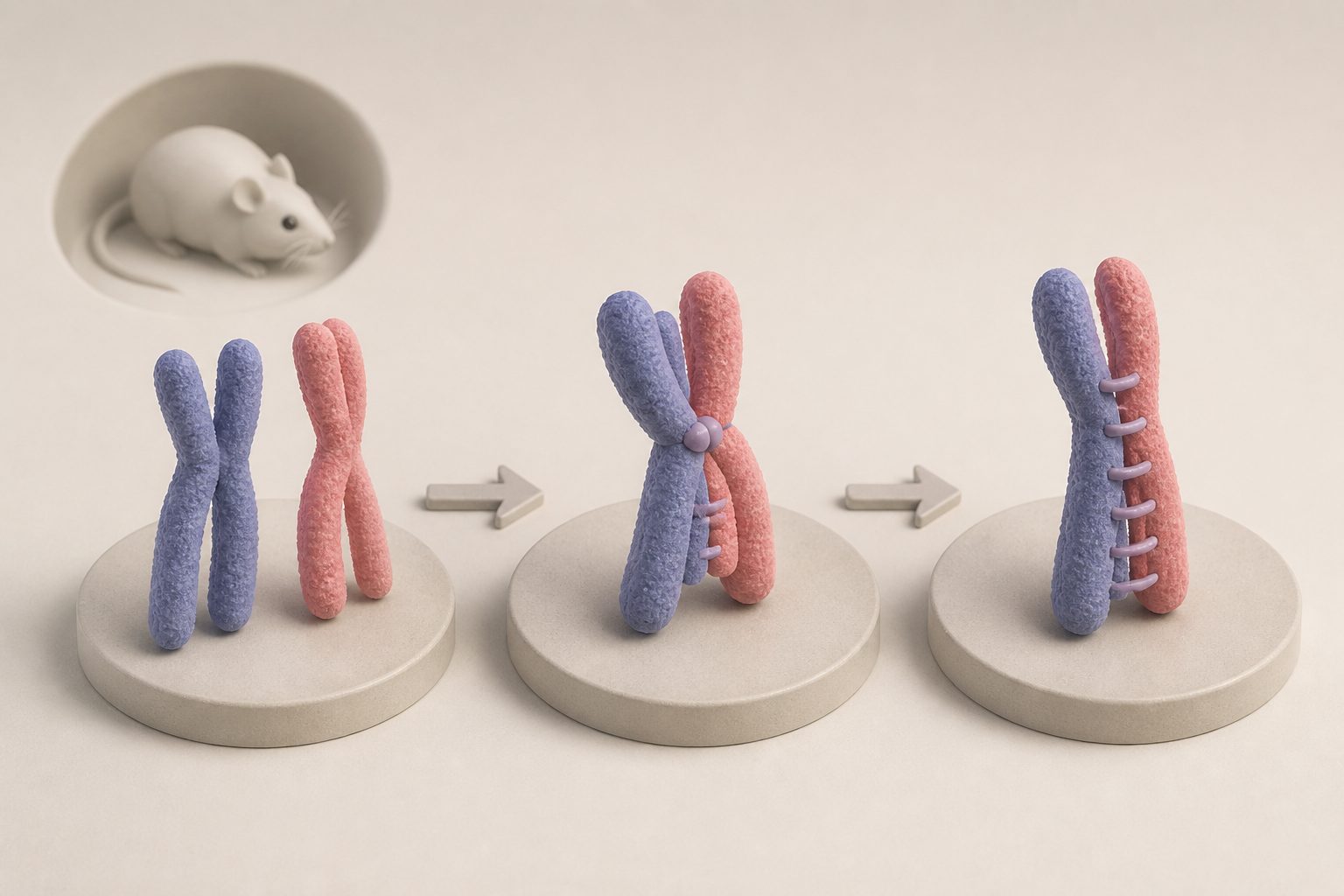
Abstract editorial illustration accompanying the article: Mouse chromosomes pair in three stages as reproductive cells form

Mouse chromosomes pair in three stages as reproductive cells form

Researchers tracked homologous mouse chromosomes as they paired during meiosis, the specialized cell division that produces reproductive cells. The chromosomes moved from widely separated positions to close alignment in three stages, with DNA breaks and recombination helping drive the transitions.

·36 views
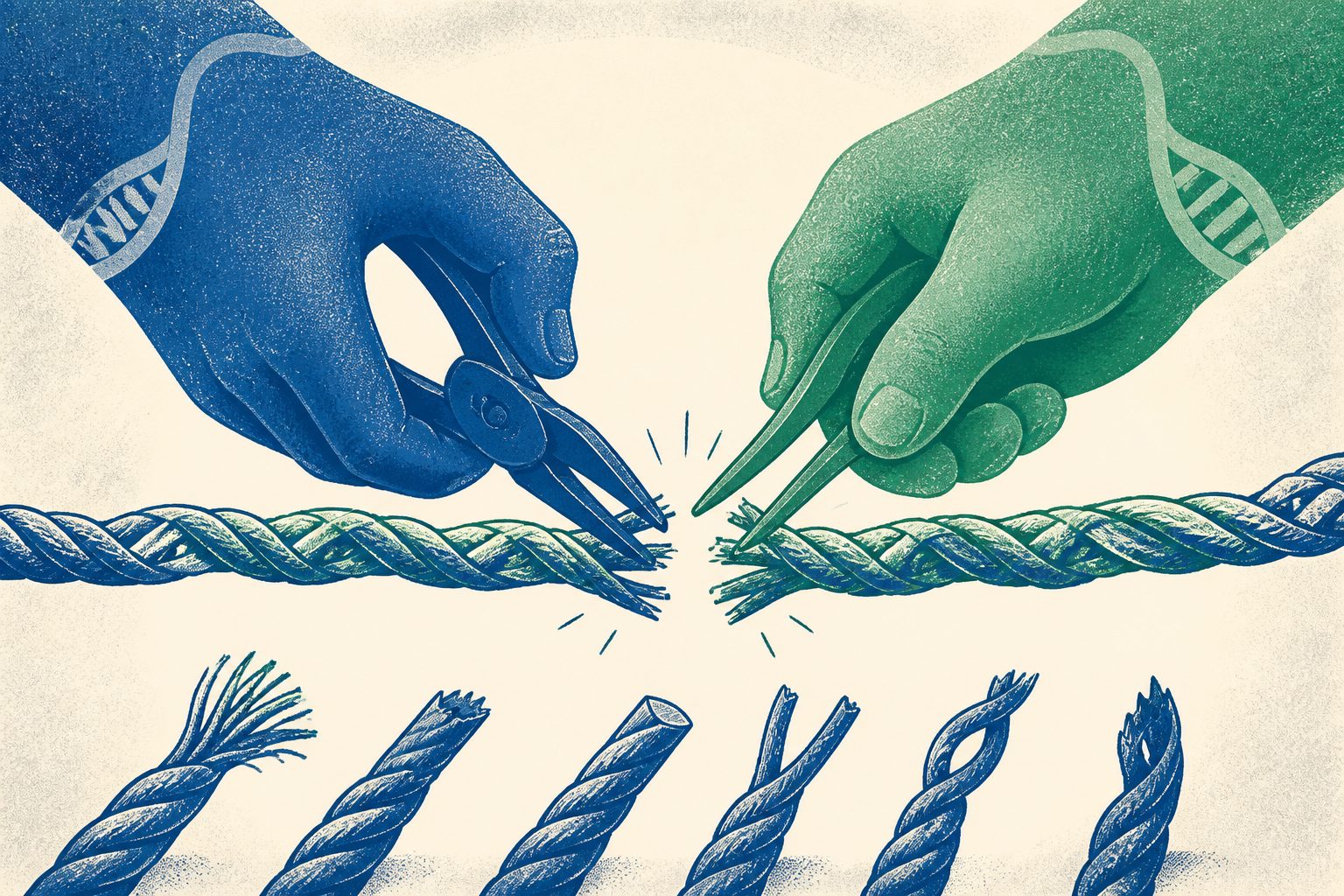
Abstract editorial illustration accompanying the article: Two DNA repair proteins team up to process many kinds of broken ends

Two DNA repair proteins team up to process many kinds of broken ends

Researchers have determined how two DNA repair proteins, polymerase lambda and PNKP, work together in a complex that brings broken DNA ends into close contact. The findings suggest that this large repair complex can process several types of damaged DNA ends so they can be joined.

·51 views
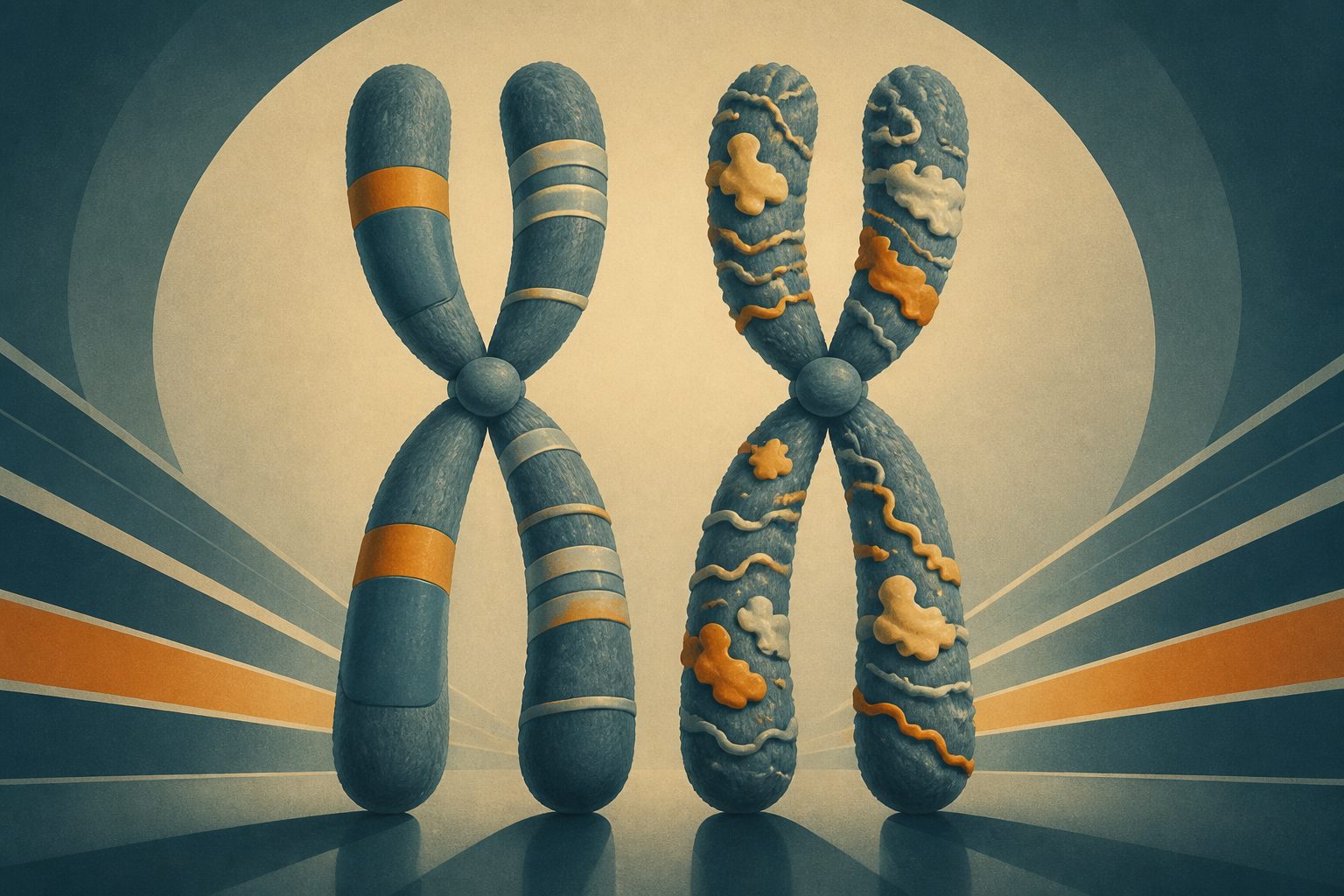
Abstract editorial illustration accompanying the article: Sister copies of human chromosomes are not arranged exactly alike

Sister copies of human chromosomes are not arranged exactly alike

Researchers found that sister copies of human chromosomes have a previously unrecognized difference in their large-scale three-dimensional arrangement. The shift is linked to the protein complexes that hold the copies together and could affect how cells find matching DNA during repair.

·98 views