Phenylephrine and harmine worked in sequence to activate cell-division programs in laboratory and in vivo experiments.
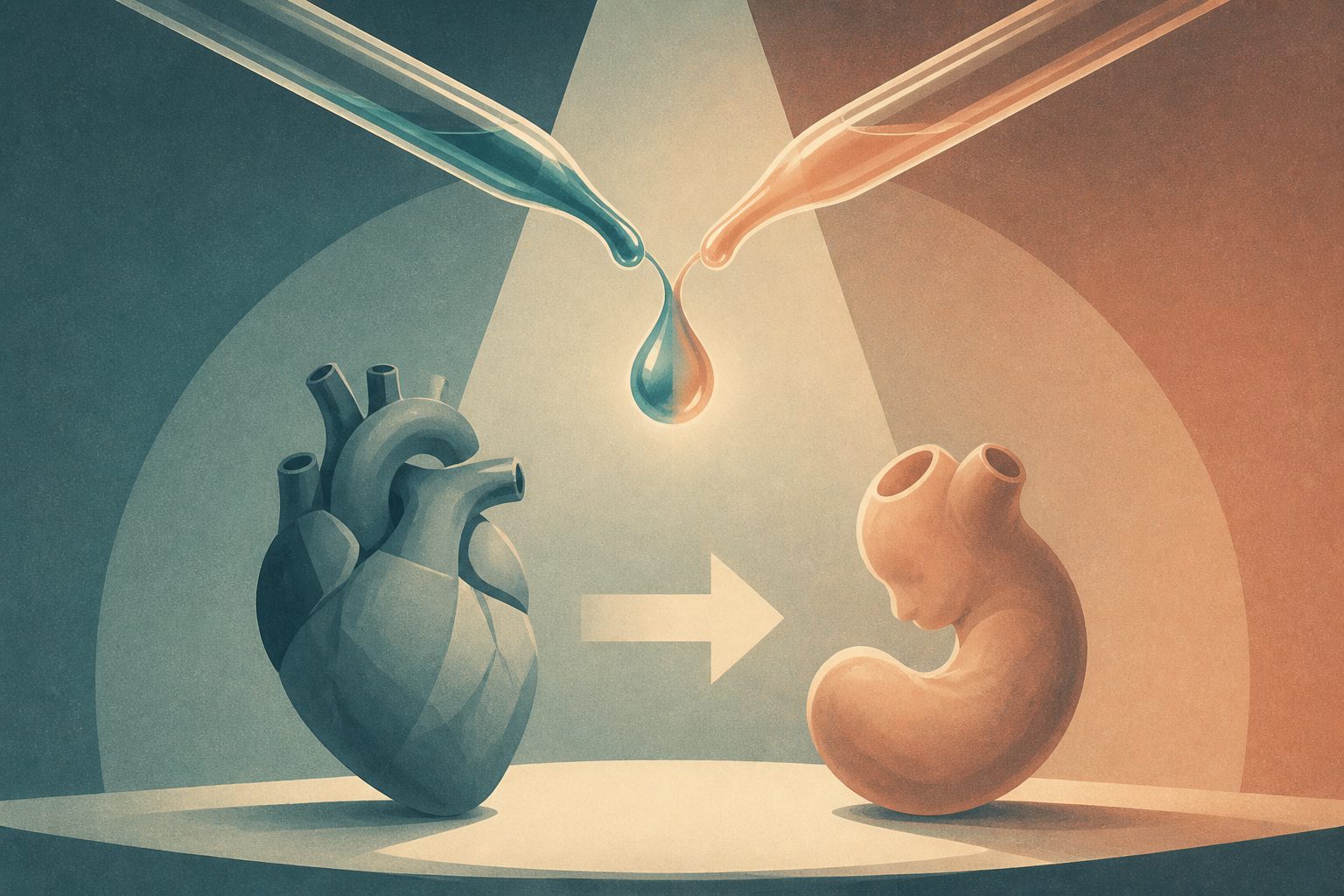
Researchers identified a two-compound treatment made from phenylephrine hydrochloride and harmine that increased the division of adult heart-muscle cells in laboratory and in vivo experiments. The treatment simplified an earlier five-compound mixture that had also been linked to heart-cell proliferation and regeneration.
The compounds acted in sequence. Phenylephrine activated an embryonic or fetal-like program and helped cells enter the first stages of division, while harmine activated genes needed for the later stages and completion of cell splitting.
How the two compounds worked
The researchers identified a dual-compound cocktail, called 2SM, made up of phenylephrine hydrochloride and harmine. It enhanced adult cardiomyocyte proliferation in vitro and in vivo, and analyses of gene activity and metabolism indicated that it activated cell-cycle programs and changed how the cells processed energy.
Phenylephrine activated a fetal program through the mTOR signaling pathway and increased CCND1 and WEE1, allowing cardiomyocytes to enter the G1/S phase of the cell cycle. Harmine inhibited DYRK1A and activated the MMB and FOXM1-MuvB complexes, increasing gene activity linked to the G2/M phase. Sequential treatment, with phenylephrine given before harmine, was necessary for the cells to complete cytokinesis, the final physical separation into two cells.
Overall, the researchers concluded that 2SM reprogrammed cardiomyocytes into an embryonic-like state and coordinated their progression through the cell cycle. The two-compound treatment was presented as a simpler version of an earlier five-compound cocktail.
// Source
Cell Regeneration · 2026 · DOI: 10.1186/s13619-026-00301-0
Authors: Zihao Wang, Lixia Zheng, Xiaokai Ma, Peng Gao, Yuanyuan Chen, Chenglu Xiao, Xin Zhao, Zhenyan Xiao, Xiaojun Zhu, Zhe Zhang, Jing‐Wei Xiong
Institutions: Peking University, Peking University Third Hospital, First Affiliated Hospital of Jiangxi Medical College