Trees on farms show strong soil benefits, but broader gains remain unclear
A review of 42 meta-analyses found consistent improvements in soil carbon and soil quality, while evidence for combined food and other products was less developed.
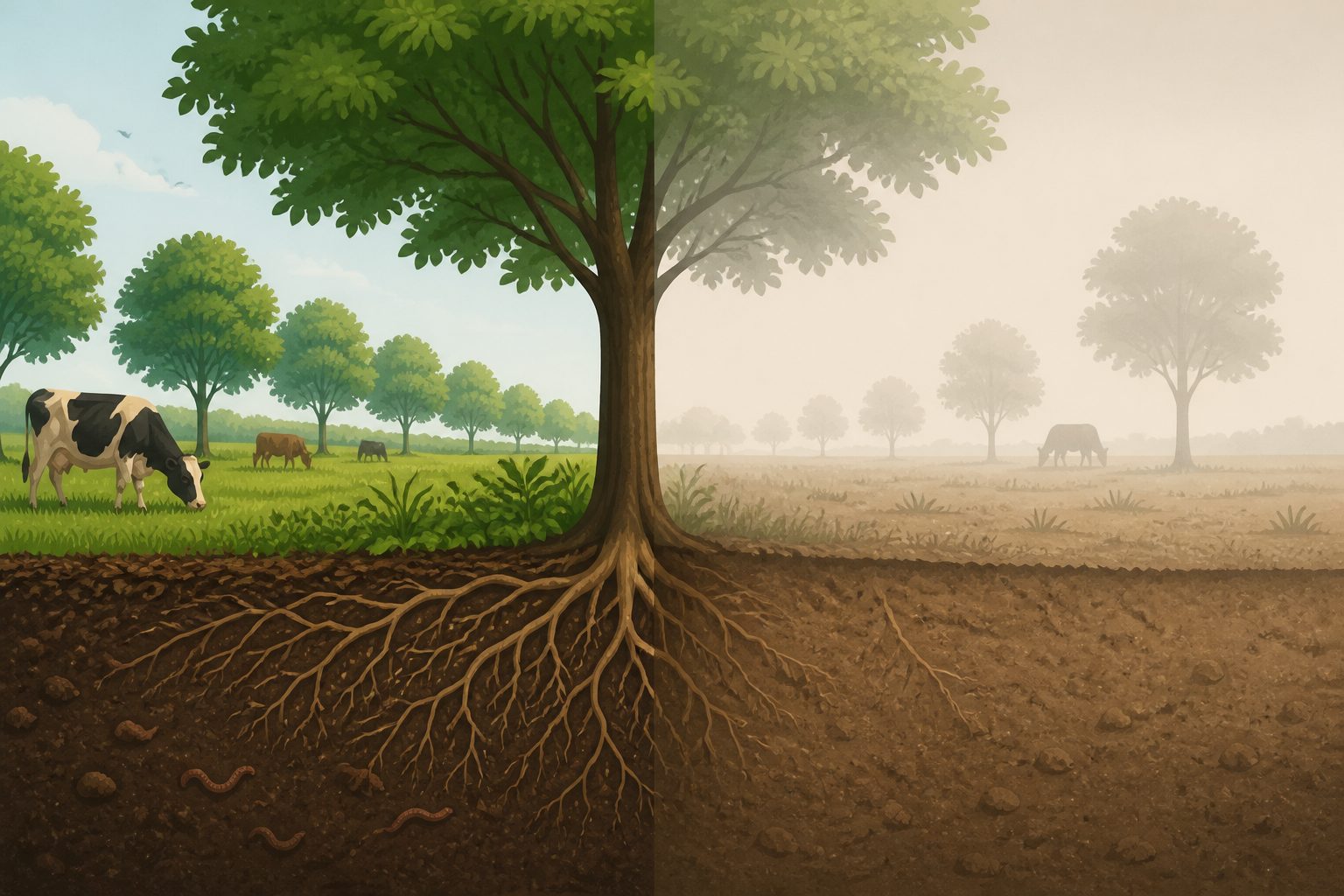
Editorial illustration — not from the study.
The review mapped 42 meta-analyses on agroforestry systems in temperate regions, covering environmental, climate and productivity outcomes. Across 154 results, a clear majority reported positive effects on soil carbon sequestration and multiple indicators of soil quality.
The evidence was less consistent for products such as crops and other outputs. The authors also found that studies often measured single-crop yield rather than the combined food or non-food products produced on the same land. Their map identifies gaps in research coverage and lists 1,500 primary studies and the locations of experiments relevant to temperate regions.
What the review found
The researchers found a strong overall pattern for regulating ecosystem services, especially soil-related outcomes. More than 65% of the assessments reported significantly positive effects on soil carbon sequestration and several measures of soil quality, accounting for 154 results.
Results for provisioning services, such as agricultural products, were more variable. The review found that single-crop yield was reported often, even though it does not show the total food or non-food production from an agroforestry system. More comprehensive measures, including the land equivalent ratio, were rarely used. When the findings were organized using the CICES framework, the researchers found no meta-analytical evidence on cultural ecosystem services.
Why the map matters
The findings identify soil carbon and soil quality as the best-supported benefits of temperate agroforestry in the reviewed evidence. They also show why assessments of productivity need to account for the different products that can come from the same land, rather than focusing mainly on one crop.
For policymakers, the review provides a map of established evidence alongside areas where further research is needed before the full range of agroforestry benefits can be assessed.
Evidence and limits
This was an umbrella review, meaning it synthesized 42 existing meta-analyses rather than conducting a new field experiment. Its conclusions therefore depend on the studies included in those reviews. The authors report variable methodological quality, including frequent shortcomings in how studies described their selection methods and statistical analyses.
The evidence map also shows uneven coverage: provisioning outcomes were measured in inconsistent ways, comprehensive productivity measures were uncommon, and no meta-analysis addressed cultural ecosystem services. The review focused on evidence relevant to temperate soil-and-climate conditions, so its findings should not automatically be applied to all regions or agroforestry systems.
Certain Streptomyces bacteria improved maize growth when plants were grown with limited water in a greenhouse experiment. The effects varied among the four bacterial isolates, and further testing is needed before they can be considered for field use.
A review of five medicinal plants finds evidence that leaves, young stems, small branches and fruits may sometimes replace roots, bark or heartwood as sources of similar plant chemicals. The authors say these substitutions could reduce destructive harvesting, but therapeutic and safety testing is still needed.
Adding LED lighting and solid carbon dioxide generators to winter greenhouse cucumber production increased yield by 18% and income by 21% compared with the control. Plants also grew larger and produced wider, heavier fruit during the trial.