A mathematical model suggests that short copying windows and repeated attempts could produce exact sequences up to 50 bases long.
The study examines how enzyme-free copying might become more accurate without actively correcting mistakes. Experiments have shown that an early mismatch can slow further copying and increase the chance of additional errors. The researchers used these findings in a mathematical model of copying in an environment where strands have limited time to grow and shorter strands are preferentially lost.
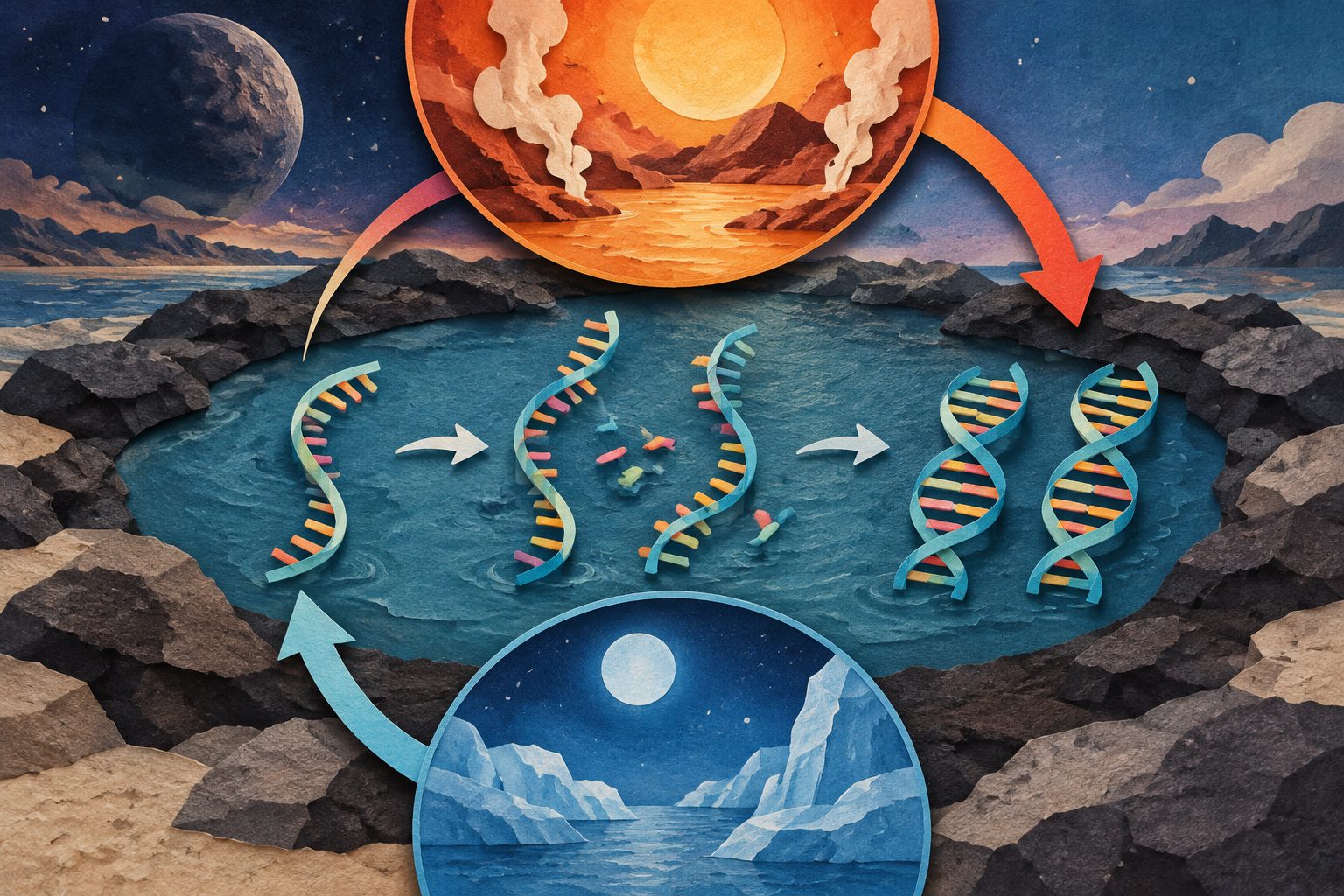
A short copying window reduces the number of faulty strands that reach full length, but it also lowers the total yield. The model suggests that repeated attempts during environmental cycles, such as temperature changes near hydrothermal systems, could improve both the accuracy and production rate for sequences that are not too long.
How copying errors are filtered
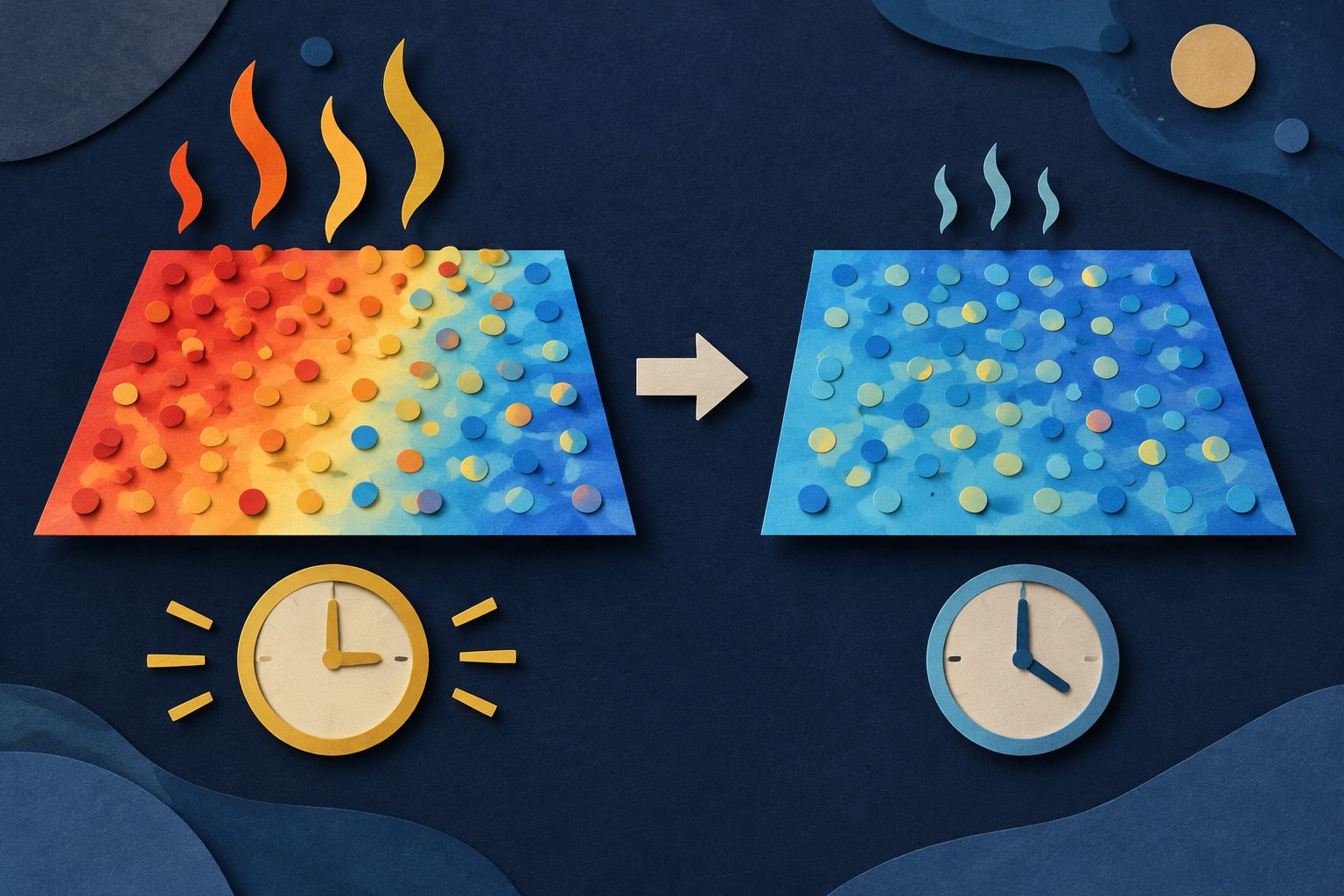
The model captures two observed features of enzyme-free copying: an initial mismatch can slow extension, and it can promote clusters of later errors. Because faulty strands tend to extend more slowly, limiting each copying attempt to a set time favors full-length strands with fewer errors.
This filtering creates a trade-off: shorter copying windows improve the accuracy of completed strands but reduce yield. In the model, repeated attempts in a cyclic environment can overcome that trade-off for suitable template lengths. When the cycle time is chosen to reduce the average time needed to obtain an exact copy, the model estimates that sequences up to about 50 bases could be copied faithfully within their lifetime.
Why accurate copying matters
Accurate copying is needed for self-replicating systems to preserve useful molecular sequences. The proposed process offers a way for enzyme-free copying to favor accurate full-length strands without requiring a sophisticated enzyme that actively corrects each error.
If environments with changing conditions and length-selective retention existed in early Earth settings, repeated copying attempts could have helped maintain catalytically active short nucleic-acid sequences. The work therefore provides a possible route by which copying accuracy could improve before modern enzyme-based proofreading evolved.
Model evidence and limits
The study is primarily a mathematical modeling analysis using experimentally estimated parameters and experimentally documented effects of mismatches on enzyme-free copying. It models limited copying windows, repeated attempts in cyclic environments, and preferential loss of shorter strands.
The predicted production of exact copies up to 50 bases is therefore a model result, not a direct demonstration in a hydrothermal system. The scenario depends on environmental features such as suitable cycle times, length-selective retention or loss, and available chemical energy. The model also describes a trade-off between accuracy and yield, and its benefits apply to templates that are not too long.