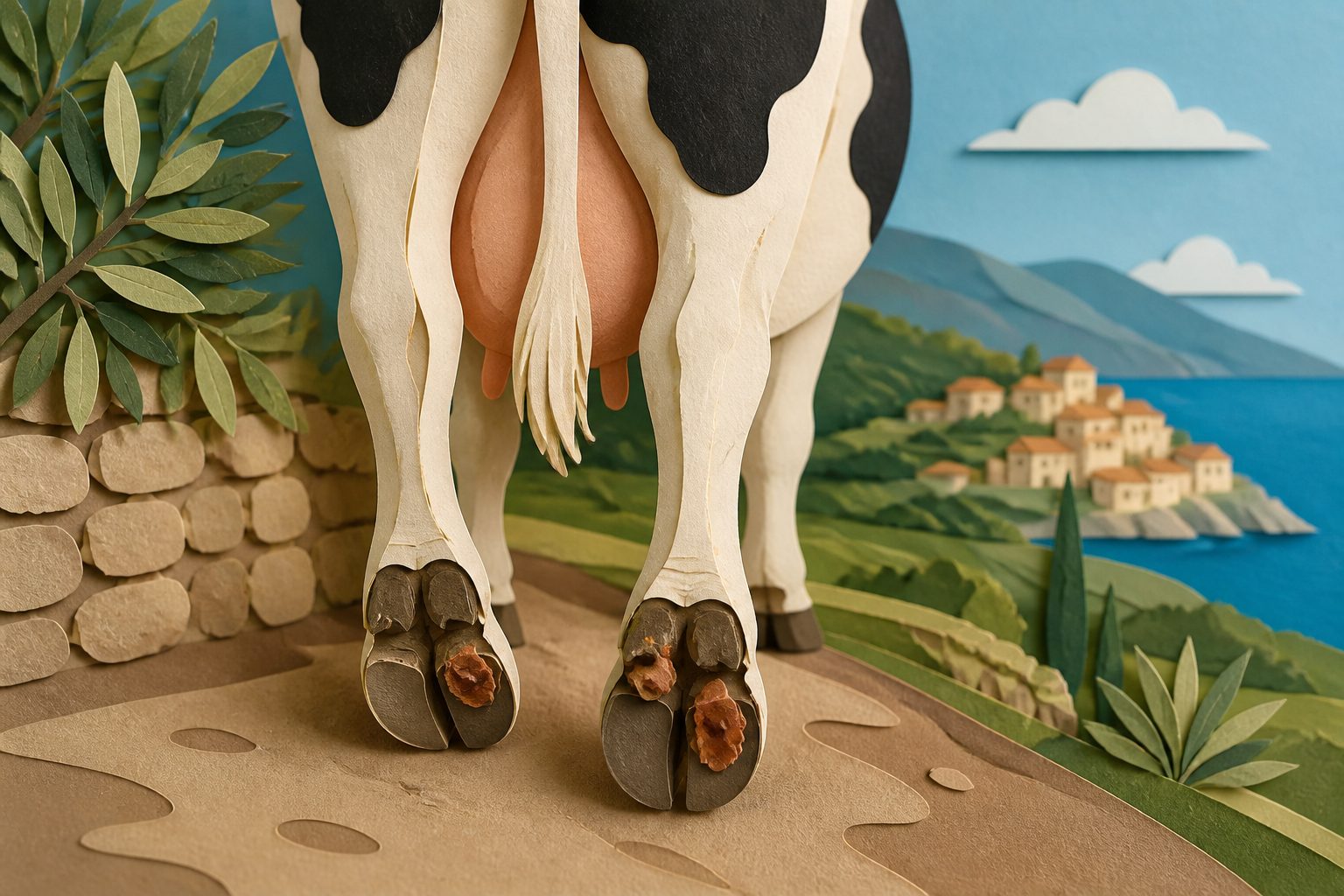
Records from 94 farms found the highest odds of lesions in the outer claws of cows’ hind feet.
Researchers analysed 24,158 trimming records from 13,782 dairy cows at 94 farms in Southern Italy, covering 246 visits between 2023 and 2025. Lesions were recorded in 27.4% of cows across trimming visits, although prevalence varied substantially between farms and visits.
Hind-foot lesions accounted for 71.5% of all recorded lesions. Compared with the outer claw of a front foot, the odds of a lesion were highest in the outer claw of a hind foot. Digital dermatitis, corkscrew claw, white line disease and sole haemorrhage were the most common recorded conditions.
Where lesions were found
The records contained 11,408 lesions. Digital dermatitis made up 30.1% of them, followed by corkscrew claw at 21.4%, white line disease at 15.6% and sole haemorrhage at 14.4%.
Lesions were recorded more often on hind feet than front feet: 71.5% versus 28.5%. Using the outer front claw as the comparison, lesion odds were 5.85 times higher in the inner front claw, 2.53 times higher in the inner hind claw and 16.93 times higher in the outer hind claw. The 27.4% cow-level prevalence varied by trimming visit, falling from 49.3% among the smallest visits to 22.5% among the largest visits. Farm-level prevalence averaged 37.2% and ranged from 14.7% to 97.6%.
Why hoof location matters
The findings identify the hind feet—particularly the outer hind claw—as a key location for lesions in these Southern Italian dairy-cow records. They also show substantial variation between farms and trimming sessions.
The researchers say routinely collected trimming data can support more consistent farm-level hoof-health reporting and future epidemiological and genetic analyses within Italy’s national claw-health framework. The data also highlight the frequent recording of corkscrew claw, which the researchers identify as a possible trait for future national genetic analyses.
Evidence and caveats
This was a retrospective observational pilot study based on routine hoof-trimming records, not a controlled experiment. The records were collected by one professional hoof trimmer, so differences in recognising or coding lesions cannot be ruled out. In some sessions, mainly lame cows may have been brought for trimming, which could bias prevalence estimates.
Trimming schedules differed between farms, with a median interval of about seven months, and more frequent trimming may make lesions more likely to be detected. Some cows appeared in more than one trimming session, so the estimates are not directly comparable with single-time-point surveys. The researchers also lacked information on farm management, housing, nutrition and environmental conditions.
// Source
Journal of Dairy Research · 2026 · DOI: 10.1017/s0022029926102507
Authors: Giovanni Capuzzello, Laura Randall, Maurizio Marusi, R. Finocchiaro, Lorenzo Benzoni, Giovanni Schembari, Fabio Testori, Salvatore Monti, Gabriele Marino, Christopher Hudson
Institutions: University of Nottingham, Ospedale SS. Annunziata, Fundação de Amparo à Pesquisa do Espírito Santo, Associazione Italiana Sclerosi Multipla