Review links lasting pain after caesarean delivery with lower quality of life
The review found reported effects on daily activity, sleep, mood, energy and sexual wellbeing, but study methods varied widely.
High evidenceReviewSome caution advised
Medical disclaimer: This article summarizes research findings and is for informational purposes only. It is not medical advice.
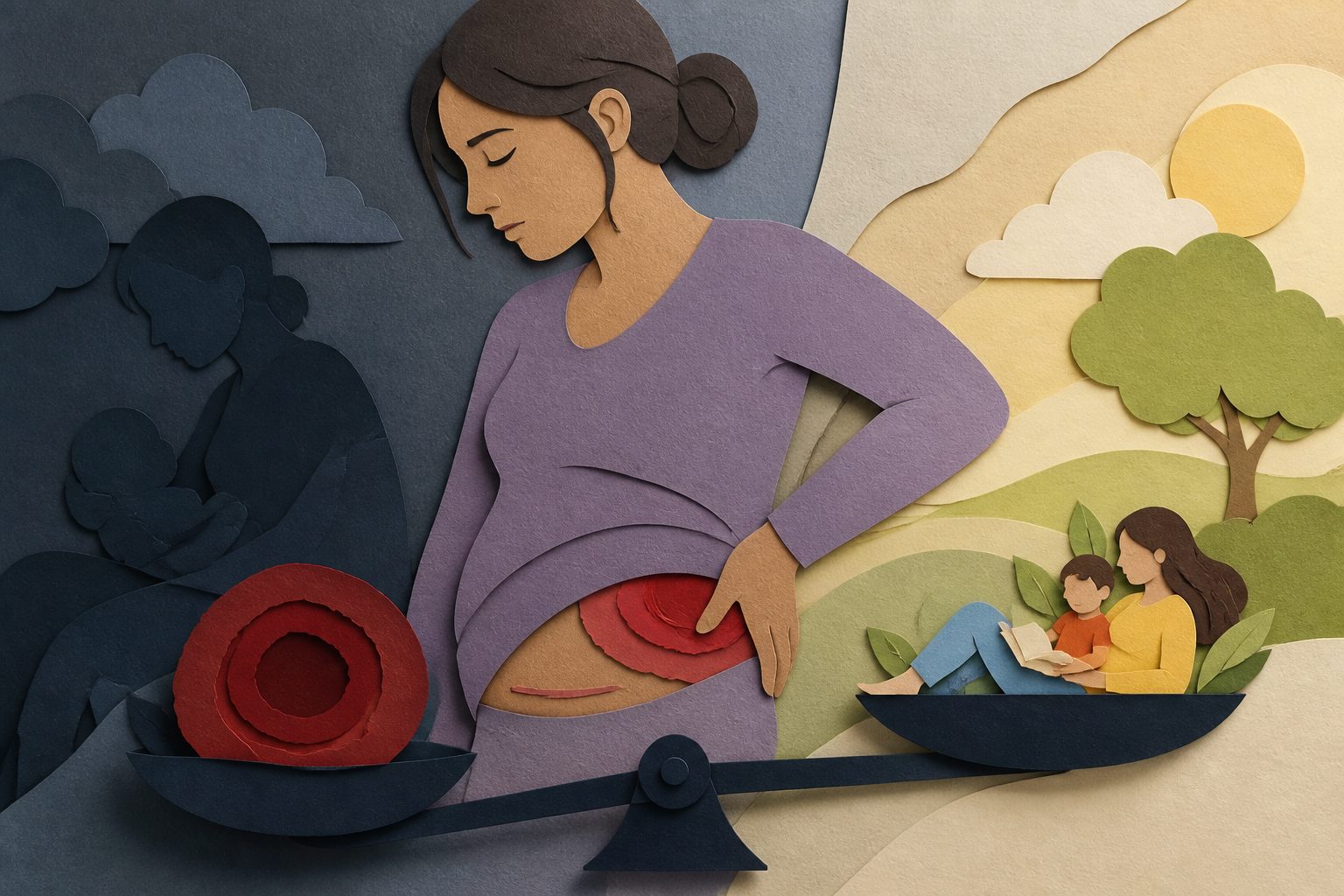
Editorial illustration — not from the study.
Researchers reviewed studies that assessed quality of life after caesarean delivery in women with pain lasting at least three months. The review considered physical function, sleep, mood, fatigue and sexual wellbeing rather than pain intensity alone.
The reported pattern appeared to change over time. Activity-related interference was more prominent at three months postpartum, while mood-related interference was more prominent at six and 12 months. The review also reported that depressive symptoms and fatigue were frequently associated with persistent pain, but these findings do not show that pain caused those problems.
What the review covered
The researchers conducted a systematic review of studies reporting quality-of-life outcomes at least three months after caesarean delivery. The included studies involved 28,295 women in total and examined persistent pain attributed to, or reported after, surgery. Outcomes included daily activity, sleep, mood, energy, fatigue and sexual wellbeing. Because the studies differed in their definitions of chronic postsurgical pain, the body area attributed as the source of pain, and quality-of-life measurement tools, the researchers used a narrative synthesis rather than combining the results into a single overall estimate.
What the evidence shows
Across the included studies, chronic postsurgical pain was associated with, or occurred alongside, ongoing interference with daily activity, sleep, mood and energy. Activity-related interference was reported in 54% of participants at three months postpartum, while mood-related interference was reported in 53% at six months and 68% at 12 months; the abstract does not clarify whether these percentages came from the same studies or were directly comparable. Fatigue showed little improvement between six and 12 months. Reported postpartum depression during the first year ranged from 7% to 46%, and depressive symptoms and fatigue were frequently associated with chronic postsurgical pain. These are associations from the reviewed literature and do not establish that persistent pain caused the outcomes.
Where this may apply
These findings may apply most closely to women who have undergone caesarean delivery and report persistent pain at three months or later, in populations resembling those represented in the 30 included studies. They may not describe women without persistent pain, people who have not given birth by caesarean delivery, or populations that were underrepresented in the review. Because the review combined studies with differing methods and measures, its reported percentages should not be assumed to apply uniformly to all postpartum women.
What this could mean
The review suggests that the effects associated with persistent pain after caesarean delivery may involve several aspects of quality of life, not only pain severity. It also indicates that the type of reported interference may differ at different points after delivery. The findings are relevant to understanding recovery among women after caesarean delivery, but they do not by themselves determine why these problems occur or how common they are in every population.
Limitations & evidence assessment
The review found substantial variation in how chronic postsurgical pain was defined, where pain was attributed, and how quality of life was measured. This prevented a pooled statistical analysis and makes direct comparisons between time points and studies uncertain. The abstract provides limited information about the designs, control groups, participant characteristics and follow-up methods of the individual studies, so the strength and causal direction of the reported associations cannot be determined from the abstract alone. Some reported outcomes, including depression and fatigue, may also have multiple contributing factors beyond postsurgical pain.
Why this evidence level: Systematic review aggregating primary studies with explicit methodology.
Evidence levels are editorial estimates derived from study metadata — they are not clinical appraisals.
Researchers examined prescribing patterns among 239,995 Danish residents with type 2 diabetes who were diagnosed at age 40 or older. Nearly one third had at least one possible omission under the study's general prescribing criteria, and prescribing gaps involving cardiovascular care were common. The study found associations with being female and living alone, but it did not show that these factors caused the prescribing differences.
This review examines off-label prescribing in children, meaning medicines used outside the terms of their official approval. It argues that such prescribing is not automatically inappropriate, but that its acceptability depends on the available evidence, the clinical setting, and safety monitoring. The article also describes continuing delays, incomplete studies, and a lack of suitable child-specific formulations.
Researchers analysed double-blind randomised trials of adults with major depressive disorder to compare 10 antidepressants with placebo during the first eight weeks of treatment. Some medicines were associated with longer QTc intervals, a heart rhythm measurement, but the analysis did not find higher rates of early major cardiovascular events or non-suicidal death compared with placebo.