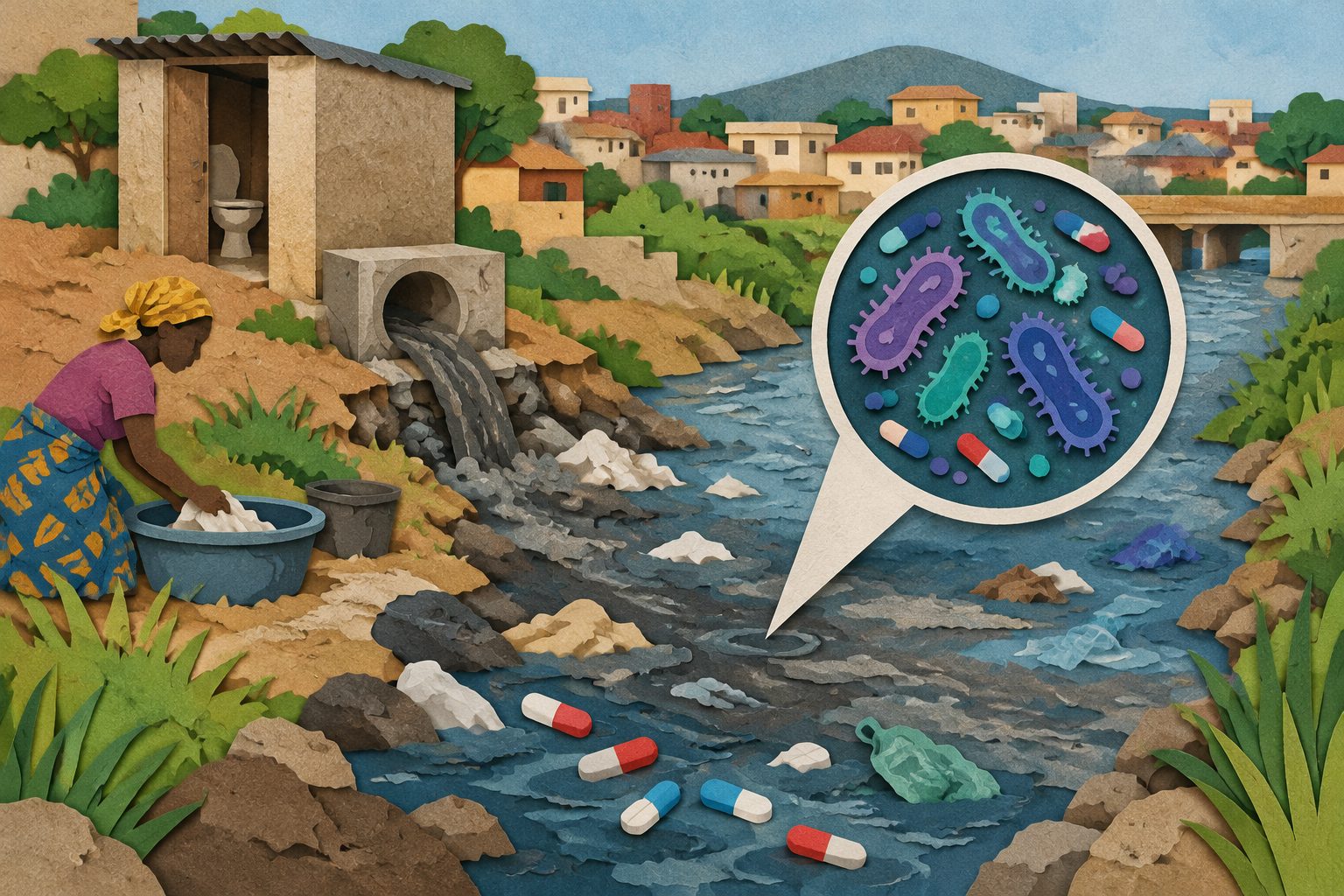
An exploratory study of six Nigerian streams found higher resistance indicators in catchments with lower sanitation scores.
The researchers sampled six urban streams over three weeks and assessed water quality, bacterial contamination and resistance to six antibiotics. They also surveyed 180 households in the streams’ catchments to create a Composite Sanitation Score, which summarized sanitation conditions.
All six streams differed from World Health Organization and Nigerian reference values. Resistance indicators were higher where sanitation scores were lower, including measures of multidrug-resistant bacteria and several antibiotic-resistance genes. The researchers describe the results as exploratory and say larger studies across multiple sites are needed.
Resistance in the streams
The team tested 247 isolates from six streams. Ampicillin resistance ranged from 64% to 89% by site, while the proportion of multidrug-resistant Gram-negative isolates ranged from 43% to 68%.
Among 98 multidrug-resistant isolates screened by polymerase chain reaction, the resistance gene blaTEM was the most common, detected in 58% to 82% of isolates by site. The tetA gene, linked to tetracycline resistance, occurred in 46% to 74%, and the class 1 integron gene intI1 occurred in 39% to 61%. Seven isolates were also identified through 16S ribosomal RNA sequencing.
Sanitation scores were strongly negatively correlated with all five measured antimicrobial-resistance indicators: catchments with better sanitation had lower indicator levels. The reported correlation was ρ = −1.00, with an exact permutation p-value of 0.003.
Evidence and limits
This was a cross-sectional environmental assessment, combining three weeks of stream sampling with a survey of 180 households. It found ecological associations between sanitation scores and resistance indicators, not causal effects.
The analysis covered only six stream catchments, so the results may not represent other parts of Ilorin, Nigeria or West Africa. The authors describe the findings as exploratory and call for confirmation in larger, multi-site studies. The study also tested a defined set of isolates, antibiotics and resistance genes rather than measuring every form of antimicrobial resistance in the streams.
// Source
Scientific Reports · 2026 · DOI: 10.1038/s41598-026-75372-9
Authors: Olatunji Matthew Kolawole, Fausat Abimbola Jimoh, Damilola Miracle Olayemi, Amudalat Jimoh, Adetola Esther Okunola, Joshua Sunday Aderibigbe, Fowowe Gideon Oluwasegun, Ayomide Faith Olagunju, Banwo Esther Oluwapelumi, Fatai Etudaye Saliu, Odunaye Oriyomi Abdullateef, Duro Faith Ahuoiza, Ayomide Praise Onifade, Fawaz Ayomide Olanrewaju, Adesola Isaac Aboyeji, Favour Tosin Oloruntoba
Institutions: University of Ilorin, Kwara State University